
- Services
- Discovery & Intelligence Services
- Publication Support Services
- Sample Work
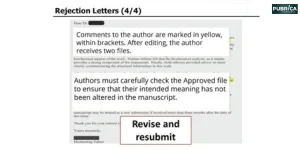
Publication Support Service
- Editing & Translation
-
Editing and Translation Services
- Sample Work

Editing and Translation Service
-
- Research Services
- Sample Work
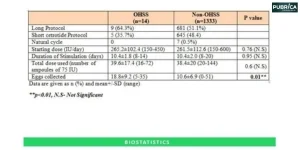
Research Services
- Physician Writing
- Sample Work

Physician Writing Service
- Statistical Analyses
- Sample Work
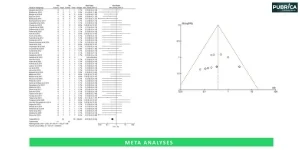
Statistical Analyses
- Data Collection
- AI and ML Services
- Sample Work

AI and ML Services
- Medical Writing
- Sample Work
Medical Writing
- Research Impact
- Sample Work

Research Impact
- Medical & Scientific Communication
- Sample Work
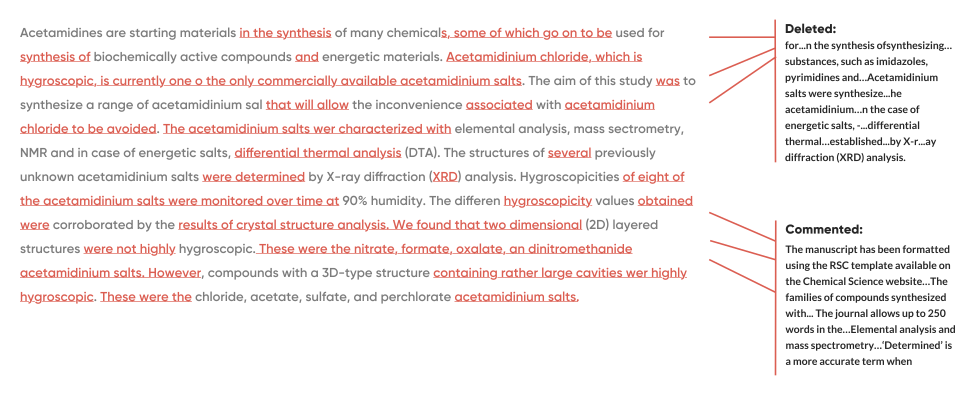
Medical & Scientific Communication
- Medico Legal Services
- Educational Content
- Academic Editorial Services
- Sample Work
Academic Editorial Services
- Educational Editorial Service
-
Education Editorial Services
- Sample Work
Education Editorial Services
-
- Industries
- Subjects
- About Us
- Academy
- Insights
- Contact Us
Researchers Q & A
Get all your inquiries about research writing and publishing addressed by experienced researchers and publication specialists!
Meta Analysis
- Asked on February 26, 2025
Mean and Mean difference are the two key statistical measures used in the statistical analysis
Meta Analysis
- Asked on February 26, 2025
Meta-analysis is one of the methods of systematic review
Meta Analysis
- Asked on February 26, 2025
The term "effect size" is commonly used in the social sciences, especially in meta-analysis. An effect size is a value that shows the magnitude
Meta Analysis
- Asked on February 26, 2025
SMDs, often referred to as effect sizes, can be interpreted using commonly accepted guidelines, primarily derived from social science research.
Meta Analysis
- Asked on February 26, 2025
Review authors may consider including a rule of thumb in the Comments column of the ‘Summary of Findings
Meta Analysis
- Asked on February 28, 2025
The real-world importance of an effect size is highly context-dependent, meaning that a small effect in one setting may still be clinically significant
Meta Analysis
- Asked on February 28, 2025
This is derived from a Z test to determine if there is no effect (or no effect
Meta Analysis
- Asked on February 28, 2025
Generally, P value below 0.05 is referred statistically significant, states it is small adequate to reject
Meta Analysis
- Asked on February 28, 2025
The P value refers the probability of getting the observed effect (stronger effect) under
Meta Analysis
- Asked on February 26, 2025
Statistical significance explains if there is a treatment effect exists or not while the effect size shows
Meta Analysis
- Asked on March 01, 2025
P values depend on both the effect estimate and the sample size (or the precision of the effect estimate).
Meta Analysis
- Asked on March 01, 2025
A P value higher than 0.05 does not prove that an intervention has no observed effect.
Meta Analysis
- Asked on March 01, 2025
Cochrane does not support using terms like “statistically insignificant” due to the chance for misinterpretation
Meta Analysis
- Asked on March 01, 2025
Confidence intervals (CIs) refer the range within which the intervention effect is likely lies, indicating a magnitude of uncertainty around
Meta Analysis
- Asked on March 01, 2025
A confidence interval is an interval that gives a range for observed data within which the population
Meta Analysis
- Asked on March 03, 2025
A 95% confidence interval (CI) means that if the study were repeated multiple times
Meta Analysis
- Asked on March 03, 2025
The sample size in a study significantly affects the width of the confidence interval
Meta Analysis
- Asked on March 03, 2025
Random-effects models are used for estimating the heterogeneity across studies, indicating the average effect across
Meta Analysis
- Asked on March 03, 2025
Confidence intervals can be reported at different confidence levels (e.g., 90%, 95%, 99%)
Meta Analysis
- Asked on March 03, 2025
There is a strong relationship between confidence intervals P values and confidence intervals
Meta Analysis
- Asked on March 04, 2025
Confidence intervals can be used to determine the significance of an intervention for the intended effect.
Meta Analysis
- Asked on March 04, 2025
Each confidence levels can indicates different degrees of certainty
Meta Analysis
- Asked on March 04, 2025
If an effect estimate is small and its confidence interval excludes the minimum clinically meaningful benefit
Meta Analysis
- Asked on March 04, 2025
A funnel plot is a scatter plot that visually represents the effect estimates from individual studies against
Meta Analysis
- Asked on March 04, 2025
Funnel charts are scatter plots that display treatment effect estimates from individual studies against a measure
Meta Analysis
- Asked on March 05, 2025
No, Publication bias will not always show asymmetry in meta-analysis. If no true intervention effect
Meta Analysis
- Asked on March 05, 2025
Standard error is preferred because it accounts for additional factors influencing statistical power
Meta Analysis
- Asked on March 04, 2025
Study precision is plotted on the vertical axis in funnel plot (reversed scale).
Meta Analysis
- Asked on March 05, 2025
The studies with negative result will be ingnored for reporting in a funnel plot
Meta Analysis
- Asked on March 04, 2025
The term “funnel plot” comes from the fact that as study size increases, the precision of the estimated
Meta Analysis
- Asked on March 07, 2025
Assume an industrial company decides to start a project in a village. This would require the village
Meta Analysis
- Asked on March 07, 2025
Ratio measures (odds ratios, risk ratios) → Should be plotted on a logarithmic scale to ensure symmetry.
Meta Analysis
- Asked on March 07, 2025
Inability to confirm bias – In some cases funnel plots states bias but do not confirm it; further statistical interpretations are required to confirm it.
Meta Analysis
- Asked on March 07, 2025
Safety is the detection, evaluation, understanding, and prevention of adverse effects from
Meta Analysis
- Asked on March 07, 2025
A hypothesis is essential to scientific research, shaping the research goal and supporting the approach
Meta Analysis
- Asked on March 10, 2025
Obtaining the Standard Deviation for change scores need correlation formula. But the change score
Meta Analysis
- Asked on March 10, 2025
f homogeneous variance is assumed, the Cohen method can be used to pool SD (Formula 15).
Meta Analysis
- Asked on March 10, 2025
If only the IQR is provided, estimation follows Sub-circumstance 3.2 (Formula 12).
Meta Analysis
- Asked on March 07, 2025
If a study provides the range but does not specify minimum and maximum values, the formula used ..
Meta Analysis
- Asked on March 07, 2025
Lou et al. stated a alteration of Bland’s method to calculate Standard Deviation based...
Journal Selection & Submission
- Asked on April 17, 2025
Selecting the right journal is a purposeful and tactical decision that will affect journal visibility, readership, and acceptance
Journal Selectionn & Submission
- Asked on April 17, 2025
Submitting the same manuscript at the same time to more than one journal is an example of a duplicate submission; this is unethical..
Journal Selection & Submission
- Asked on April 17, 2025
Formatted according to the guidelines of the journal and structured (IMRAD or otherwise)...
Journal Selection & Submission
- Asked on April 17, 2025
A predatory journal takes advantage of the open access model by charging publication fees...
Journal Selection & Submission
- Asked on March 17, 2025
The Impact Factor (IF) is an indicator of how often citations occur, but it varies across disciplines...
Journal Selection & Submission
- Asked on April 17, 2025
Time frames are highly variable between journals and disciplines...
Journal Selection & Submission
- Asked on April 17, 2025
The rejection process is typical of the publication cycle. Even good manuscripts can be rejected...
Journal Selection & Submission
- Asked on April 17, 2025
The cover letter serves as your initial correspondence with the journal editor. It should be...
Journal Selection & Submission
- Asked on April 17, 2025
The choice of Open Access (OA) or subscription journals will depend on...
Journal Selection & Submission
- Asked on April 17, 2025
Yes, Submission portals are frequently intricate and need: Correct entry of metadata...
Slide Deck
- Asked on April 21, 2025
Scientific slide decks create organized, impactful presentation documents summarizing scientific, medical, or regulatory information...
Slide Deck
- Asked on April 21, 2025
Scientific slide decks are key for translating large amounts of complex data into narratives that align with a strategy and the audience...
Slide Deck
- Asked on April 21, 2025
Pubrica’s scientific slide deck preparation services follow a full-cycle, quality-controlled process based on client...
Slide Deck
- Asked on April 21, 2025
Yes, both Pubrica and NanobotMedical have extensive experience in creating evidence-based, visually attractive slide decks for..
Slide Deck
- Asked on April 21, 2025
Pubrica offers decks in flexible, editable, and secure delivery formats to support client dissemination need...
Slide Deck
- Asked on April 21, 2025
Timelines vary based on a deck’s complexity, therapeutic area, and design needs. The estimated durations include:
Slide Deck
- Asked on April 17, 2025
Timelines vary based on a deck’s complexity, therapeutic area, and design needs. The estimated durations include:
Slide Deck
- Asked on April 21, 2025
The price is dependent on the length of the deck, the scientific depth, data volume, design complexity, and nonsupervisory compliance...
Slide Deck
- Asked on April 17, 2025
Pubrica has experience creating slide decks for many different target audiences and regulatory environments:
Slide Deck
- Asked on April 21, 2025
All confidentiality and data security are a central part of how Pubrica operates. We offer...
Table of Content
- Q: What is the difference between Mean and Mean difference in meta-analysis?
- Q: What is the Minimal sample required for Meta-analysis?
- Q: What is the effect size in Meta-Analysis, and which is the good effect size?
- Q: How can Standardized Mean Differences (SMDs) be interpreted using rules of thumb?
- Q: Should review authors include effect size rules of thumb in meta-analysis reports?
- Q: Why might generic effect size interpretations be problematic?
- Q: How does RevMan report P values in a meta-analysis?
- Q: What threshold is commonly used to determine statistical significance?
- Q: What is a P value, and how is it interpreted in the context of Cochrane reviews?
- Q: What are statistical significance and effect size?
- Q: How does sample size affect the interpretation of P values?
- Q: What are common misinterpretations in P values?
- Q: How should P values be referred in Cochrane reviews?
- Q: What are confidence intervals, why they are important in meta-analysis?
- Q: What is the good confidence interval that I can expect in Meta Analysis?
- Q: How should a 95% confidence interval be interpreted?
- Q: How does sample size affect confidence intervals?
- Q: How do fixed-effect and random-effects models differ in confidence intervals?
- Q: How does the confidence level impact the width of the confidence interval?
- Q: What is the good confidence interval that I can expect in Meta Analysis?
- Q: How can confidence intervals help assess clinical significance?
- Q: How confidence intervals can be used to assess harm versus benefit?
- Q: Can confidence intervals be used to conclude that an intervention is ineffective?
- Q: What is a funnel plot, and how is it used in meta-analysis?
- Q: How should be a funnel chart in Meta Analysis?
- Q: Can publication bias in a meta-analysis always be detected using a funnel plot?
- Q: Why is standard error preferred over total sample size on the vertical axis?
- Q:How are funnel plots constructed in meta-analysis?
- Q: What does an asymmetrical funnel plot propose?
- Q: Why is it called a "funnel plot"?
- Q: When to use hypothesis?
- Q: How should ratio measures (e.g., odds ratios) and continuous outcomes be plotted in a funnel plot?
- Q: What are the shortcomings of funnel plots in meta-analysis?
- Q: How can Standardized Mean Differences (SMDs) be interpreted using rules of thumb?
- Q: Should review authors include effect size rules of thumb in meta-analysis reports?
- Q: How can SD for the change score be estimated when baseline and post-intervention values are provided?
- Q: How should ratio measures (e.g., odds ratios) and continuous outcomes be plotted in a funnel plot?
- Q: How can SD be estimated when only the interquartile range (IQR) is available, without Q1 and Q3 values?
- Q: How can Standardized Mean Differences (SMDs) be interpreted using rules of thumb?
- Q: Should review authors include effect size rules of thumb in meta-analysis reports?
- Q: How do I select the best journal for my manuscript?
- Q: Can I submit the same manuscript to multiple journals at once?
- Q: What should I include in a journal submission package?
- Q: How do I know if a journal is predatory?
- Q: What is a good impact factor? Should I only aim for high-impact journals?
- Q: How long does the submission and peer review process take?
- Q: What if my paper gets rejected?
- Q: What is a cover letter, and why is it important?
- Q: Should I go for Open Access or traditional journals?
- Q: Can Pubrica help me with submission portals like Scholar One or Editorial Manager?
- Q: What are Scientific Slide Decks?
- Q: Why do companies require Scientific Slide Decks?
- Q: What services are included in Pubrica’s Scientific Slide Deck offerings?
- Q: Does Pubrica (or NanobotMedical) have experience developing such decks?
- Q: What file formats are provided?
- Q: How long does it take to complete a Scientific Slide Deck?
- Q: How long does it take to complete a Scientific Slide Deck?
- Q: How much does a scientific slide deck service cost?
- Q: Can Pubrica assist with regulatory, congress, or investor-specific formats?
- Q: How is confidentiality maintained?