
How to Design a Research Poster: Structure, Layout & Print Specifications (Step-by-Step)
High-Impact Journals
Interesting topics
How to Design a Research Poster: Structure, Layout & Print Specifications (Step-by-Step)
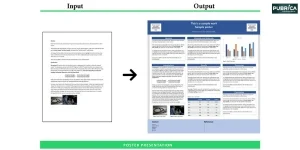
Research posters are visually compelling presentations of the results of a study or research. They are widely used during academic conferences, symposiums, seminars, and university exhibitions as a medium of displaying research projects. A good research poster should have an impressive content, well-organised, appealing, and professional look. Understanding how to design a research poster begins with careful planning of its content, academic poster structure, and visual presentation. Good planning of the research poster will make sure that its structure and research poster dimensions and print details are appropriate for presenting the research findings. [1]
1. Understanding the Purpose of a Research Poster
A research poster is a form of representation of a research project that brings out the major elements of a research project, stimulating discussions from the spectators.
Research posters are widely used for: [2]
- Presentation of research results during conferences
- Visual communication of information
- Interacting with researchers
- Visibility of research
2. Standard Structure of a Research Poster
Most academic institutions follow a standard academic poster structure that allows readers to understand the content quickly. A scientific poster template can also help researchers organise each section consistently.
Poster Section | Purpose |
Title & Author Information | Introduces the research topic and authors |
Introduction | Provides research background and objectives |
Methodology | Explains research design and methods |
Results | Presents key findings using visuals |
Discussion | Interprets the research findings |
Conclusion | Summarises major outcomes and implications |
References | Lists key cited sources |
Acknowledgements | Recognises funding and contributors |
3. Designing an Effective Poster Layout
A properly designed research poster layout guide increases the readability of the content.[3]
Design tips that must be followed include:
- Using a 3-column layout structure.
- Keeping sufficient white space between sections.
- Consistency of fonts, colours, and alignment.
- Having the most important points closer to the centre.
Following a well-planned research poster layout guide improves readability and creates a professional appearance.
4. Choosing the Right Visual Elements
Visual elements make it easier to comprehend research posters compared to text alone.
Elements include:
- Graphs and charts
- Tables
- Flow diagrams
- Diagrams
- High-quality pictures
Ensure there is no excess text on the poster. Visuals are meant to complement the research findings and are an important part of effective poster presentation design tips.
5. Common Design Mistakes to Avoid
The problems that may lead to poor poster design are as follows:
- Overwhelming content
- Low font size
- Low-quality images
- Conciliating colour scheme
- Limited use of decoration
A simple and well-designed layout enhances clarity and reader interest. Following proven poster presentation design tips can help avoid these common mistakes.
6. Final Checklist Before Printing
Before submitting your poster for printing, please ensure that:
- All the content is proofread.
- Images are of high resolution.
- All figures and tables are properly labelled.
- References are complete.
- Dimensions of your poster adhere to conference requirements.
- Final document is a print-ready PDF file.
Connect with us to explore how we can support you in maintaining academic integrity and enhancing the visibility of your research across the world!
Conclusion
A good research poster presentation communicates the results of the research by incorporating the right structure, effective design elements and great visuals. By observing the standard sections in a poster presentation, ensuring hierarchy of visual elements, choosing the correct research poster dimensions, following conference poster print specs, using a suitable scientific poster template, and applying effective poster presentation design tips, it is possible to develop a poster that will not only communicate the results of the research but also attract attendees at an academic conference.
How to Design a Research Poster: Structure, Layout & Print Specifications (Step-by-Step). Our Pubrica consultants are here to guide you. [Get Expert Publishing Support] or [Schedule a Free Consultation]
Frequently Asked Questions (FAQs)
A standard research poster typically includes the title, author information, introduction, methodology, results, discussion, conclusion, references, and acknowledgements. These sections help present research in a logical and easy-to-follow format.
A three-column layout is commonly recommended because it provides a clear reading flow, balances text and visuals, and makes the poster easier to navigate during conferences and academic presentations.
A research poster should present only the most important information using concise text, bullet points, and visual elements. Graphs, tables, and figures should communicate findings more effectively than lengthy paragraphs.
Before printing, proofread all content, verify image resolution, ensure figures and tables are correctly labelled, confirm references are complete, check that the poster dimensions meet conference requirements, and export the final version as a high-resolution PDF.
References
- Gundogan, B., Koshy, K., Kurar, L., & Whitehurst, K. (2016). How to make an academic poster. Annals of medicine and surgery (2012), 11, 69–71. https://doi.org/10.1016/j.amsu.2016.09
- Miller J. E. (2007). Preparing and presenting effective research posters. Health services research, 42(1 Pt 1), 311–328. https://doi.org/10.1111/j.1475-6773.2006.00588.x
- Erren, T. C., & Bourne, P. E. (2007). Ten simple rules for a good poster presentation. PLoS computational biology, 3(5), e102. https://doi.org/10.1371/journal.pcbi