
How Important Is Plagiarism Checking in the Publication Process?
High-Impact Journals
Interesting topics
How Important Is Plagiarism Checking in the Publication Process?
Checking for plagiarism is an important part of the academic and scientific publishing process. As the amount of research being produced worldwide increases, publishers, journals, and universities are increasingly stressing the importance of originality in research. Plagiarism checking in the publication process ensures that research work maintains high ethical standards. In cases where plagiarism happens, it refers to using someone else’s work, words, ideas, figures, or results without properly acknowledging that someone else is responsible. The effects of plagiarism could be disastrous, whether the plagiarism is intentional or unintentional.
In today’s day and age, plagiarism detection for research paper plagiarism check plays a vital role in scholarly publication. [1]
1. Visual Overview of the Publication Screening Process
The article selection process entails the evaluation of an article before submitting it to meet all the journal’s requirements. The process entails the evaluation of quality of the article, its organisation, language used, formatting, plagiarism checking for journal publication, ethical standards, citations, and suitability for the journal. [2]
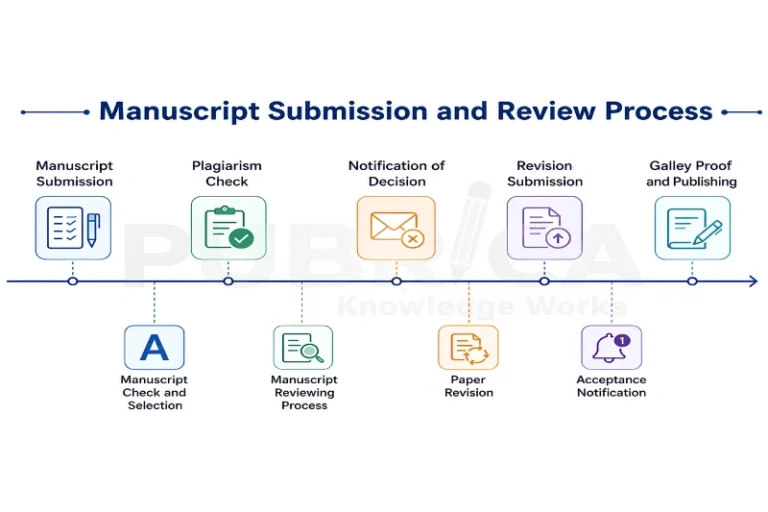
Typical publication workflow showing manuscript submission, research paper plagiarism check, plagiarism screening, peer review, revision, and final publication.
2. Why Plagiarism Checking Matters
Detection of plagiarism is an important measure that prevents publishing fraud. This process ensures the detection of duplication before the manuscript undergoes peer review and submission for publication. [3]
Advantages of using a plagiarism checker include:
- Maintaining the integrity and authenticity of academic work
- Avoidance of copyright infringement
- Imparting originality to the manuscript
Numerous journals rely on tools like Turnitin, iThenticate, and Crossref Similarity Check for detecting similarities in the submitted papers, highlighting the importance of plagiarism in research publication.
3. Common Types of Plagiarism
Researchers may unintentionally commit plagiarism due to poor citation practices or lack of awareness.
Type of Plagiarism | Description |
Direct Plagiarism | Copying text word-for-word without citation |
Self-Plagiarism | Reusing previously published work without disclosure |
Mosaic Plagiarism | Combining copied phrases with original content |
Accidental Plagiarism | Incorrect citation or paraphrasing |
Source-Based Plagiarism | Misrepresenting or incorrectly citing sources |
Understanding these forms helps researchers avoid ethical violations during manuscript preparation, making plagiarism checking for journal publication essential.
4. Role of Plagiarism Detection Software
Current anti-plagiarism software uses manuscript comparisons with vast databases of published articles, books, conference papers, websites, and university archives.
Functions of Plagiarism Software
- Detects duplication or similarity of text
- Creates similarity reports
- Points out citation problems
- Supports the editor while evaluating the manuscript
It must be borne in mind that a strict mathematical approach to similarity percentages would not do. Editor’s discretion is required because similar texts can arise naturally due to common vocabulary, citations, and methodology.
5. Impact on Journal Publication
Most reputable journals have strict plagiarism rules. Articles with high plagiarism might be subjected to: [4]
- Immediate rejection
- Revision request
- Ethical inquiry
- Retracting the published article
Below is a table explaining the implications of plagiarism checking for journal publication while publishing.
Publication Stage | Purpose of Plagiarism Check |
Manuscript Preparation | Improve originality before submission |
Editorial Screening | Detect duplication and ethical concerns |
Peer Review | Support evaluation of research integrity |
Publication Decision | Ensure compliance with journal policies |
Post-Publication Review | Investigate potential misconduct |
6. Essential Publication Practices for Researchers
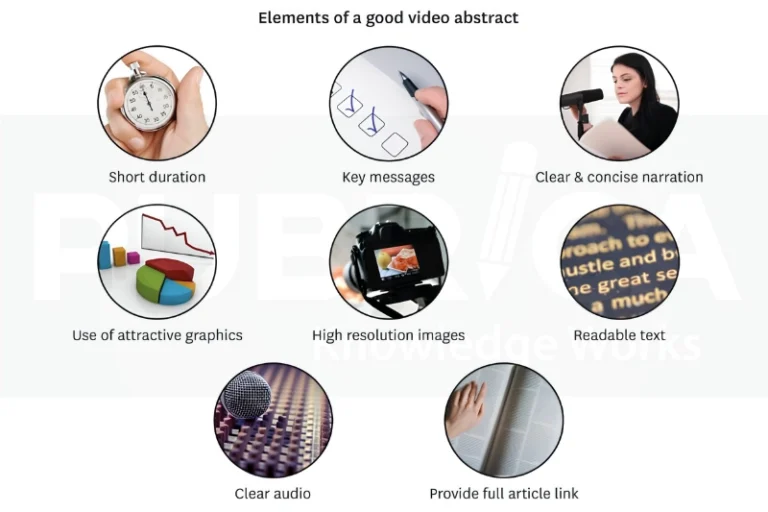
The following guidelines can be followed to prevent plagiarism issues: [5]
- Always cite sources: Give credit to original authors to maintain integrity and allow verification.
- Use quotation marks for quotes: Show exact words clearly and cite the source.
- Paraphrase when needed: Rewrite ideas in your own words and still cite the source.
- Keep references: Record all sources for accurate citations and easier review.
- Check for plagiarism: Use tools to ensure originality and proper attribution.
Following these guidelines will improve the credibility of academic papers.
7. Challenges in Plagiarism Assessment
While plagiarism software can be helpful, it does have its weaknesses. The similarity score might highlight common phrases or technical jargon that do not amount to plagiarism. In addition, idea plagiarism and wrong paraphrasing are sometimes difficult to detect by the software.
It is therefore prudent to view plagiarism checking in publication process as an auxiliary tool to ethics and professional editing.
Connect with us to explore how we can support you in maintaining academic integrity and enhancing the visibility of your research across the world!
Conclusion
Checking for plagiarism has become an essential part of the publishing process. Not only does it help maintain academic integrity and protect intellectual property, but it also improves the quality of scientific literature. With the help of plagiarism detection software and careful writing on the part of researchers, it becomes possible to ensure that plagiarism in research publication is minimized and scientific literature is produced according to the required standards of originality.
How Important Is Plagiarism Checking in the Publication Process? Our Pubrica consultants are here to guide you. [Get Expert Publishing Support] or [Schedule a Free Consultation]
Frequently Asked Questions (FAQs)
Yes. Journals may reject manuscripts with excessive plagiarism or request revisions if the similarity level exceeds their acceptable limits.
Researchers can avoid plagiarism by properly citing sources, using quotation marks for direct quotes, paraphrasing correctly, and checking their work with plagiarism detection software.
References
- Lalwani N. (2025). Plagiarism in Publications: All about Being Fair!. The Indian journal of radiology & imaging, 35(Suppl 1), S36–S45. https://doi.org/10.1055/s-0044-1791745
- Amobonye, A., Lalung, J., Mheta, G., & Pillai, S. (2024). Writing a Scientific Review Article: Comprehensive Insights for Beginners. TheScientificWorldJournal, 2024, 7822269. https://doi.org/10.1155/2024/7822269
- Zimba, O., & Gasparyan, A. Y. (2021). Plagiarism detection and prevention: a primer for researchers. Reumatologia, 59(3), 132–137. https://doi.org/10.5114/reum.2021.105974
- Sharma, M., Sarin, A., Gupta, P., Sachdeva, S., & Desai, A. V. (2014). Journal impact factor: its use, significance and limitations. World journal of nuclear medicine, 13(2), 146. https://doi.org/10.4103/1450-1147.139151
- Tarkang, E. E., Kweku, M., & Zotor, F. B. (2017). Publication Practices and Responsible Authorship: A Review Article. Journal of public health in Africa, 8(1), 723. https://doi.org/10.4081/jphia.2017.723