
- Services
- Discovery & Intelligence Services
- Publication Support Services
- Sample Work
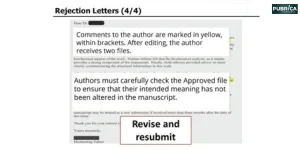
Publication Support Service
- Editing & Translation
-
Editing and Translation Services
- Sample Work

Editing and Translation Service
-
- Research Services
- Sample Work
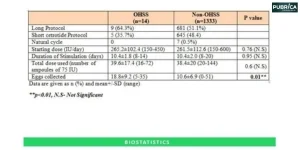
Research Services
- Physician Writing
- Sample Work
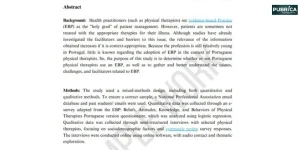
Physician Writing Service
- Statistical Analyses
- Sample Work
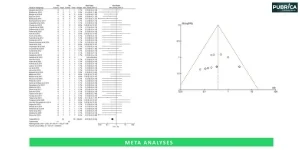
Statistical Analyses
- Data Collection
- AI and ML Services
- Sample Work
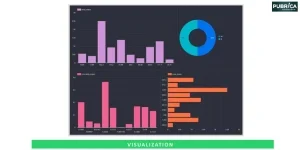
AI and ML Services
- Medical Writing
- Sample Work
Medical Writing
- Research Impact
- Sample Work
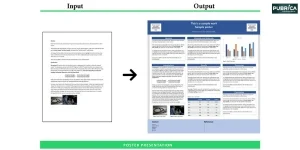
Research Impact
- Medical & Scientific Communication
- Sample Work
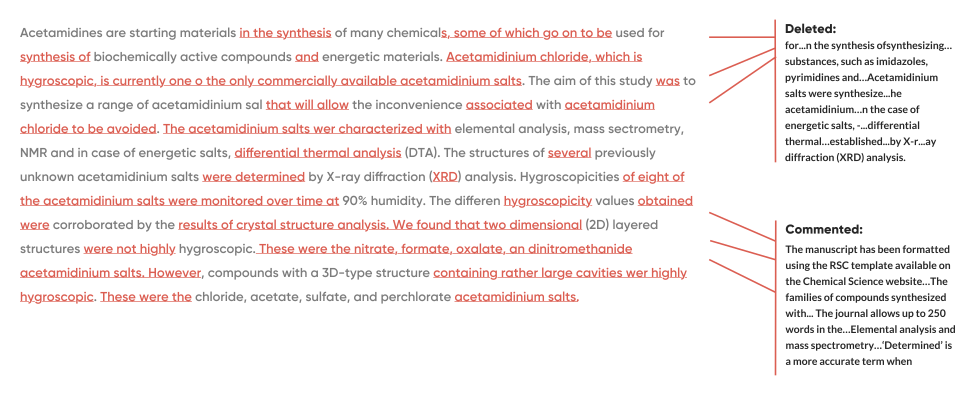
Medical & Scientific Communication
- Medico Legal Services
- Educational Content
- Academic Editorial Services
- Sample Work
Academic Editorial Services
- Educational Editorial Service
-
Education Editorial Services
- Sample Work
Education Editorial Services
-
- Industries
- Subjects
- About Us
- Academy
- Insights
- Contact Us
Single-Blind, Double-Blind or Open? Choosing a Peer-Review Model for Your Paper
High-Impact Journals
- What Is the Main Peer-Review Models?
- Single-Blind vs Double-Blind vs Open Review
- Why Does Reviewer Anonymity Matter?
- Transparency and Accountability in Open Review
- How Should Authors Choose a Peer-Review Model?
- Current Trend: Transparent and Hybrid Peer Review
- Emerging Issue: Artificial Intelligence in Peer Review
- Ethical Considerations Across Peer-Review Models
- Practical Decision Framework
- Conclusion
Interesting topics
Single-Blind, Double-Blind or Open? Choosing a Peer-Review Model for Your Paper
Peer review is still one of the key methods used in the quality control process in scholarly publishing, but more journals apply various systems to organize the process of managing reviewer anonymity, author identification, transparency and accountability. There are three systems discussed in relation to peer review – single blind review, double blind review, and open peer review. COPE mentions that the peer review may also differ in terms of timing, identification, reporting and communication.
Selecting a review model is not just a matter of personal choice. Authors need to know how these systems work and what are the possible advantages and limitations of each of them. Understanding peer review models is therefore important for researchers preparing a manuscript for publication. [1]
1. What Is the Main Peer-Review Models?
Single-Blind Peer Review: In a single-blind scheme, reviewers usually know the identity of the authors, and the identity of the reviewers is not known to the authors. This is the most popular traditional method.
The main benefit of this scheme is the anonymity of the reviewers, which allows reviewers to make critical comments without linking them to their identity. This traditional approach is one of the most discussed types of peer review in the journal peer review process. [1]
Double-Blind Peer Review: In the double-blind, or double-anonymized, peer review scheme, both reviewers and authors are anonymized. Authors should remove any identifiable information in the manuscript as required by the journal.
Nature-branded and Communications journals use the double-anonymized scheme at present, showing the relevance of this scheme in modern publishing. Single-blind vs double-blind peer review is therefore an important consideration for researchers when preparing manuscripts for different journals. [1]
Open Peer Review: The open peer review improves transparency by making visible the reviewer identity, reviews, authors’ replies or various combinations of these. However, there is no unique scheme called “open peer review”; journals have different levels of openness. [1]
There is a modern example of the open peer review provided by Nature: since June 2025, all the research articles published in Nature include referees’ reports and the replies from the authors.
2. Single-Blind vs Double-Blind vs Open Review
|
Feature |
Single-Blind |
Double-Blind |
Open Peer Review |
|
Author identity known to reviewer |
Yes |
No |
Usually yes |
|
Reviewer identity known to author |
No |
No |
Often yes |
|
Review reports published |
Usually no |
Usually no |
May be published |
|
Main emphasis |
Reviewer anonymity |
Mutual anonymity |
Transparency |
|
Potential concern |
Author-related bias |
Complete anonymization can be difficult |
Reviewer reluctance or interpersonal pressure |
|
Best suited consideration |
Established journal workflows |
Reducing identity-based influence |
Transparent publishing environments |
No model should automatically be considered universally superior. Evidence comparing review quality across models is mixed, and journal practices vary substantially by discipline and publication venue.
3. Why Does Reviewer Anonymity Matter?
Anonymity is designed to have an impact on the review process and shield reviewers from any professional or interpersonal repercussions.
Single- and double-anonymization methods can assist reviewers in concentrating on the content of the manuscript rather than the interpersonal relations with the authors. Double anonymisation aims at limiting the impact of author identity on the manuscript evaluation.
This is an important consideration when blind peer review is explained to authors, because anonymity can reduce identity-related influence but cannot always guarantee complete concealment.[2]
4. Transparency and Accountability in Open Review
Open review works in a different way, which involves bringing certain parts of the review process out into the open. This can be achieved by:
- Publishing the reviews of the reviewers.
- Naming the reviewers.
- Publishing the response of the author.
- Publishing the letter of the editor’s decision.
Thus, open review can establish an accessible history of the evaluation of scholarly debates. For instance, the Nature transparent review process can include the following: reviewer comments, author’s reply letter, and the letter of editor’s decision.
Nevertheless, open review needs to consider the confidentiality of the reviewer, their willingness to participate, and the policies of the journal. These factors are important components of the modern manuscript review process.
5. How Should Authors Choose a Peer-Review Model?
In most cases, the authors cannot choose any type of review they want independently. It is the journal that decides what kind of review system is used, though in some cases the authors can choose between different kinds of reviews provided by the journal.[3]
Before the submission, the researchers need to familiarize themselves with the journal’s peer-review policy and determine:
- If the identities of reviewers are kept anonymous;
- If the identities of the authors are kept anonymous;
- If the review reports are published;
- If the reviewers can sign their reviews;
- If the reviewing process will become part of the article’s history.
Understanding the journal peer review process before submission can help peer review for researchers become more predictable and can help authors prepare their manuscripts according to the journal’s requirements.
6. Current Trend: Transparent and Hybrid Peer Review
Peer reviewing is no longer limited to the question of whether it should be “blind” or “open.” With the help of modern publishing infrastructure, one may create an amalgam of different approaches, such as the anonymity of reviewers during peer reviewing and subsequent publication of their reports in case of paper acceptance.
The shift can be seen in various major publishing contexts. The shift of Nature in 2025 towards automatically attaching referee reports and authors’ responses to published scientific articles is a clear step towards transparency. [4]
7. Emerging Issue: Artificial Intelligence in Peer Review
The other more recent challenge is related to the use of generative AI by reviewers. The AI tools might be helpful in performing tasks related to language checking, summarization, and methodological critique. However, the use of AI tools creates some concerns regarding privacy, reliability, accountability, and disclosure.
This emerging issue is becoming part of discussions about peer review for researchers and the future of the manuscript review process.
8. Ethical Considerations Across Peer-Review Models
Irrespective of the type of reviewer chosen, all the parties should ensure that there is confidentiality maintained, conflicts of interest recognized, evidence-based comments provided, and any unnecessary criticism avoided. COPE stresses the point that responsible peer reviewing is crucial in the maintenance of the scholarly record.[5]
Ethical Consideration | What Authors and Reviewers Should Consider |
Confidentiality | Protect unpublished manuscript information |
Conflicts of interest | Disclose relevant personal or professional relationships |
Reviewer bias | Focus assessment on scholarly merit |
Data integrity | Avoid inappropriate use of unpublished information |
AI use | Follow journal-specific AI policies |
Transparency | Clearly understand what aspects of review will become public |
These ethical principles apply across different types of peer review, including single-blind, double-blind, and open peer review.
9. Practical Decision Framework
Such a basic decision process could be useful to guide authors:
Target journal identified → Review peer-review process → Identify anonymity needs → Investigate transparency options → Review AI and confidentiality policies → Prepare manuscripts accordingly.
In double anonymous reviewing, authors need to strip down unnecessary identifying information where necessary at the target journal. In transparent reviewing, authors need to know that reports or responses will be publicly available.
Connect with us to explore how we can support you in maintaining academic integrity and enhancing the visibility of your research across the world!
Conclusion
Single blind, double blind, and open peer reviews are some of the approaches that can be used to deal with issues of anonymity, transparency, and accountability in the publishing process.
Understanding peer review models, single-blind vs double-blind peer review, open peer review, and the different types of peer review can help researchers better understand the journal peer review process, prepare for the manuscript review process, and make informed decisions about peer review for researchers.
Single-Blind, Double-Blind or Open? Choosing a Peer-Review Model for Your Paper. Our Pubrica consultants are here to guide you. [Get Expert Publishing Support] or [Schedule a Free Consultation]
Frequently Asked Questions (FAQs)
The main models are single-blind, double-blind, and open peer review. The model used depends on the journal.
In single-blind review, reviewers know the authors’ identities. In double-blind review, both authors and reviewers are anonymised where possible.
Open peer review makes some review information public, such as reviewer identities, reports, or author responses, depending on the journal.
The journal usually determines the model. Authors should check the journal’s peer review process, anonymity rules, and review-report policy before submission.
Reviewers should protect confidentiality, disclose conflicts of interest, and follow the journal’s AI policy. Confidential manuscript information should not be entered into external AI tools unless permitted.
References
- Moylan, E. C., Harold, S., O’Neill, C., & Kowalczuk, M. K. (2014). Open, single-blind, double-blind: which peer review process do you prefer?. BMC pharmacology & toxicology, 15, 55. https://doi.org/10.1186/2050-6511-15-55
- Rastogi, C., Song, X., Jin, Z., Stelmakh, I., Daumé, H., 3rd, Zhang, K., & Shah, N. B. (2024). A randomized controlled trial on anonymizing reviewers to each other in peer review discussions. PloS one, 19(12), e0315674. https://doi.org/10.1371/journal.pone
- Zimba, O., & Gasparyan, A. Y. (2021). Peer review guidance: a primer for researchers. Reumatologia, 59(1), 3–8. https://doi.org/10.5114/reum.2021.
- Aczel, B., Barwich, A. S., Diekman, A. B., Fishbach, A., Goldstone, R. L., Gomez, P., Gundersen, O. E., von Hippel, P. T., Holcombe, A. O., Lewandowsky, S., Nozari, N., Pestilli, F., & Ioannidis, J. P. A. (2025). The present and future of peer review: Ideas, interventions, and evidence. Proceedings of the National Academy of Sciences of the United States of America, 122(5), e2401232121. https://doi.org/10.1073/pnas.240123
- Barrow JM, Brannan GD, Khandhar PB. Research Ethics. [Updated 2022 Sep 18]. In: StatPearls [Internet]. Treasure Island (FL): StatPearls Publishing; 2026 Jan-. Available from: https://www.ncbi.nlm.nih.gov/books