
- Services
- Discovery & Intelligence Services
- Publication Support Services
- Sample Work
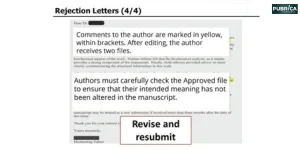
Publication Support Service
- Editing & Translation
-
Editing and Translation Services
- Sample Work

Editing and Translation Service
-
- Research Services
- Sample Work

Research Services
- Physician Writing
- Sample Work
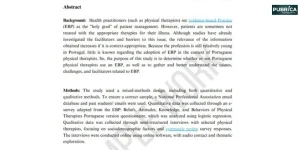
Physician Writing Service
- Statistical Analyses
- Sample Work
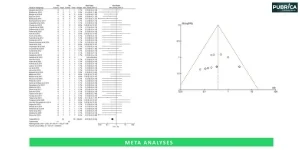
Statistical Analyses
- Data Collection
- AI and ML Services
- Sample Work
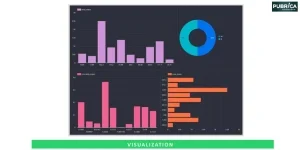
AI and ML Services
- Medical Writing
- Sample Work
Medical Writing
- Research Impact
- Sample Work
Research Impact
- Medical & Scientific Communication
- Sample Work
Medical & Scientific Communication
- Medico Legal Services
- Educational Content
- Academic Editorial Services
- Sample Work
Academic Editorial Services
- Educational Editorial Service
-
Education Editorial Services
- Sample Work
Education Editorial Services
-
- Industries
- Subjects
- About Us
- Academy
- Insights
- Contact Us
Targeted literature searches are a fundamental part of writing clinical manuscripts that will meet the standards of high-quality journals and contribute meaningfully to evidence-based practice. When physicians write clinical manuscripts, utilizing a targeted literature search can identify high-quality, relevant, and current evidence. While a general literature review is useful, a targeted literature search is specific to the clinical question and should be completed through frameworks established, such as PICO (Population, Intervention, Comparator, Outcome) and PRISMA [1].
AI and Peer Review: Collaborative Intelligence and Human Expertise
- Home
- Academy
- Research Impact
- AI and Peer Review: Collaborative Intelligence and Human Expertise
High-Impact Journals
Interesting topics
AI and Peer Review: Collaborative Intelligence and Human Expertise
Peer review is a fundamental component of ensuring the quality and integrity of research. There are, however, issues with peer review; along with the concept of reviewer fatigue, other issues can include long turnaround times and subjective bias. Artificial intelligence (AI) offers avenues to augment human capacity and expertise, increase efficiency of processes, and improve transparency in peer review. This article will examine how AI may assist, disrupt, and change peer review. [1]
1. Potential Applications of AI in Peer Review
AI can play a crucial role in several stages of peer review, assisting editors, reviewers, and authors alike. [2]
Stage | AI Function | Benefits |
Pre-screening | Plagiarism checks, formatting verification, and ethical compliance | Saves editorial time and reduces desk rejections |
Reviewer Matching | Automated reviewer selection using topic modeling and bibliometric data | Improves reviewer manuscript fit |
Content Summarization | Generating abstracts or summaries of long manuscripts | Helps editors and reviewers quickly grasp key ideas |
Quality Assessment | Detecting data inconsistencies, citation anomalies, and figure manipulation | Enhances integrity and reproducibility |
Sentiment & Bias Detection | Identifying biased or unconstructive reviewer comments | Promotes fairness and professionalism |
2. Potential Problems of AI in Peer Review
Although AI brings changes in efficiency, it brings questions regarding ethics and process as well. [3]
Challenge and Risks
- Data Privacy: The content of a manuscript may still include data that has yet to be published, or confidential data that AI systems could act on.
- Bias: AI models based on biased training data may reinforce systemic inequities in the selection of reviewers or in their evaluations.
- Lack of Transparency: Many AI systems are black boxes, making any decision made difficult to interpret or audit.
- Over-Reliance: Editors may have an excessive level of trust in AI outputs with less than adequate human review.
- Plagiarism or Data Leaky: Using generative AI tools may result in author text being leaked or re-generated text that can impair an organization or the review process.
3. Current Views and Guidelines on AI Use in Peer Review
Publishing organizations are beginning to establish policies for responsible AI use:[4]
Organization | Guideline Summary |
COPE (Committee on Publication Ethics) | AI should not be listed as a reviewer; reviewers must disclose any AI assistance. |
Nature Publishing Group | AI tools may be used only for grammar or summary assistance, not for evaluation. |
Elsevier | Reviewers using AI must ensure confidentiality and accuracy and disclose its use. |
3.1. Common Guiding Principles
- Human responsibility must continue to be the focus.
- AI utilization should be transparent and always be limited to supportive modalities and never substitute expert judgment.
4. Looking Ahead: Important Considerations
Building Explainable AI (XAI): Models must provide valid and credible reasons for their recommendations [5]
- Ethical oversight: Journals may need boards or checklists on the ethics of AI
- Training reviewers: Researchers should learn to use AI in a responsible way
- Global equity: AI should not disadvantage researchers in underrepresented geographies or languages.
Connect with us to explore how we can support you in maintaining academic integrity and enhancing the visibility of your research across the world!
Conclusion
AI has the potential to transform the peer review process through collaborative intelligence, enhancing the process’s efficiency while still being overseen by humans. The future of peer review will involve an appropriate relationship of enhancing decisions through AI as a powerful tool, informed by human ethics, transparency, and expertise.
AI and Peer Review: Collaborative Intelligence and Human Expertise. Our Pubrica consultants are here to guide you. [Get Expert Publishing Support] or [Schedule a Free Consultation]
References
- Overcash J. (2025). Human Expertise in an AI-Collaborative Peer-Review Process. Oncology nursing forum, 52(5), 316–317. https://doi.org/10.1188/25.ONF.316-317
- Doskaliuk, B., Zimba, O., Yessirkepov, M., Klishch, I., & Yatsyshyn, R. (2025). Artificial Intelligence in Peer Review: Enhancing Efficiency While Preserving Integrity. Journal of Korean medical science, 40(7), e92. https://doi.org/10.3346/jkms.2025.40.e92
- Kemal Ö. (2025). Artificial Intelligence in Peer Review: Ethical Risks and Practical Limits. Turkish archives of otorhinolaryngology, 63(3), 108–109. https://doi.org/10.4274/tao.2025.2025-8-12
- Leung, T. I., de Azevedo Cardoso, T., Mavragani, A., & Eysenbach, G. (2023). Best practices for using AI tools as an author, peer reviewer, or editor. Journal of Medical Internet Research, 25, e51584. https://doi.org/10.2196/51584
- What is explainable AI (XAI)? (2025, July 29). com. https://www.ibm.com/think/topics/explainable-ai