- Services
- Discovery & Intelligence Services
- Publication Support Services
- Sample Work
Publication Support Service
- Editing & Translation
-
Editing and Translation Services
- Sample Work
Editing and Translation Service
-
- Research Services
- Sample Work
Research Services
- Physician Writing
- Sample Work
Physician Writing Service
- Statistical Analyses
- Sample Work
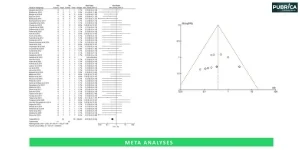
Statistical Analyses
- Data Collection
- AI and ML Services
- Sample Work
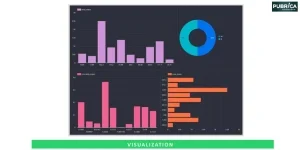
AI and ML Services
- Medical Writing
- Sample Work
Medical Writing
- Research Impact
- Sample Work
Research Impact
- Medical & Scientific Communication
- Sample Work
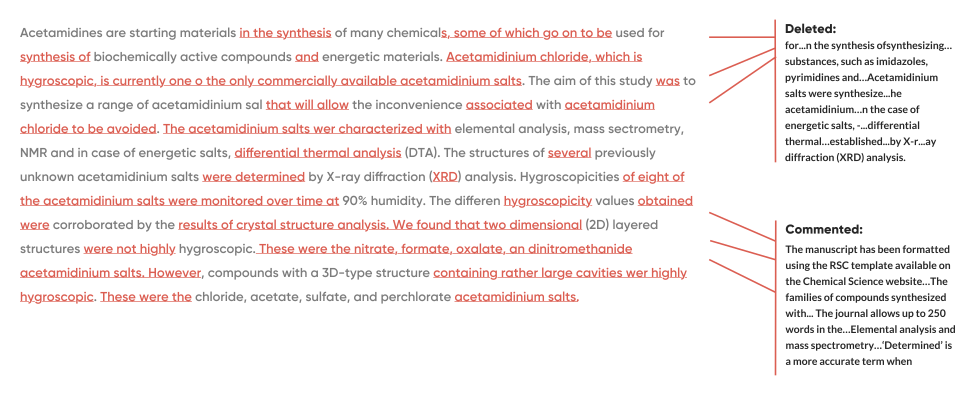
Medical & Scientific Communication
- Medico Legal Services
- Educational Content
- Academic Editorial Services
- Sample Work
Academic Editorial Services
- Educational Editorial Service
-
Education Editorial Services
- Sample Work
Education Editorial Services
-
- Industries
- Subjects
- About Us
- Academy
- Insights
- Contact Us
Targeted literature searches are a fundamental part of writing clinical manuscripts that will meet the standards of high-quality journals and contribute meaningfully to evidence-based practice. When physicians write clinical manuscripts, utilizing a targeted literature search can identify high-quality, relevant, and current evidence. While a general literature review is useful, a targeted literature search is specific to the clinical question and should be completed through frameworks established, such as PICO (Population, Intervention, Comparator, Outcome) and PRISMA [1].
Rethinking Peer Review in the AI Era: Peer Review Week 2025
- Home
- Academy
- Research Impact
- Rethinking Peer Review in the AI Era: Peer Review Week 2025
High-Impact Journals
Interesting topics
Rethinking Peer Review in the AI Era: Peer Review Week 2025
Peer Review Week 2025 examines the ways AI will fully shift the peer review processes – improving efficiency, transparency, and reviewer support. To be clear, there should be a desire to supplement human decision-making, not replace it, when AI augments human judgment in evaluating research. This will require ethically sound consideration, human oversight, and collaboration among researchers, publishers, and, ultimately, AI creators.[1]
1. Why Rethinking Peer Review in the AI Era Matters
Peer review provides the robust, trustworthy, scholarly, and credible communication necessary to safeguard research integrity. Yet artificial intelligence (AI) now changes the trajectory of how knowledge is produced, communicated, and evaluated. The use of AI tools has already permeated the processes around readying a manuscript, including scripting, organizing tools, and identifying potential content plagiarism, matching potential reviewers, and even AI-generated reviewer feedback. The academy has more impetus than ever to rethink peer review.[2]
Key reasons why these matters:
- Promotes integrity in digital research.
- Increases efficiency and decreases reviewer burden.
- Addresses bias and inclusivity in selecting reviewers.
- Serves as a barrier against the misuse of AI for improper intent.
2. Ethical Dimensions to Consider
- Transparency: Make it clear that AI was involved in the review process
- Accountability: Involve a human to check findings supported by AI
- Fairness: Avoid algorithmic bias when pairing and recommending reviewers or assessing submissions.
- Trust: Build trust among authors, reviewers, and readers.
3. AI in Peer Review – Opportunities vs. Challenges
Opportunities | Challenges |
Faster reviewer identification | Algorithmic bias in reviewer selection |
Improved plagiarism and error detection | Ethical misuse of AI-generated reviews |
Enhanced consistency in review quality | Reduced role of human critical judgment |
Support for multilingual manuscript review | Risk of over-reliance on automation |
4. Peer Review Week 2025: A Platform to Lead the Change
Peer Review Week, 2025, with the theme, Rethinking Peer Review in the AI Era, seeks to provoke a global discussion around new thought leadership, best practices, and collaboratively developed ethical guidelines among scholarly communities, publishers, and institutions. This initiative is aimed at also helping to generate some thinking about how to responsibly and morally use AI to address long-standing issues in peer review, like reviewer burden, inequity, lack of transparency, etc.[3]
Highlighted activities include:
- Panel discussions focused on AI-assisted peer review tools.
- Workshops invested in responsible use of large language models in research evaluation.
- Collaborative forums to draft global ethical guidelines.
5. Why Now and How You Can Engage
The sense of urgency relates to the rapid pace of innovation in Artificial Intelligence, as we have already seen that AI is advancing much quicker than traditional academic governance structures are able to keep up with. Because the research community should lead and shape the role of AI in peer review, rather than simply responding to it, it is an opportunity to be proactive.[4]
6. Ways to Engage
- Attend webinars and workshops associated with Peer Review Week.
- Lend your voice to efforts to support institutional policies on AI transparency in peer review.
- Partner with others to explore ways to develop global standards for ethical AI
- Contribute to sharing case studies and other experiences around the use of AI in the review process.
Connect with us to explore how we can support you in maintaining academic integrity and enhancing the visibility of your research across the world!
Conclusion
The use of AI peer review creates opportunities but also challenges. It can offer increased efficiency, less fatigue for reviewers, and add transparency. But we must advance the implementation of AI according to ethical guidelines that assure the integrity of research and science. These guidelines must come from scientists, publishers, and developers of AI working collaboratively. Peer Review Week 2025 is an ideal opportunity for discussions on the responsible use of AI. Embracing it now will be the first step in creating a future where technology can replace our human judgment in journalistic publishing without bias.
Rethinking Peer Review in the AI Era: Envisioning a Tech-Forward Future in Peer Review Week 2025? Our Pubrica consultants are here to guide you. [Get Expert Publishing Support] or [Schedule a Free Consultation]
References
- (N.d.). Stanford.edu. Retrieved September 29, 2025, from https://laneblog.stanford.edu/2025/09/15/rethinking-peer-review-in-the-ai-era/
- Peer review week 2025: Rethinking peer review in the AI era. (2025, September 9). Amnet. https://amnet.com/peer-review-week-2025-rethinking-peer-review-in-the-ai-era/
- Peer Review Week (PRW) is a global celebration of the vital role peer review plays in ensuring the quality and integrity of research. (n.d.). Peer Review Week. Retrieved September 29, 2025, from https://peerreviewweek.net/
- Doskaliuk, B., Zimba, O., Yessirkepov, M., Klishch, I., & Yatsyshyn, R. (2025). Artificial Intelligence in Peer Review: Enhancing Efficiency While Preserving Integrity. Journal of Korean medical science, 40(7), e92. https://doi.org/10.3346/jkms.2025.40.e92