Contents
On this page
- 1. Core Components of a Journal Submission Service
- 2. The Journal Submission Process: Step-by-Step
- 3. Benefits of Using a Journal Submission Service
- 4. Example: How Journal Submission Services Simplify Publishing
- 5. Journal Submission Service vs. Traditional Submission
- 6. Ethical and Compliance Considerations
- 7. Choosing the Right Journal Submission Service
- Conclusion
- References
Academy · Journal Submission
What is a Journal Submission Service and How Does It Help You Get Published
Learn what a journal submission service is, how it simplifies manuscript submission, & how improve your chances of publication success.
- Home
- Academy
- Journal Submission
- What is a Journal Submission Service and How Does It Help You Get Published
Table of Content
1. Core Components of a Journal Submission Service
2. The Journal Submission Process: Step-by-Step
3. Benefits of Using a Journal Submission Service
4. How Journal Submission Services Simplify Publishing
5. Journal Submission Service vs. Traditional Submission
6. Ethical and Compliance Considerations
7. Choosing the Right Journal Submission Service
A journal submission service is a professional publication support service that assists researchers and academics in managing the administrative and technical tasks involved in submitting a manuscript to a scholarly journal. These services help ensure that manuscripts meet journal-specific guidelines, prepare cover letters, manage online submission systems, and handle communication with editors.
By streamlining the submission process, journal submission services help reduce rejection risks, save author time, and increase the likelihood of publication success.
According to Dantas-Torres F (2022) [1], nearly 40% of manuscript rejections occur due to poor formatting, unclear writing, or failure to meet journal guidelines rather than the quality of research itself. This highlights the importance of expert support during the submission process. [2]
1. Core Components of a Journal Submission Service
A professional manuscript submission support provider offers a comprehensive range of solutions designed to meet journal expectations and editorial standards.
- Journal selection and matching: Helping identify and choose the best journals for the paper’s focus, audience, and impact factor. [3]
- Formatting and compliance: Ensuring the manuscript adheres to rigorous journal guidelines (word limits, reference style, figures, tables, etc.).
- Submission management: Handling the entire submission process, including creating author accounts, uploading files, and managing metadata. [4]
- Cover letter and reviewer response assistance: Preparing professional communication materials to accompany the submission.
- Post-submission support: Facilitating revisions, resubmissions, and communication with the editors.
2. The Journal Submission Process: Step-by-Step
Each stage requires meticulous attention. Journal Submission Services streamline this process through structured workflows and expert guidance.
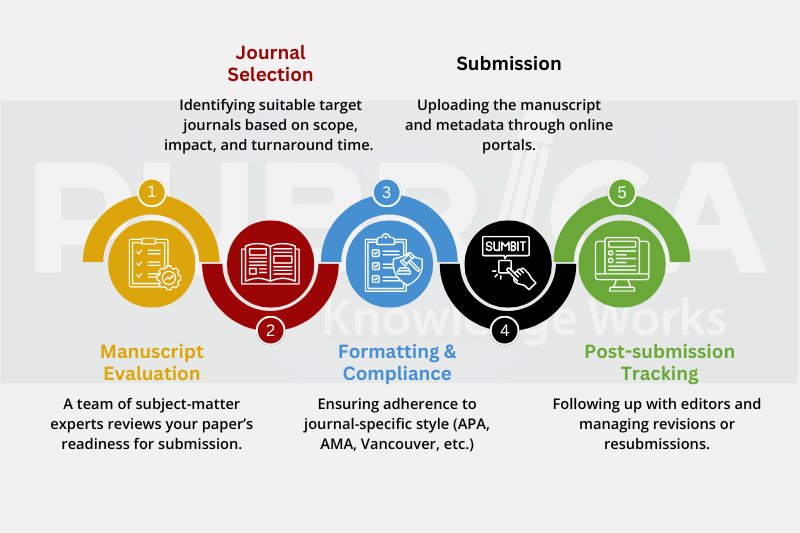
Figure 1. Stages of Journal Submission Process
3. Benefits of Using a Journal Submission Service
Using a professional journal submission service offers several distinct advantages:
Saves Time and Effort | Researchers often juggle teaching, clinical work, or experiments. Delegating administrative and technical submission tasks allows them to focus on research quality. |
Increases Acceptance Rates | Professionally formatted and well-presented manuscripts are more likely to pass editorial screening. A study found that authors using editing and submission services had 25% higher acceptance rates compared to those who did not. |
Ensures Compliance with Journal Guidelines | Every journal has unique submission rules. A small oversight, such as incorrect reference style (APA vs. Vancouver) or word count, can lead to rejection without review. |
Enhances Professional Presentation | Cover letters, figure legends, and author declarations crafted by experts make the submission package appear professional and ethical. |
Manages Communication Efficiently | Submission portals and editorial systems can be complex. Services manage correspondences, reviewer feedback, and revision submissions promptly and accurately. |
Overall, professional research paper submission help minimizes administrative burdens while enhancing submission quality.
4. Example: How Journal Submission Services Simplify Publishing
Case Example: Dr. Meera Sharma, a postdoctoral researcher in oncology, completed her manuscript on “Novel Biomarkers for Breast Cancer Detection.” Despite strong data, her paper faced two desk rejections due to formatting inconsistencies and missing ethical documentation. After engaging with Pubrica’s journal submission service, her paper was revised, formatted in the Journal of Clinical Oncology style, and resubmitted. Within six weeks, she received a “Minor Revision” notice and eventually published her article successfully.
This example illustrates how professional assistance can bridge the gap between good research and successful publication.
5. Journal Submission Service vs. Traditional Submission
Aspect | Self-Submission | Journal Submission Service |
Time Spent | 20–40 hours | 4–6 hours (expert-assisted) |
Formatting Errors | Common | Minimal |
Journal Selection | Often limited | Data-driven recommendations |
Acceptance Rate | ~30% | ~55% (with editing & compliance) |
Support with Revisions | Researcher-dependent | Full assistance provided |
6. Ethical and Compliance Considerations
Journal Submission Services follow COPE (Committee on Publication Ethics) guidelines and ensure that manuscripts adhere to ethical standards. Providers do not alter data or conclusions but focus on presentation and compliance. Authors retain full authorship and intellectual rights. [5]
Key compliance checks include:
- Authorship and contributor verification
- Plagiarism detection (<10% similarity)
- Conflict-of-interest declarations
- Ethical approval documentation for human/animal studies
7. Choosing the Right Journal Submission Service
Selecting a reliable academic publishing assistance provider requires considering several factors:
- Subject specialization (e.g., life sciences, social sciences, engineering).
- Track record of successful publications in indexed journals.
- Transparency about pricing and turnaround time.
- Confidentiality policies and adherence to ethical guidelines.
- Availability of additional services, such as peer review response and journal recommendation reports.
Selecting a provider with PhD-qualified editors and subject-matter experts enhances quality assurance and credibility.
Conclusion
A Journal Submission Service acts as a bridge between your completed research and its successful publication. By providing expert formatting, compliance checking, and submission tracking, these services increase your manuscript’s visibility and acceptance potential. Whether you’re an early-career researcher or a seasoned academic juggling multiple commitments, professional manuscript submission support can simplify your path to publication success.
Ready to publish your research with confidence? Partner with Pubrica’s Journal Submission Experts for end-to-end support, from manuscript formatting to post-review resubmission.
Need support with this?
Pubrica’s writers, editors and statisticians work with authors on journal submission and related publication tasks. The authors keep ownership of the work and responsibility for its content. Talk to the team.
References
- Dantas-Torres F. (2022). Top 10 reasons your manuscript may be rejected without review. Parasites & vectors, 15(1), 418. https://doi.org/10.1186/s13071-022-05543-w
- Common reasons for rejection.” (n.d.). Springer Author & Reviewer Tutorials. https://www.springer.com/gp/authors-editors/authorandreviewertutorials/submitting-to-a-journal-and-peer-review/what-is-open-access/10285582?srsltid=
- (n.d.). How to submit a paper for publication in a journal. Elsevier. Retrieved from https://www.elsevier.com/researcher/author/submit-your-paper
- Taylor & Francis. (n.d.). Making your submission – Author Services. Taylor & Francis. Retrieved from https://authorservices.taylorandfrancis.com/publishing-your-research/making-your-submission/
- COPE. (2023). COPE Ethical Guidelines for Peer Reviewers. Committee on Publication Ethics.https://publicationethics.org