
- Services
- Discovery & Intelligence Services
- Publication Support Services
- Sample Work
Publication Support Service
- Editing & Translation
-
Editing and Translation Services
- Sample Work
Editing and Translation Service
-
- Research Services
- Sample Work
Research Services
- Physician Writing
- Sample Work
Physician Writing Service
- Statistical Analyses
- Sample Work
Statistical Analyses
- Data Collection
- AI and ML Services
- Sample Work
AI and ML Services
- Medical Writing
- Sample Work
Medical Writing
- Research Impact
- Sample Work
Research Impact
- Medical & Scientific Communication
- Sample Work
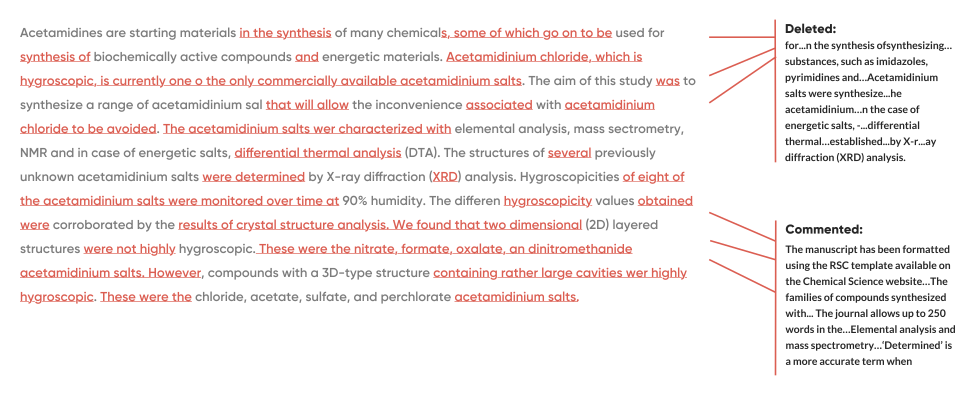
Medical & Scientific Communication
- Medico Legal Services
- Educational Content
- Academic Editorial Services
- Sample Work
Academic Editorial Services
- Educational Editorial Service
-
Education Editorial Services
- Sample Work
Education Editorial Services
-
- Industries
- Subjects
- About Us
- Academy
- Insights
- Contact Us
Why Good Research Gets Rejected: Proven Publication Strategies to Improve Journal Acceptance
High-Impact Journals
- Why High-Quality Research Gets Rejected
- Common Reasons for Journal Rejection
- Selecting the Right Journal for Successful Publication
- Writing a Publication-Ready Manuscript
- Importance of Research Methodology and Statistical Analysis
- Responding Effectively to Peer Review
- Publication Strategies That Improve Journal Acceptance
- Ethical Considerations in Scientific Publishing
- Conclusion
Interesting topics
Why Good Research Gets Rejected: Proven Publication Strategies to Improve Journal Acceptance
Publication in a peer-reviewed journal is a major achievement for researchers, but even well-conducted research is commonly rejected. It does not always mean that good research gets rejected, but rather something else, which may include problems with manuscript preparation, selection of a journal, reporting practices, and editor’s expectations. As the industry experts say, top-ranking journals reject from 70% to 95% of submitted manuscripts, so getting published becomes a very competitive process. Knowing the reasons for rejection and applying the right strategies will greatly increase chances for acceptance. [1]
The researcher who complies with journal guidelines, conducts well-grounded research, makes a strong scientific case, and follows ethical standards stands a greater chance of being successful. In this paper, I will talk about reasons why good research gets rejected and provide some publication strategies. Following effective journal acceptance strategies and research publication success strategies can help researchers improve manuscript quality and increase their chances of successful publication.
1. Why High-Quality Research Gets Rejected
Good research quality is not enough in itself for a study to be published. The editors make judgments about whether manuscripts are novel, robust, well presented, ethical, and relevant to their readers.
Some of the common causes are:
- Journal selection
- Sloppy writing of the manuscript
- Lack of novelty/significance
- Limitations in methods
- Lack of proper statistics
- Language and format problems
- Nonconformity to journal instructions
Even good research can be rejected because of these. Understanding these challenges and applying suitable publication support strategies for researchers can help improve manuscript quality before submission.
2. Common Reasons for Journal Rejection
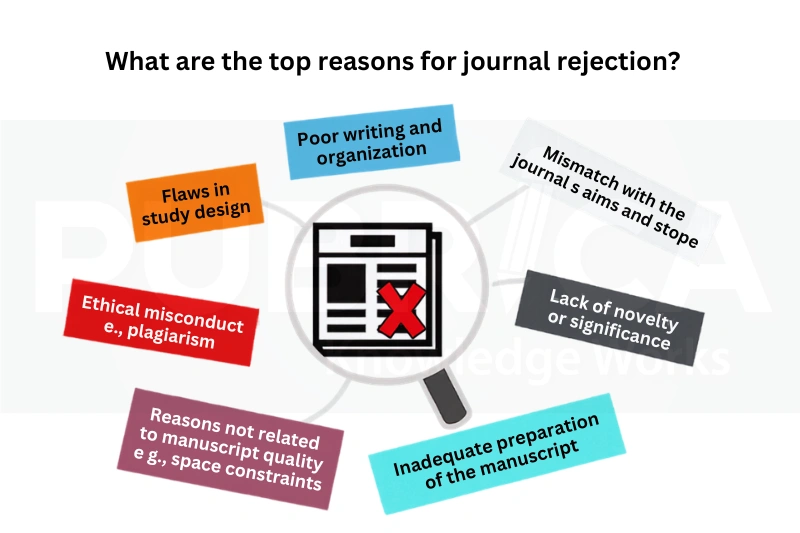
Reason | Impact on Publication |
Journal mismatch | Immediate desk rejection |
Poor research question | Low scientific significance |
Weak methodology | Questions research validity |
Incomplete literature review | Demonstrates insufficient background |
Statistical errors | Reduces confidence in findings |
Poor English and formatting | Limits readability |
Ethical concerns | Possible manuscript rejection |
Plagiarism or duplicate publication | Immediate rejection |
Editors often make an initial screening decision within a few days before peer review begins. Researchers can benefit from journal acceptance consulting services to identify possible weaknesses, improve manuscript preparation, and address issues before submission.
3. Selecting the Right Journal
Selection of a suitable journal is perhaps the most critical decision made for publication.
It is necessary to consider:
- Journal scope and aims
- Audience
- Impact factor or other metrics
- Acceptance rate
- Time for publication
- Open access policies
- Guidelines for authors
Sending manuscripts to journals that usually publish similar work increases chances of acceptance considerably. Proper journal selection is one of the important strategies for successful manuscript publication, as selecting a suitable journal improves the relevance of the manuscript and increases the possibility of acceptance.
4. Writing a Publication-Ready Manuscript
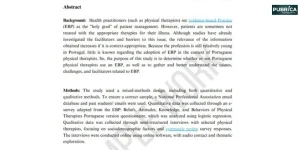
A well-written manuscript communicates scientific findings clearly and professionally. Every section should contribute to the overall research narrative. [2]
Section | Best Practice |
Title | Clear, concise, keyword-rich |
Abstract | Summarise objectives, methods, results, and conclusions |
Introduction | Define research gap and objectives |
Methods | Ensure transparency and reproducibility |
Results | Present findings objectively |
Discussion | Interpret results without exaggeration |
Conclusion | Highlight practical significance |
Clear scientific writing helps reviewers focus on the quality of the research rather than presentation issues. Professional manuscript preparation and manuscript acceptance rate improvement services can help researchers enhance language quality, formatting, and overall presentation according to journal expectations.
5. Importance of Research Methodology and Statistical Analysis
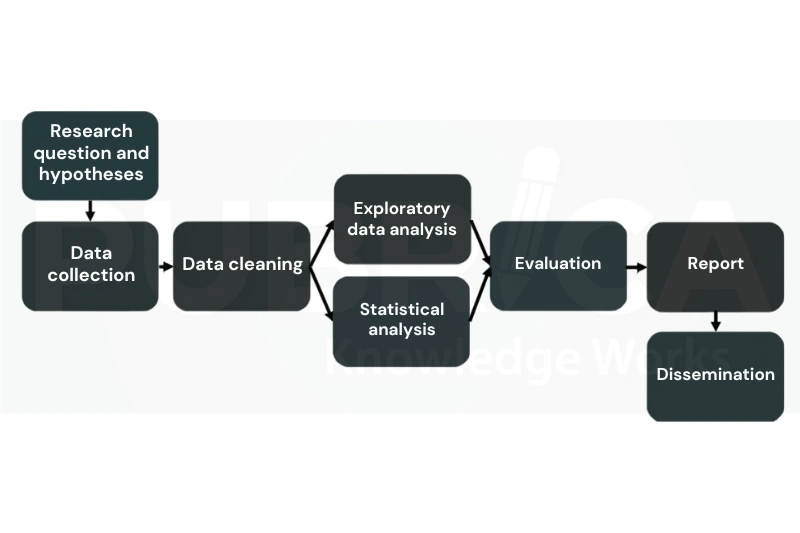
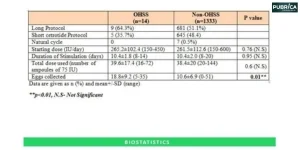
Many papers get rejected due to reviewers finding flaws in research design or data analysis. [3]
It is important that the researcher:
- Have a proper research design
- Have a sufficient sample size
- Use validated measures
- Use proper statistical methods
- Report findings correctly
- Have reproducible analyses
Seeking help from a statistician while planning the study will benefit your paper. Proper methodological planning is one of the important publication support strategies for researchers because strong research design and accurate statistical reporting improve the reliability and acceptance potential of manuscripts.
6. Responding Effectively to Peer Review
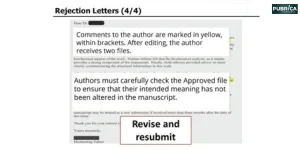
Peer review is designed to improve the quality of a manuscript. An effective revision should address every reviewer comment, provide evidence when disagree with suggestions, thoroughly revise the manuscript, and maintain a professional and respectful tone. Well-prepared responses can significantly improve the chances of publication. [4]
Following structured journal acceptance strategies during the peer-review response process helps researchers communicate effectively with reviewers, resolve concerns, and improve the final quality of the manuscript.
7. Publication Strategies That Improve Journal Acceptance
Good researchers always practice evidence-based publication. Following systematic research publication success strategies helps researchers prepare stronger manuscripts, improve quality, and increase the possibility of journal acceptance.
Recommended Strategies
- Choose journals before preparing your manuscript.
- Follow reporting guidelines (CONSORT, PRISMA, STROBE, CARE, ARRIVE, and others).
- Edit your language before submission.
- Double-check all citations and references.
- Search for plagiarism.
- Get internal peer review before submission.
- Conform to journal formatting guidelines.
These practices minimise unnecessary mistakes and increase confidence of editors. Applying effective strategies for successful manuscript publication allows researchers to meet journal expectations and improve the overall publication process.
8. Ethical Considerations in Scientific Publishing
Ethical publishing is essential for maintaining scientific integrity and credibility. Researchers should avoid plagiarism, duplicate publication, data fabrication, inappropriate authorship, citation manipulation, and undisclosed conflicts of interest. Adhering to journal and institutional ethical guidelines promotes transparency, strengthens the peer review process, and builds trust in scientific research. [5]
Publication Success Checklist
Publication Step | Status Check |
Research question clearly defined | ✓ |
Appropriate journal selected | ✓ |
Author guidelines followed | ✓ |
Statistical analysis verified | ✓ |
References correctly formatted | ✓ |
Language professionally edited | ✓ |
Plagiarism screening completed | ✓ |
Ethical approval documented | ✓ |
Completing this checklist before submission can substantially reduce preventable reasons for rejection.
Maintaining ethical standards is also an important part of journal acceptance strategies, as journals evaluate the credibility, transparency, and reliability of submitted research before publication.
Connect with us to explore how we can support you in maintaining academic integrity and enhancing the visibility of your research across the world!
Conclusion
It is normal practice for journals to reject papers in the academic publishing industry. In many cases, quality papers get rejected because of problems like mismatch between the study and the journal, poor presentation of the paper, methodology problems, formatting issues, or failing to meet the editorial requirements. With careful selection of the right journal, writing an organised paper, application of quality research methodology, adherence to ethics and constructive response to peer reviews, one increases their chances of getting published. Learning from the comments of reviewers and adopting publication approaches will lead to success and improvement of the quality of science.
Why Good Research Gets Rejected: Proven Publication Strategies to Improve Journal Acceptance. Our Pubrica consultants are here to guide you. [Get Expert Publishing Support] or [Schedule a Free Consultation]
Frequently Asked Questions (FAQs)
Good research papers can be rejected due to several reasons, including incorrect journal selection, weak manuscript t presentation, lack of novelty, methodological limitations, statistical errors, poor formatting, language issues, ethical concerns, or failure to follow journal guidelines. Rejection does not always indicate poor research quality; sometimes the manuscript may not meet the journal’s requirements or expectations.
The common reasons for research paper rejection include journal mismatch, unclear research objectives, inadequate literature review, weak methodology, incorrect statistical analysis, poor academic writing, formatting problems, plagiarism, duplicate publication, and ethical issues. Understanding these challenges helps researchers improve their manuscripts before submission.
Researchers can improve acceptance chances by selecting the right journal, following author guidelines, preparing a well-structured manuscript, maintaining strong research methodology, presenting accurate data analysis, addressing reviewer comments professionally, and following ethical publishing practices. Using effective journal acceptance strategies can significantly improve publication outcomes.
Choosing the right journal is one of the most important factors affecting acceptance. A manuscript submitted to a journal that matches its scope, audience, and research area has a higher chance of successful review. Professional journal acceptance consulting services can help researchers identify suitable journals and avoid rejection due to journal mismatch.
Publication support strategies for researchers include manuscript preparation, scientific editing, journal selection guidance, statistical review, formatting support, submission assistance, and reviewer response preparation. These strategies help improve manuscript quality and increase the likelihood of acceptance.
References
- Khadilkar S. S. (2018). Rejection Blues: Why Do Research Papers Get Rejected? Journal of obstetrics and gynaecology of India, 68(4), 239–241. https://doi.org/10.1007/s13224-018-1153-1
- Aga, S. S., & Nissar, S. (2022). Essential Guide to Manuscript Writing for Academic Dummies: An Editor’s Perspective. Biochemistry research international, 2022, 1492058. https://doi.org/10.1155/2022/1492058
- Panos, G. D., & Boeckler, F. M. (2023). Statistical Analysis in Clinical and Experimental Medical Research: Simplified Guidance for Authors and Reviewers. Drug design, development and therapy, 17, 1959–1961. https://doi.org/10.2147/DDDT.S427470
- Hidouri, S., Kamoun, H., Salah, S., Jellad, A., & Ben Saad, H. (2024). Key Guidelines for Responding to Reviewers. F1000Research, 13, 921. https://doi.org/10.12688/f1000research.154614.3
- Miteu G. D. (2024). Ethics in scientific research: a lens into its importance, history, and future. Annals of medicine and surgery (2012), 86(5), 2395–2398. https://doi.org/10.1097/MS9.0000000000001959