
- Services
- Discovery & Intelligence Services
- Publication Support Services
- Sample Work
Publication Support Service
- Editing & Translation
-
Editing and Translation Services
- Sample Work
Editing and Translation Service
-
- Research Services
- Sample Work
Research Services
- Physician Writing
- Sample Work
Physician Writing Service
- Statistical Analyses
- Sample Work
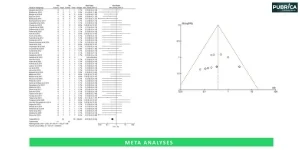
Statistical Analyses
- Data Collection
- AI and ML Services
- Sample Work
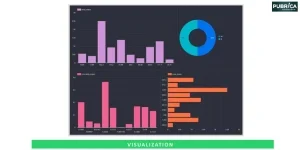
AI and ML Services
- Medical Writing
- Sample Work
Medical Writing
- Research Impact
- Sample Work
Research Impact
- Medical & Scientific Communication
- Sample Work
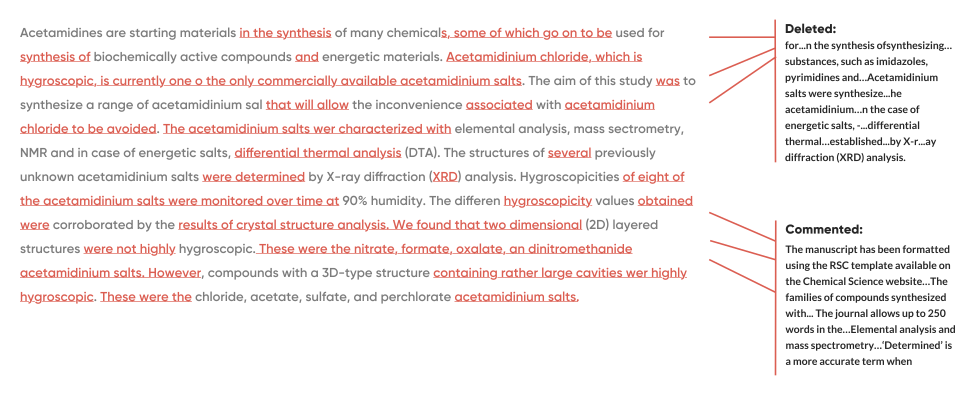
Medical & Scientific Communication
- Medico Legal Services
- Educational Content
- Academic Editorial Services
- Sample Work
Academic Editorial Services
- Educational Editorial Service
-
Education Editorial Services
- Sample Work
Education Editorial Services
-
- Industries
- Subjects
- About Us
- Academy
- Insights
- Contact Us
Challenges in Research Paper Writing and Strategies to Overcome Them
High-Impact Journals
- Lack of a Clear Research Narrative
- Literature Review and Research Gap Identification
- Ambiguous Writing and Poor Data Presentation
- Lack of Structure or Not Following Journal Formatting Requirements
- Maintaining Grammar and Style in the Research Paper
- Citing Sources and Avoiding Plagiarism
- Peer Review and Feedback Management
- Time Management and Project Planning
- Conclusion
Interesting topics
Challenges in Research Paper Writing and Strategies to Overcome Them
Writing a research paper is considered one of the key skills that every student or scholar should be equipped with. Unfortunately, there are quite a few researchers who face numerous difficulties in the course of their work. It may be due to a variety of reasons, from finding an appropriate research narrative to structuring the paper correctly.
1. Lack of a Clear Research Narrative
A well-structured research narrative is necessary to ensure your research is clear and concise. This way, your paper will be more focused and organised. If you don’t have a strong narrative, you could end up having an unstructured paper with no aim. Using a professional journal selection service or affordable journal selection service ensures that your narrative fits the best possible journals. [2]
| Challenge | Suggested Solutions |
|---|---|
| Lack of a clear research story |
|
2. Literature Review and Research Gap Identification
A good literature review will provide the basis for understanding where your paper fits in the literature. Not doing the literature review correctly or identifying a research gap may jeopardize the importance of your paper. Manuscript submission service for researchers and expert journal selection consultancy can help you identify suitable publication opportunities and align your research with the right journals. [3]
Strategies
- Conduct an exhaustive literature search using databases like JSTOR, PubMed, and Google Scholar.
- Summarize and synthesize sources to identify trends, contradictions, and gaps.
- Clearly state your research gap to justify the study’s relevance.
3. Ambiguous Writing and Poor Data Presentation
It is necessary to achieve clarity while writing as well as presenting data, as ambiguous language may confuse readers. Editorial assistance services and journal submission services for systematic reviews can offer suggestions to improve the clarity and presentation of your data. [4]
- Be Concise: Do not use excessive jargon; be precise.
- Visualise Data: Use charts, tables, graphs, etc., properly labelled.
- Category Your Work: Use appropriate headings and sub-headings.
4. Lack of Structure or Not Following Journal Formatting Requirements
Many papers are rejected because of a lack of proper format or due to non-adherence to the guidelines for that journal. [5]
Solutions
- Adhere to journal guidelines for manuscript submission, particularly title, headings, references, and tables.
- Utilise citation management software such as Zotero, Mendeley, or EndNote.
- Seek assistance through a journal selection and submission bundle to ensure compliance with journal requirements.
5. Maintaining Grammar and Style in the Research Paper
Good grammar and writing styles are extremely important for achieving clarity, readability, and credibility. Language support services can be used to polish the manuscript to meet professional standards before using a journal submission support service.
Strategies
- Read several times and read out loud to check mistakes.
- Use grammar checking services such as Grammarly or Hemingway.
- Keep writing style constant.
6. Citing Sources and Avoiding Plagiarism
Proper citations are essential in avoiding plagiarism. Academic journal submission help and manuscript review assistance may help detect any form of plagiarism before final submission.
Best Practices
- Adhere to the citation format provided (APA, MLA, etc.).
- Conduct plagiarism tests through sites such as Turnitin or Grammarly.
- Correct paraphrasing and citing.
7. Peer Review and Feedback Management
Getting input from other people on your work and implementing their feedback is crucial when conducting any kind of research. However, getting contradictory comments or reviews can make it difficult for you to cope with all that you have to do. A fastest journal submission support provider can also help streamline revisions and responses to reviewers.
Solutions
- See feedback as constructive criticism.
- Come up with a strategy for revising your paper first focusing on the most important things.
8. Time Management and Project Planning
Research papers require meticulous planning and appropriate time management. Bad time management will result in hasty completion of the task and mistakes being made. Working with a journal submission service can reduce delays during the publication process.
Methods
- Create a schedule with deadlines for the entire paper.
- Split up the process into smaller tasks.
- Consider using project management software like Trello, Notion, or even Gantt diagrams.
Connect with us to explore how we can support you in maintaining academic integrity and enhancing the visibility of your research across the world!
Conclusion
Writing a research paper requires efforts on many levels that are usually associated with various difficulties, including the absence of coherence in the writing process, plagiarism, or poor formatting of the document. By realising what may hinder the completion of a successful research paper and how to overcome these issues, one can create an excellent research paper. The utilisation of professional assistance, such as journal selection, academic journal submission help, expert journal selection consultancy, manuscript submission service for researchers, journal submission support service, fastest journal submission support, journal submission service, affordable journal selection service, journal selection and submission bundle, and journal submission service for systematic reviews can significantly improve the chances of successful publication.
Challenges in Research Paper Writing and Strategies to Overcome Them. Our Pubrica consultants are here to guide you. [Get Expert Publishing Support] or [Schedule a Free Consultation]
Frequently Asked Questions (FAQs)
You can identify a research gap by conducting a comprehensive literature review, analyzing existing studies, and recognizing unanswered questions or inconsistencies. Professional academic journal submission support can also help researchers position their work effectively
Common reasons include poor manuscript structure, unclear research objectives, inadequate literature review, formatting errors, weak data presentation, and failure to follow journal guidelines.
A journal selection service helps researchers identify suitable journals based on their manuscript’s scope, subject area, impact requirements, and publication goals, reducing the risk of desk rejection.
References
- Nacke, Lennart (2024), “7 Challenges to Write Research Papers Faster (& How to Overcome Them) …,” Medium, (accessed October 29, 2025), [available at https://acagamic.medium.com/7-challenges-to-write-research-papers-faster-how-to-overcome-them-6fbe18a78e32].
- Wong, G., & Breheny, M. (2018). Narrative analysis in health psychology: a guide for analysis. Health psychology and behavioral medicine, 6(1), 245–261. https://doi.org/10.1080/21642850.2018.1515017
- Paré G, Kitsiou S. Chapter 9 Methods for Literature Reviews. In: Lau F, Kuziemsky C, editors. Handbook of eHealth Evaluation: An Evidence-based Approach [Internet]. Victoria (BC): University of Victoria; 2017 Feb 27. Available from: https://www.ncbi.nlm.nih.gov/books/NBK481583/
- Stone, A. L., Tai-Seale, M., Stults, C. D., Luiz, J. M., & Frankel, R. M. (2012). Three types of ambiguity in coding empathic interactions in primary care visits: implications for research and practice. Patient education and counseling, 89(1), 63–68. https://doi.org/10.1016/j.pec.2012.06.013
- Aga, S. S., & Nissar, S. (2022). Essential Guide to Manuscript Writing for Academic Dummies: An Editor’s Perspective. Biochemistry Research International, 2022, 1492058. https://doi.org/10.1155/2022/1492058