
- Services
- Discovery & Intelligence Services
- Publication Support Services
- Sample Work
Publication Support Service
- Editing & Translation
-
Editing and Translation Services
- Sample Work
Editing and Translation Service
-
- Research Services
- Sample Work
Research Services
- Physician Writing
- Sample Work
Physician Writing Service
- Statistical Analyses
- Sample Work
Statistical Analyses
- Data Collection
- AI and ML Services
- Sample Work
AI and ML Services
- Medical Writing
- Sample Work
Medical Writing
- Research Impact
- Sample Work
Research Impact
- Medical & Scientific Communication
- Sample Work
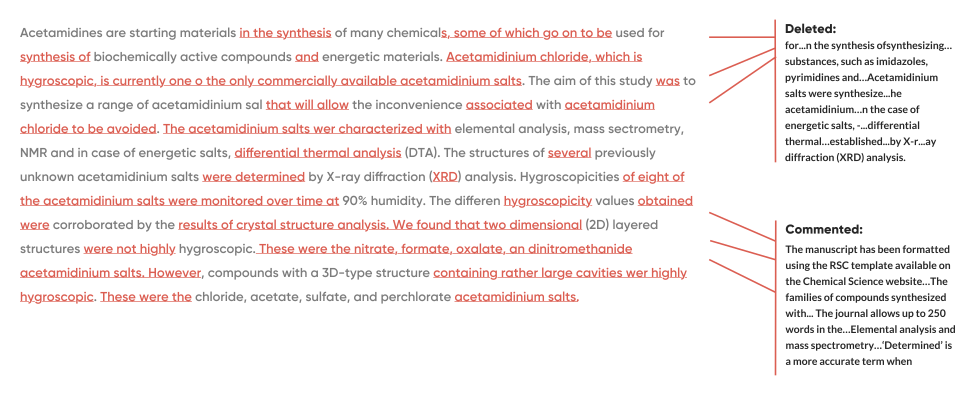
Medical & Scientific Communication
- Medico Legal Services
- Educational Content
- Academic Editorial Services
- Sample Work
Academic Editorial Services
- Educational Editorial Service
-
Education Editorial Services
- Sample Work
Education Editorial Services
-
- Industries
- Subjects
- About Us
- Academy
- Insights
- Contact Us
How to Write a Medical Paper: Tips for High-Impact Journals
- Home
- Academy
- Poster Presentation
- How to Write a Medical Paper: Tips for High-Impact Journals
Research Impact
- Understand the Structure of a High-Impact Medical Paper
- Choose a Relevant and Impactful Research Topic
- Follow Journal Submission Guidelines Strictly
- Maintain Scientific Clarity and Precision
- Present Data Effectively in Medical Manuscripts
- Ensure Ethical and Reporting Compliance
- Common Mistakes to Avoid in Medical Manuscript Writing
- Tips to Increase Acceptance in High-Impact Journals
- Conclusion
Interesting topics
How to Write a Medical Paper: Tips for High-Impact Journals
1. Understand the Structure of a High-Impact Medical Paper
2. Choose a Relevant and Impactful Research Topic
3. Follow Journal Submission Guidelines Strictly
4. Maintain Scientific Clarity and Precision
5. Present Data Effectively in Medical Manuscripts
6. Ensure Ethical and Reporting Compliance
7. Common Mistakes to Avoid in Medical Manuscript Writing
8. Tips to Increase Acceptance in High-Impact Journals
9. Conclusion
Publishing in reputable medical journals is essential for researchers, clinicians and postgraduate students involved in medical research paper writing and scientific paper writing for medical journals. In addition to providing an effective means of communicating research findings, a well-crafted research article enhances a researcher’s visibility and credibility worldwide. Despite the importance of publishing medical research papers in high-ranking journals, writing a manuscript that meets journal standards, scientific clarity and proper construction is often difficult for many researchers learning how to write a medical research article.[1]
These guidelines provide essential support for medical manuscript writing and assist researchers in developing quality manuscripts prepared for submission to top-tier journals and understanding the high impact journal publication process.
1. Understand the Structure of a High-Impact Medical Paper
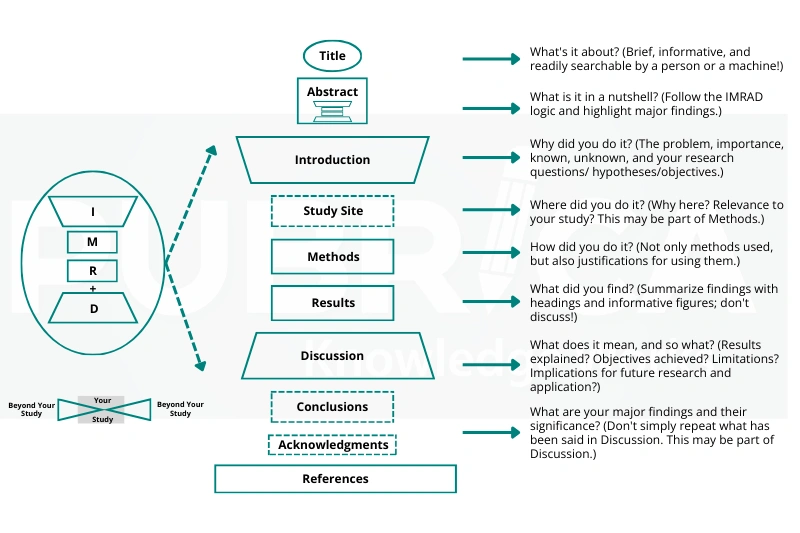
Most high-impact medical journals follow the IMRaD structure: Introduction, Methods, Results, and Discussion. Adhering to this structure ensures clarity and consistency in scientific paper writing for medical journals.[2]
High-impact journals generally follow this structure, helping readers and reviewers locate information efficiently during the peer review process in medical journals.
Main elements of a high-quality manuscript include:
- Title and Abstract: Clear and concise; keyword-focused
- Introduction: Provides background information, identifies a research gap and states the objectives of your study.
- Methods: Describes the design of the study, how data was collected and analysed.
- Results: Presents findings, tables and figures.
- Discussion: Interprets data and describes implications of your research.
- References: Include the most current and credible sources of medical information.
This structure allows all reviewers and editors to efficiently determine whether the paper should be published.
2. Choose a Relevant and Impactful Research Topic
High impact journals are looking for research that: [3]
- Targets important issues in clinical/public health
- Provides new findings
- Adds to evidence-based practice
When working on medical research paper writing, conduct a comprehensive literature review to identify research gaps and ensure originality. Journals prefer studies that advance knowledge rather than repeat existing findings, improving chances of publishing in high-impact journals.
3. Follow Journal Guidelines Strictly
All journals provide detailed journal submission guidelines covering word limits, formatting, referencing styles (Vancouver, APA), and figure/table presentation. Ignoring these instructions is a common reason for desk rejection during the peer review process. [4]
Checklist Before Submission
- Review author instructions carefully
- Format manuscript according to journal style
- Ensure ethical approval statements are included
- Confirm plagiarism-free content
4. Maintain Scientific Clarity and Precision
To publish in a high-impact journal, it is important to write accurately and objectively. Use clear writing and do not include excessive jargon. [5]
WRITTEN TIPS
- Write simply and directly.
- logically present your data.
- Avoid redundancy.
- Support your claims with evidence.
- Maintain a professional academic tone.
Researchers often use medical manuscript editing services or professional medical writing services to improve clarity and acceptance chances.
5. Present Data Effectively
Clear visuals strengthen understanding of research findings and support medical manuscript writing tips for better publication outcomes. [6]
Recommendations for Use
- Use a table to present data in detail
- Use a graph to compare and look for trends
- Label every visual with clarity
- Don’t repeat any data between text and tables
Visual clarity can strengthen the awareness of the research results.
6. Ensure Ethical and Reporting Compliance
Ethical approval is mandatory before publication. Patient consent, conflict of interest disclosure and adherence to reporting standards (CONSORT, PRISMA, WHO) are required. Ethical compliance strengthens credibility during the peer review process in medical journals and improves acceptance in impact factor medical journals. [7]
7. Common Mistakes to Avoid
Common Mistake | Impact on Publication | How to Avoid |
Poor structure | Difficult for reviewers | Follow IMRaD format |
Weak literature review | Limited originality | Use recent peer-reviewed sources |
Inadequate methodology | Low research validity | Justify methods clearly |
Language errors | Reduced clarity | Proofread and edit |
Ignoring guidelines | Desk rejection | Follow journal instructions |
8. Tips to Increase Acceptance in High-Impact Journals
Manuscript Improvement | Emphasise the originality and significance of your work Include thorough statistical analyses Use reputable sources Indicate any limitations of your study. [8] |
Get Peer Review
| Ask your supervisor or mentor to evaluate your manuscript Use a professional editor Have someone review your manuscript before submitting it for publication. [9] |
Choose the Right Journal | Find a journal that matches the following criteria: Your research area The type of study you performed Your intended readership. [10] |
Choosing the correct journal improves chances of publishing medical research papers successfully.
Connect with us to explore how we can support you in maintaining academic integrity and enhancing the visibility of your research across the world!
Conclusion
To publish successfully in high-impact journals, researchers must focus on strong methodology, clarity and adherence to journal submission guidelines. Proper planning, ethical compliance, effective data presentation and clear scientific writing are essential for medical research paper writing and successful publication.
By focusing on originality, clarity and proper formatting and by using medical editing services, journal submission support services, or professional medical writing services when needed authors can improve acceptance rates and contribute valuable knowledge to the global scientific community.
How to Write a Medical Paper: Tips for High-Impact Journals? Our Pubrica consultants are here to guide you. [Get Expert Publishing Support] or [Schedule a Free Consultation]
References
- Shokeir A. A. (2014). How to write a medical original article: Advice from an Editor. Arab journal of urology, 12(1), 71–78. https://doi.org/10.1016/j.aju.2013.
- Huecker MR, Shreffler J. How To Write And Publish A Scientific Manuscript. [Updated 2022 Oct 31]. In: StatPearls [Internet]. Treasure Island (FL): StatPearls Publishing; 2025 Jan-. Available from: https://www.ncbi.nlm.nih.gov/books
- Whitlock EP, Lopez SA, Chang S, et al. Identifying, Selecting, and Refining Topics. 2009 Apr 27. In: Methods Guide for Effectiveness and Comparative Effectiveness Reviews [Internet]. Rockville (MD): Agency for Healthcare Research and Quality (US); 2008-. Available from: https://www.ncbi.nlm.nih.gov/books
- Patrias K, author; Wendling D, editor. Citing Medicine: The NLM Style Guide for Authors, Editors, and Publishers [Internet]. 2nd edition. Bethesda (MD): National Library of Medicine (US); 2007-. Chapter 1, Journals. 2007 Oct 10 [Updated 2018 May 18]. Available from: https://www.ncbi.nlm.nih.gov/books
- O’Sullivan, T. A., & Jefferson, C. G. (2020). A Review of Strategies for Enhancing Clarity and Reader Accessibility of Qualitative Research Results. American journal of pharmaceutical education, 84(1), 7124. https://doi.org/10.5688/ajpe7124
- Midway S. R. (2020). Principles of Effective Data Visualization. Patterns (New York, N.Y.), 1(9), 100141. https://doi.org/10.1016/j.patter.2020
- Faggion, C. M., Jr, & Kohl, C. B. S. (2025). Exploring ethical elements in reporting guidelines: results from a research-on-research study. Research integrity and peer review, 10(1), 20. https://doi.org/10.1186/s41073-025-00180-0
- Kambhampati, S. B. S., & Maini, L. (2019). Formatting References for Scientific Manuscripts. Indian journal of orthopaedics, 53(3), 381–383. https://doi.org/10.4103/ortho.IJOrtho
- First level: Peer review. (n.d.). Nih.gov. Retrieved February 11, 2026, from https://grants.nih.gov/grants-process/review/first-level
- Bhatia S. J. (2017). How to Choose the Right Journal. Reporting and Publishing Research in the Biomedical Sciences, 143–153. https://doi.org/10.1007/978-981-10-7062-4_16