
- Services
- Discovery & Intelligence Services
- Publication Support Services
- Sample Work
Publication Support Service
- Editing & Translation
-
Editing and Translation Services
- Sample Work
Editing and Translation Service
-
- Research Services
- Sample Work
Research Services
- Physician Writing
- Sample Work
Physician Writing Service
- Statistical Analyses
- Sample Work
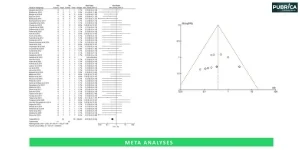
Statistical Analyses
- Data Collection
- AI and ML Services
- Sample Work
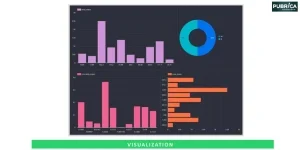
AI and ML Services
- Medical Writing
- Sample Work
Medical Writing
- Research Impact
- Sample Work
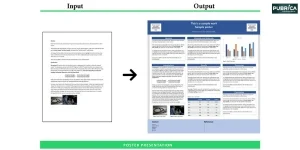
Research Impact
- Medical & Scientific Communication
- Sample Work
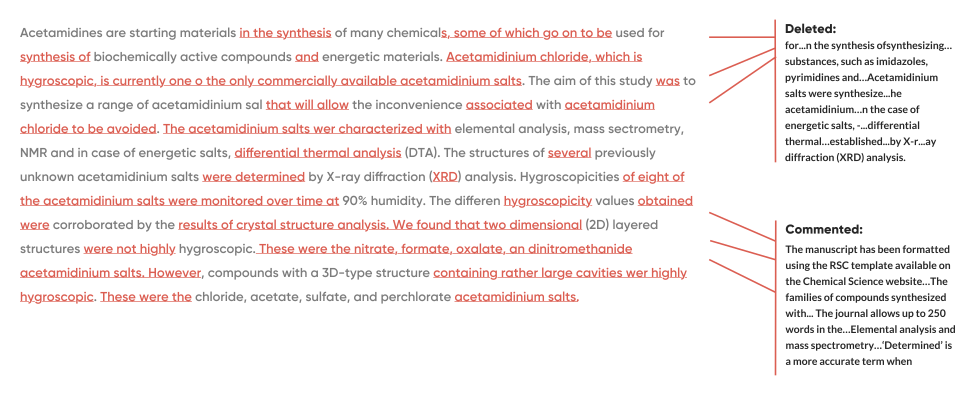
Medical & Scientific Communication
- Medico Legal Services
- Educational Content
- Academic Editorial Services
- Sample Work
Academic Editorial Services
- Educational Editorial Service
-
Education Editorial Services
- Sample Work
Education Editorial Services
-
- Industries
- Subjects
- About Us
- Academy
- Insights
- Contact Us
Mastering Journal Submission Guidelines with Ease
- Home
- Publication Support
- Journal Selection
- Mastering Journal Submission Guidelines with Ease
An Academy Guide
Interesting topics

Mastering Journal Submission Guidelines with Ease
Preparation for submitting a research manuscript to a journal requires careful consideration, specific formatting instructions, and clearly communicating your findings. The journal submission guidelines serve as a guide for authors to properly format their papers in accordance with the requirements of the editor and reviewers. By following the submission guidelines of a journal, not only does it improve the chances of getting published, but it also provides a way to publish scientific results professionally and ethically.[1,2]. Authors may consider using a journal manuscript submission service to ensure adherence to formatting and submission guidelines.
1. Decode the Journal Requirements
To ensure your work aligns with editorial expectations, it is essential to follow the journal’s specific requirements for manuscript structure, word limit, reference style, ethical compliance, and any additional materials required by the editorial board. You should read the “Guide for Authors” page of the journal before submitting or modifying your manuscript.[3]. Check whether supplementary materials (figures, datasets, protocols) are needed.
Example: The BMJ requires a structured abstract of 300 words, whereas Elsevier journals may require unstructured abstracts depending on the discipline.
Section | Purpose |
Title | Summarizes the study and key variables |
Abstract | Provides study overview |
Methods | Enables reproducibility and includes the statistical analysis plan |
Results | Presents key findings |
References | Cites prior work |
2. Master Your Manuscript Structure
Many journals adhere to the IMRaD layout (Introduction, Methods, Results, Discussion). The structured format enhances clarity and aids in the profession’s goal of achieving greater transparency through structured reporting.[4]. Proper manuscript formatting is essential to comply with the journal’s instructions and improve readability. Maintain proper manuscript version control during revisions.
Example: The Journal of Clinical Epidemiology requires manuscripts to be double-spaced with continuous line numbering for ease of peer review.
When preparing a manuscript for submission to a journal, it is important to stick to the journal’s recommended reference style.[5]. Use reference management software such as EndNote or Zotero to ensure accuracySome journals may also require a graphical abstract.
3. Commit to the Ethical And Reporting Standards
To meet the high standards of a quality journal, authors need to follow the guidelines developed by the international groups that provide guidelines on how to report research comprehensively and transparently.[6] Upload raw data to an approved dataset repository if requested. Include a data availability statement and Conflict of interest when required. Provide ethical approval documentation when the study involves human subjects
Many journals require reporting checklist compliance, such as CONSORT or PRISMA
Study Type | Recommended Guideline | Key Requirement |
Clinical Trials | Include flow diagram and trial registry info | |
Systematic Reviews | Show the recruitment process of included studies | |
Observational Studies | Provide cohort, case-control, or cross-sectional details | |
Case Reports | Include patient info and clinical timeline |
Example: For randomized controlled trials, include a CONSORT flow diagram showing participant recruitment, allocation, follow-up, and analysis for transparency.
4. Submission to Acceptance – Understand the Publishing Process
You must adhere strictly to the journal’s requirements when submitting your manuscript. Engaging in professional editing and formatting ensures that the manuscript meets the journal’s standards for clarity and presentation. Read all comments and suggestions from the reviewers thoroughly before making any revisions to the manuscript; incomplete answers may result in your manuscript being rejected.[7]
5. The Last Look: Pre-Submission Checklist
Before submitting your article:
- Clarify the corresponding author responsibilities before submission. Confirm that all authors have approved of their last edited version and ensure all authors have updated their ORCID identifier.
- Verify that all manuscript metadata (title page, author affiliations, ORCID IDs) is complete.
- Writing a compelling cover letter for a journal submission can highlight the novelty and significance of your work
- Use tools such as iThenticate to check for acceptable levels of plagiarism
- Selecting the best journal submission service can save time and reduce errors during submission
- Ensure data visualization formats follow journal guidelines.
- Perform data validation checks before final submission.
Completing these checks shortly before submission reduces the risk of being immediately rejected by the editorial office or delaying peer review by the editor.
6. Journal Submission Roadmap
Following journal guidelines and considering reviewer feedback carefully will result in a smooth, efficient submission process as outlined below. An academic journal’s submission service can guide authors through peer review responses and compliance with reporting standards
Manuscript preparation: To help you develop and structure your manuscript per the format of the publication, we shall ensure that it is clear and easy for your reader to understand. Professional technical editing can improve clarity and precision. | Journal Selection: When starting your research project, carefully evaluate and choose the most appropriate and influential scientific journal(s) to publish your results. Consider the article processing charges (APC) when selecting a journal |
Submission & Compliance: You should ensure the compliance of your manuscript with the appropriate journal guidelines regarding Manuscript Formatting/Presentation, Manuscript Submission/Review Process, and Reporting Abstracts of Manuscripts that are accepted for publication. Perform data validation checks before final submission. | Peer Review & Editorial workflow: Initial manuscript triage determines if the paper proceeds to peer review.Get to know the review process, how to respond carefully to reviewers’ comments, and improve the chances of your manuscript being accepted by revising it. Understanding the journal’s editorial workflow can help anticipate review timelines |
Conclusion
Careful planning of journal submissions increases the likelihood of acceptance and promotes ethical scientific communication. Journal submission guidelines provide authors with the framework to present their research in a transparent, ethical, and professional manner. As authors use standard formats and reporting criteria for manuscripts, and they complete pre-submission checks, they improve their chances of acceptance as well as promote the values of honest, transparent, and high-quality scientific publishing through their efforts.
Boost your chances of acceptance—partner with Pubrica for expert manuscript editing, formatting, and submission support. [Get Expert Publishing Support] or [Schedule a Free Consultation].
References
- Zul, M. (2023a, November 9). Mastering author guidelines in journal publishing. com. https://publishingstate.com/author-guidelines-in-journal-publishing/2023/
- Journal-publishing.com. Retrieved December 8, 2025, from https://www.journal-publishing.com/blog/never-ignore-the-author-instructions-of-an-academic-or-scientific-journal/
- Zul, M. (2023, November 28). Why you must follow journal submission guidelines. com. https://publishingstate.com/why-you-must-follow-journal-submission-guidelines/2023/
- IMRaD in scholarly publishing. (n.d.). Sujith’s Library. Retrieved December 8, 2025, from https://sujith-eag.in/mca/rm/u53
- Bajwa, S. J., & Sawhney, C. (2016). Preparing manuscript: Scientific writing for publication. Indian journal of anaesthesia, 60(9), 674–678. https://doi.org/10.4103/0019-5049.190625
- Sponsorship, H. (n.d.). Recommendations for the conduct, reporting, editing, and publication of scholarly work in medical journals. Icmje.org. Retrieved December 8, 2025, from https://www.icmje.org/icmje-recommendations.pdf
- Ali J. (2010). Manuscript rejection: causes and remedies. Journal of young pharmacists: JYP, 2(1), 3–6. https://doi.org/10.4103/0975-1483.62205