
- Services
- Discovery & Intelligence Services
- Publication Support Services
- Sample Work
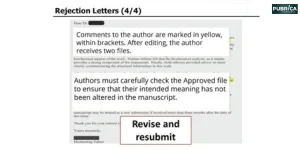
Publication Support Service
- Editing & Translation
-
Editing and Translation Services
- Sample Work
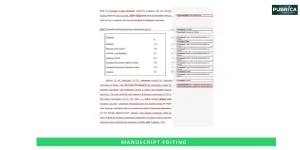
Editing and Translation Service
-
- Research Services
- Sample Work
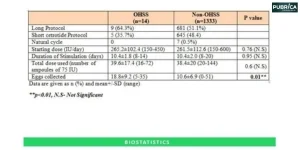
Research Services
- Physician Writing
- Sample Work
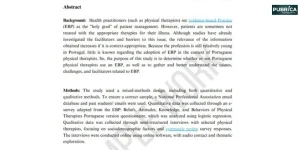
Physician Writing Service
- Statistical Analyses
- Sample Work
Statistical Analyses
- Data Collection
- AI and ML Services
- Sample Work
AI and ML Services
- Medical Writing
- Sample Work
Medical Writing
- Research Impact
- Sample Work
Research Impact
- Medical & Scientific Communication
- Sample Work
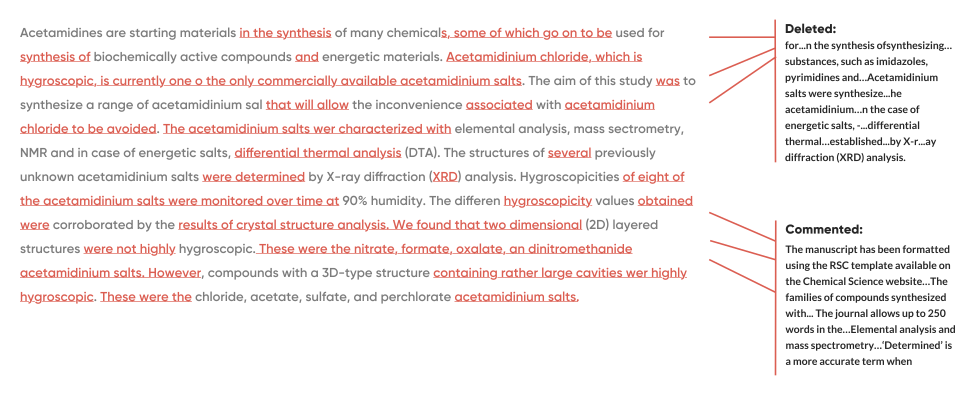
Medical & Scientific Communication
- Medico Legal Services
- Educational Content
- Academic Editorial Services
- Sample Work
Academic Editorial Services
- Educational Editorial Service
-
Education Editorial Services
- Sample Work
Education Editorial Services
-
- Industries
- Subjects
- About Us
- Academy
- Insights
- Contact Us
Targeted literature searches are a fundamental part of writing clinical manuscripts that will meet the standards of high-quality journals and contribute meaningfully to evidence-based practice. When physicians write clinical manuscripts, utilizing a targeted literature search can identify high-quality, relevant, and current evidence. While a general literature review is useful, a targeted literature search is specific to the clinical question and should be completed through frameworks established, such as PICO (Population, Intervention, Comparator, Outcome) and PRISMA [1].
How to Identify the Best Journal for Your Manuscript Submission
- Home
- Academy
- Research Impact
- How to Identify the Best Journal for Your Manuscript Submission
High-Impact Journals
- Understand the Scope of the Journal
- Consider the Journal Impact Factor and Metrics
- Identify the Audience and Readership
- Check Indexing and Abstracting Services
- Review Times and Publication Speed
- Assess Acceptance Rate and Selectivity
- Evaluate Journal Reputation and Publisher
- Use Journal Selection Tools
- Conclusion
Interesting topics
How to Identify the Best Journal for Your Manuscript Submission
Table of Content
1. Understand the Scope of the Journal
2. Consider the Journal Impact Factor and Metrics
3. Identify the Audience and Readership
4. Check Indexing and Abstracting Services
5. Review Times and Publication Speed
6. Assess Acceptance Rate and Selectivity
7. Evaluate Journal Reputation and Publisher
8. Use Journal Selection Tools
9. Conclusion
Choosing an appropriate journal for your research manuscript is a decisive aspect of the publication process. The selected journal determines your readership, citation frequency, and scientific impact. The table below provides a well-defined process to identify the best journal for your manuscript submission. [1,2]
1. Understand the Scope of the Journal
- Aim & Scope: Make sure the focus of the journal corresponds to your research area. If the focus of the journal is closer to the audience that will read your paper, the chance that it will be read and cited will increase.
- Disciplinary Fit: While some journals have a broad aim scope (e.g., PLOS ONE), others are very specific (e.g., Alzheimer’s & Dementia for neurodegenerative research). [3]
1.1. Examples of Journals Based on Scope
Scope Type | Example Journals | Target Audience |
Broad | PLOS ONE, Scientific Reports | Multidisciplinary researchers |
Specialized | Journal of Alzheimer’s Disease | Neurology & Alzheimer’s experts |
Interdisciplinary | Nature Communications | Researchers across disciplines |
2. Consider the Journal Impact Factor and Metrics
- Impact Factor (IF): Represents the mean number of citations per article; traditionally, higher impact factors are correlated with higher prestige.
- Alternative metrics: CiteScore, Eigenfactor, and H-index can provide additional perspective. [4]
2.2. Sample Metrics
Journal Name | Impact Factor | Cite Score | Acceptance Rate |
Nature | 69.5 | 85.2 | ~7% |
Scientific Reports | 4.6 | 5.2 | ~50% |
3. Audience and Readership
- Primary Audience: Identify who the focus of your research is intended for.
- Regional vs. Global: Some journals concentrate on a specific region, which may limit implications outside that region.
- Open Access vs. Subscription: Open-access journals are broadly accessible, which could lead to broader citing.
4. Indexing and Abstracting
- Indexed journals are more visible in databases such as PubMed, Scopus, and Web of Science.
- Journals that are indexed are often considered to be of higher quality.[5]
4.1. Common Indexing Services
Indexing Service | Importance |
PubMed | Essential for biomedical research |
Scopus | Provides citation metrics and h-index |
Web of Science | Prestigious indexing and citation data |
DOAJ | Confirms open-access journals |
5. Review Times and Publication Speed
Some journals have speedy peer review processes (e.g., weeks) while others may take months. Keep your publication timeline in mind when selecting a journal candidate. [6]
5.1. Review and Publication Times
Journal Name | Average Review Time | Average Publication Time |
Nature | 8–10 weeks | 4–6 months |
Scientific Reports | 4–6 weeks | 2–3 months |
6. Acceptance Rate and Selectivity
More selective journals may have lower acceptance rates but more impactful published output. Journals in your field that are moderate or highly specialized may be a better fit for the niche study. Assess acceptance likelihood to prevent educated guesswork or an avoidable pattern of rejection. Journals that do reject less overall may still have a reader base in the field of study. [7]
7. Journal Reputation and Publisher
- Assess both the journal and the publisher’s reliability.
- Avoid predatory journals by reviewing directories, like the DOAJ (Directory of Open Access Journals) and Think. Check. Submit.
- Search for journals with editorial boards comprised of recognizable experts.
- Review journal ethics policies and compliance with COPE (Committee on Publication Ethics) standards.
8. Use Journal Selection Tools
Tools such as Elsevier Journal Finder, Springer Journal Suggester, and Edanz Journal Selector can help identify potential journals based on your manuscript title and abstract. Enter keywords, title, and abstract for tailored suggestions. Compare suggested journals for impact factor, scope, and audience.
Connect with us to explore how we can support you in maintaining academic integrity and enhancing the visibility of your research across the world!
Conclusion
The identification of a journal for submission is a strategic process that balances relevance, visibility, impact, and feasibility. Authors need to assess the scope, audience, metrics, indexing, review time, and ethical measures set by the journal. Authors can assist their own likelihood of acceptance and maximize exposure of the research by using journal selection tools, reviewing articles published in that journal, and considering open access options.
References
- Bhatia S. J. (2017). How to Choose the Right Journal. Reporting and Publishing Research in the Biomedical Sciences, 143–153. https://doi.org/10.1007/978-981-10-7062-4_16
- Ramia J. M. (2023). How to select a journal for your research. World journal of gastroenterology, 29(21), 3379–3384. https://doi.org/10.3748/wjg.v29.i21.3379
- Rogers, J. R., Mills, H., Grossman, L. V., Goldstein, A., & Weng, C. (2020). Understanding the nature and scope of clinical research commentaries in PubMed. Journal of the American Medical Informatics Association: JAMIA, 27(3), 449–456. https://doi.org/10.1093/jamia/ocz209
- Kavic, M. S., & Satava, R. M. (2021). Scientific Literature and Evaluation Metrics: Impact Factor, Usage Metrics, and Altmetrics. JSLS: Journal of the Society of Laparoendoscopic Surgeons, 25(3), e2021.00010. https://doi.org/10.4293/JSLS.2021.00010
- (N.d.). Taylorandfrancis.com. Retrieved October 21, 2025, from https://librarianresources.taylorandfrancis.com/services-support/discovery/abstracting-and-indexing/
- Phillips, K. A., & Horn, D. M. (2025). Review and Publication Times and Reporting Across Journals on Health Policy. JAMA Network Open, 8(5), e2512545. https://doi.org/10.1001/jamanetworkopen.2025.12545
- Pulverer B. (2023). A selective journal. EMBO reports, 24(11), e58271. https://doi.org/10.15252/embr.202358271