
- Services
- Discovery & Intelligence Services
- Publication Support Services
- Sample Work
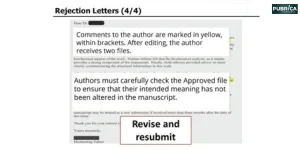
Publication Support Service
- Editing & Translation
-
Editing and Translation Services
- Sample Work

Editing and Translation Service
-
- Research Services
- Sample Work
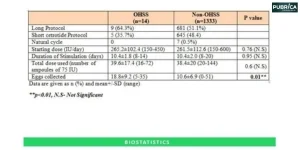
Research Services
- Physician Writing
- Sample Work
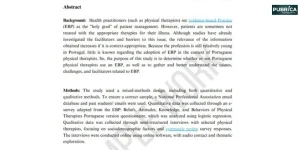
Physician Writing Service
- Statistical Analyses
- Sample Work
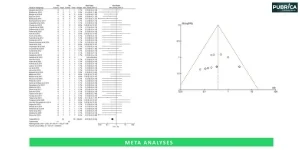
Statistical Analyses
- Data Collection
- AI and ML Services
- Sample Work
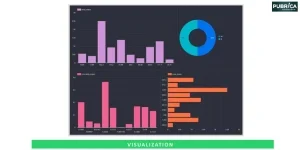
AI and ML Services
- Medical Writing
- Sample Work
Medical Writing
- Research Impact
- Sample Work
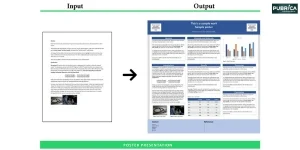
Research Impact
- Medical & Scientific Communication
- Sample Work
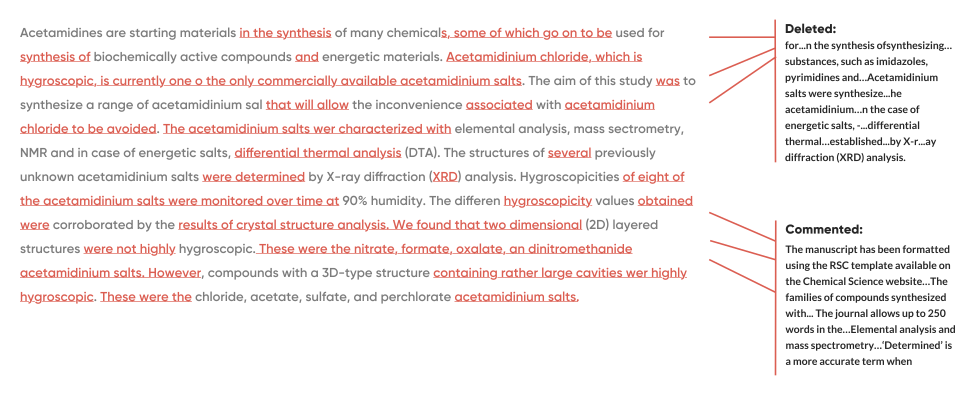
Medical & Scientific Communication
- Medico Legal Services
- Educational Content
- Academic Editorial Services
- Sample Work
Academic Editorial Services
- Educational Editorial Service
-
Education Editorial Services
- Sample Work
Education Editorial Services
-
- Industries
- Subjects
- About Us
- Academy
- Insights
- Contact Us
The Role of AI in Scholarly Publishing: Opportunities and Challenges
Artificial Intelligence (AI) has been revolutionising scholarly publishing through improving efficiency, accuracy, and accessibility throughout the entire process of research. Academic publishing technology powered by AI can significantly contribute to improving the speed and quality of the research publication process. At the same time, however, AI’s use in this area is not without problems since, for example, there are issues regarding research ethics, ethical utilisation, transparency, biases, and the impact on human intelligence. Understanding AI’s role in this area is very important. [1]
1. The Rise of AI in Scholarly Communication
AI is revolutionising academic publishing through its ability to make the research, editing, and publication process more efficient. AI systems such as LLMs can aid in AI in manuscript drafting, summary writing, citation creation, and visual representation of data. On the other hand, the adoption of AI comes with ethical challenges in AI use related to bias, misinformation, and risks of plagiarism, among others. [2]
2. Overview of AI in Scholarly Publishing
AI finds applications at different stages of the publishing process, including those of research and development, as well as after publication. It is not merely about automation; rather, AI contributes to better decision-making and helps improve research through AI-driven publishing workflows.

3. Applications of AI in Academic Publishing
AI tools have transformed traditional publishing workflows by supporting several key functions. [3]
Applications of AI in Scholarly Publishing
Area | AI Applications |
Research Assistance | Literature search, summarisation, citation management |
Content Creation | Abstract writing, image generation, AI in manuscript drafting |
Quality Control | AI in language editing, formatting, AI and quality control in publishing, and image resolution checks |
Editorial Workflow | Journal selection, peer review assistance, and statistical analysis |
Ethical Oversight | Plagiarism detection and identification of paper mills |
4. Benefits of AI in Scholarly Publishing
- Increased Efficiency and Productivity AI automates routine processes of editing and screening manuscripts. It will take less time to format papers properly and edit them. Moreover, it frees scientists from administrative routines to allow them to concentrate on more important matters. These advantages are central to AI-driven publishing workflows.
- Accurate Data Analysis AI helps to enhance language skills, fix errors and analyse statistical information correctly. AI in language editing improves formatting, vocabulary and references, ensuring consistency throughout the manuscript.
- Global Availability and Accessibility Probably one of the greatest features of AI is the opportunity to help people whose native language is not English to have their articles published in foreign scientific journals through advanced academic publishing technology.
5. AI in Research, Development, and Writing Support
AI, besides being applied for editing purposes, is also utilised in the research and development stage. It includes the following features: [4]
- Analysis of literature review
- Synthesis of hypothesis
- Summarising data
- Framing of the draft
The above qualities help AI to act as an effective co-pilot in the research process.
6. Misconceptions About Salami-Slicing in Publishing
There are worries about ethical problems related to unfairness in publishing, such as “salami-slicing,” along with advances in technology. However, there is some data to suggest that this problem might be overestimated. [5]
- Publication Expansion and Improvement in Quality: According to studies, lengthy research publications usually get cited more frequently, especially those in the realm of biomedicine.
- Expansion of Scientific Communities: More publications might be the consequence of having a larger community of scholars conducting research rather than the increased output of each scholar.
- Collaborative Work on Research: Contemporary research is becoming more collaborative, which can lead to an appearance of lower output per author.
7. Limitations of AI Tools in Academic Publishing
Despite these benefits, some significant weaknesses of AI cannot be overlooked. Understanding AI limitations in publishing is essential for responsible adoption and implementation.

8. Ethical Challenges in AI Integration
The incorporation of AI in scholarly publishing poses various ethical challenges in AI use that should be governed with strictness. [6]
Plagiarism and Originality of Contents | There is an increased risk of reproducing existing content via AI tools, thereby exposing the author to plagiarism or inaccuracies in citing the content used. |
Disclosure and Transparency
| There is no transparency on the use of AI by authors in developing academic research papers or during the peer review process. |
Algorithmic Bias in Academic Findings | AI technologies could have inherent bias towards specific findings depending on the nature of the algorithm used. |
Several publications today demand disclosure from authors on their use of AI.
9. The Future of AI in Scholarly Publishing
AI technology is forecasted to contribute towards scholarly communication by becoming more deeply embedded within it. These contributions could come in the form of:
- Completely automated AI in peer review processes
- Tech-based research verification programs
- Sophisticated AI in plagiarism detection mechanisms
- Advanced AI in journal selection software
But human knowledge will always be the crucial factor in sustaining academic quality and creativity.
Conclusion
The use of artificial intelligence can revolutionize scholarly publishing through improving efficiency, accessibility, and the quality of manuscripts for researchers in their entire research cycle from submission to peer reviews. Through AI-driven publishing workflows, AI in language editing, AI in manuscript drafting, and AI and quality control in publishing, researchers can benefit significantly from modern academic publishing technology. The need for regulation is necessary, however, for the prevention of any unethical use of AI and to safeguard AI and academic integrity while addressing ethical challenges in AI use and overcoming AI limitations in publishing.
The Role of AI in Scholarly Publishing: Opportunities and Challenges. Our Pubrica consultants are here to guide you. [Get Expert Publishing Support] or [Schedule a Free Consultation]
Frequently Asked Questions (FAQs)
AI is used in manuscript drafting, language editing, citation management, plagiarism detection, journal selection, and peer review assistance to streamline the publication process.
AI improves efficiency, accuracy, and accessibility, supports quality control, speeds up research workflows, and helps non-native English speakers publish in international journals.
Challenges include ethical issues, algorithmic bias, plagiarism risks, lack of transparency in AI use, and limitations in understanding complex scientific content.
No. AI is a supportive tool that enhances productivity, but human expertise remains essential for evaluating scientific quality, originality, and ethical compliance.
AI is expected to further integrate into automated peer review, research verification, plagiarism detection, and journal recommendations, while ethical oversight and human judgment remain crucial.
Reference
- Oermann, M. H., Owens, J. K., Carter-Templeton, H., Peterson, G., & Bailey, H. E. (2025). Using Artificial Intelligence for Scholarly Writing. The American journal of nursing, 125(11), 52–55. https://doi.org/10.1097/AJN.0000000000000179
- Golan, R., Reddy, R., & Ramasamy, R. (2024). The rise of artificial intelligence-driven health communication. Translational andrology and urology, 13(2), 356–358. https://doi.org/10.21037/tau-23-556
- Arabi, L., Roohbakhsh, A., Malaekeh-Nikouei, B., & Fazly Bazzaz, B. S. (2026). Artificial intelligence (AI) in academic publishing: Legitimate use, plagiarism detection, and ethical challenges. Iranian journal of basic medical sciences, 29(1), 1–2. https://doi.org/10.22038/ijbms.2026.27130
- BaHammam A. S. (2023). Balancing Innovation and Integrity: The Role of AI in Research and Scientific Writing. Nature and science of sleep, 15, 1153–1156. https://doi.org/10.2147/NSS.S455765
- Menon, V., & Muraleedharan, A. (2016). Salami Slicing of Data Sets: What the Young Researcher Needs to Know. Indian journal of psychological medicine, 38(6), 577–578. https://doi.org/10.4103/0253-7176.194906
- Li, X., Yan, X., & Lai, H. (2025). The ethical challenges in the integration of artificial intelligence and large language models in medical education: A scoping review. PloS one, 20(10), e0333411. https://doi.org/10.1371/journal.pone.0333411

Give yourself the academic edge today
Each order includes
- On-time delivery or your money back
- A fully qualified writer in your subject
- In-depth proofreading by our Quality Control Team
- 100% confidentiality, the work is never re-sold or published
- Standard 7-day amendment period
- A paper written to the standard ordered
- A detailed plagiarism report
- A comprehensive quality report