
- Services
- Discovery & Intelligence Services
- Publication Support Services
- Sample Work
Publication Support Service
- Editing & Translation
-
Editing and Translation Services
- Sample Work
Editing and Translation Service
-
- Research Services
- Sample Work
Research Services
- Physician Writing
- Sample Work
Physician Writing Service
- Statistical Analyses
- Sample Work
Statistical Analyses
- Data Collection
- AI and ML Services
- Sample Work
AI and ML Services
- Medical Writing
- Sample Work
Medical Writing
- Research Impact
- Sample Work
Research Impact
- Medical & Scientific Communication
- Sample Work
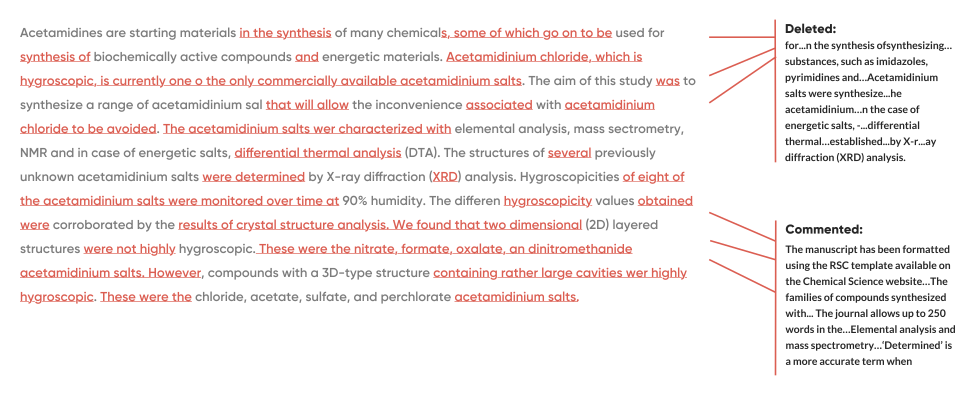
Medical & Scientific Communication
- Medico Legal Services
- Educational Content
- Academic Editorial Services
- Sample Work
Academic Editorial Services
- Educational Editorial Service
-
Education Editorial Services
- Sample Work
Education Editorial Services
-
- Industries
- Subjects
- About Us
- Academy
- Insights
- Contact Us
How to Write a Research Paper for Journal Publication in 2026
- Home
- Academy
- Publication support
- How to Write a Research Paper for Journal Publication in 2026
Research Impact
Interesting topics
How to Write a Research Paper for Journal Publication in 2026
To successfully publish a research article within an accredited scientific journal by the year 2026, there is more than just presenting findings. Due to rising competition in the publishing industry, all professional journals will look for manuscripts that show originality, accuracy and precision in methodology, integrity of ethics and scholarly communication. To meet these requirements and still follow developing publications and the appropriate digital resource tools, as well as the editors’ requirements, researchers need to understand the ever-evolving standards of journal publishing and how to write a research paper for journal publication effectively.[1]
This publication will provide a listing of some of the most important elements of creating a quality research article suitable for publication in an accredited scientific journal in 2026, while emphasising issues relating to the formats and structures of articles, clarity of written word and adherence to global standards of academic integrity. It also serves as a practical guide on how to publish a research paper successfully in today’s competitive academic environment.
1. Understanding Journal Expectations in 2026
The growth of open-access journals, digital repositories, and AI-assisted research tools has caused a marked change in how academic publishing operates. In general, journals use multiple criteria to assess submissions: originality, relevance to current scholarship, clarity of argumentation, and methodological rigour. Understanding the research paper publication process is therefore essential for modern researchers.[2]
Before drafting the manuscript, authors need to closely read and understand the target journal’s scope, formatting guidelines, and submission requirements. Carefully matching the target journal and the research topic increases the likelihood of an editorial match and ensures a proper research paper format for journal submission.
- Clear research contribution and originality
- Methodological transparency and ethical adherence
- Good integration with the literature
- Logical structure and quality of academic writing
Most desk rejections occur before a journal will peer-review a work that does not match its expectations or fails to follow the correct research paper format for journal submission.
2. Planning and Structuring the Research Paper
A well-structured research paper enhances readability and increases the likelihood of acceptance. Most journals follow the IMRaD format (Introduction, Methods, Results, and Discussion), although variations exist depending on discipline. Following the correct research paper format for a journal ensures that manuscripts meet editorial expectations.[3]
| Section | Purpose | Key Focus |
| Title & Abstract | Introduce the study and findings | Clarity and relevance |
| Introduction | Present research problem | Context and objectives |
| Literature Review | Position within scholarship | Critical analysis |
| Methodology | Explain the research design | Justification and ethics |
| Results | Present findings | Accuracy and clarity |
| Discussion | Interpret findings | Contribution to knowledge |
| Conclusion | Summarise insights | Implications and future research |
Maintaining coherence between these sections ensures that the research narrative progresses logically.
3. Developing a Strong Research Argument
The successful journal article contains a clearly defined and compelling thesis. Clearly articulate your identified research gap and identify exactly how your findings will add to, enhance or contribute to existing knowledge in your area of focus. Strong literature review writing is essential for identifying research gaps and positioning your work within scholarly debates.[4]
Your introduction should provide a backdrop for the study or research problem you are attempting to resolve. Your introduction should outline the research issue by clearly defining who is conducting the research and what his or her primary objectives are. You should provide an extremely brief overview of your research, presenting only enough information to direct prospective readers to your primary research question.
The discussion section of your paper should return to your original thesis statement and explain how the findings you generated in the results section inform your original thesis statement (research issue). Your results must connect back to theory and your previously published literature to validate your findings and demonstrate intellectual participation on the part of the writer through effective literature review writing and analysis.
4. Writing with Academic Precision
Clear, precise, and readily comprehensible academic writing is stressed in 2026. More journals are valuing concise writing that conveys difficult concepts with greater efficiency through the elimination of superfluous jargon. Following proven academic writing tips can significantly improve manuscript quality. The author is also expected to use a formal style when writing and ensure that the use of terminology is consistent throughout the text of the manuscript.[5]
Editing and proofing are each critical steps in preparing a manuscript. The elements of grammar, coherence and reference accuracy play a major role in determining whether to accept a manuscript; therefore, the revision process must be followed thoroughly. Many researchers also rely on professional scientific editing services or a research paper writing service for language refinement and structural clarity.
Automation tools are now being utilised by many journals to identify any possible instances of plagiarism and language inconsistency. As such, the need for careful revision cannot be stressed enough, along with the use of reliable scientific editing services when necessary.
5. Using Digital Tools and Ethical Research Practices
Digital technologies have transformed the current research publishing landscape of 2026. Key tools used to improve manuscript quality today include reference management software, plagiarism detection tools, and visualisation tools. However, it is necessary to use these tools ethically. [6]
- All sources must be cited properly
- The collection and analysis of data must be transparent
- All sources of funding/conflicts of interest must be disclosed
Ethically complying with these expectations contributes towards researchers being credible and satisfies journal expectations for sound research reporting practices within the research paper publication process.
6. Preparing for Peer Review and Submission
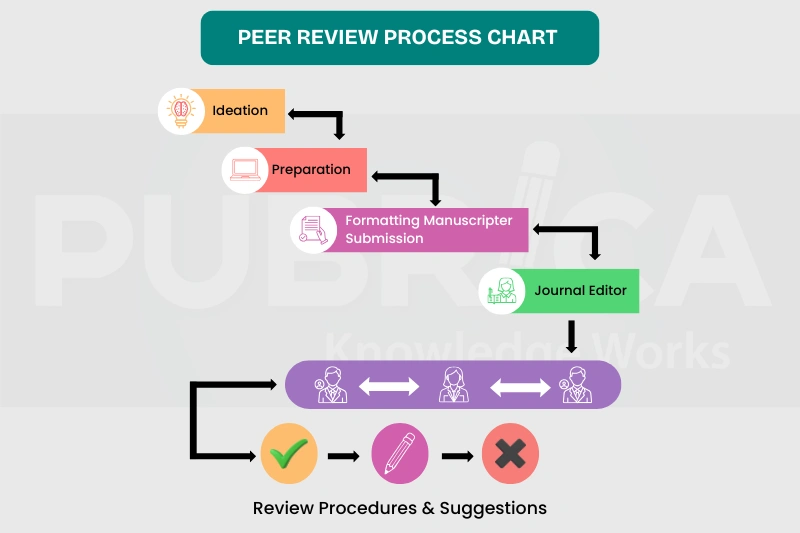
When you’re finished writing your article(s), you’ll have to make them fit the specific journal’s requirements (citing sources, word count limits, etc.). A well-formatted submission shows that you’re a professional and supportive of the editorial process and demonstrates understanding of how to publish a research paper effectively.[7] Reviewers will evaluate your manuscript during the peer-review phase based on its originality (creativity), clarity and methodology. Address any constructive comments raised by the reviewers very seriously before submitting again. How you respond to the reviewers’ comments, professionally, will often determine if your manuscript will be accepted for publication as part of the overall research paper publication process.
Connect with us to explore how we can support you in maintaining academic integrity and enhancing the visibility of your research across the world!
Conclusion
Strategic planning, rigorous methodology, and clear academic communication are essential for successful research paper publication in 2026. Understanding how to write a research paper for journal publication, selecting the right journal, maintaining a coherent structure, and following ethical research practices significantly improve publication success.
Careful editing, applying essential academic writing tips, and responding effectively to peer-review feedback help ensure research is recognised within the global academic community. Publishing in reputable journals enhances academic careers while contributing to the advancement of knowledge and strengthening expertise in how to publish a research paper successfully.
How to Write a Research Paper for Journal Publication in 2026. Our Pubrica consultants are here to guide you. [Get Expert Publishing Support] or [Schedule a Free Consultation]
Frequently asked questions
1.How to write a paper for publication in a medical journal?
To write a paper for publication in a medical journal, choose a relevant research topic, follow the target journal’s guidelines, and structure your paper using the IMRaD format (Introduction, Methods, Results, Discussion). Use clear academic writing, support claims with evidence, follow ethical standards, and revise the manuscript before submission.
2.What are the 7 steps of writing a research paper?
The seven steps of writing a research paper are selecting a topic, conducting a literature review, developing a research question, designing methodology, collecting and analysing data, writing the paper, and editing before submission.
3. What are the 4 major parts of a research paper?
The four major parts of a research paper are introduction, methodology, results, and discussion. These sections present the research problem, explain the study design, show findings, and interpret results.
4. What are the common mistakes in research papers?
Common mistakes in research papers include weak research questions, poor structure, lack of credible sources, plagiarism, improper referencing, and unclear arguments. These errors can reduce the chances of publication.
5. What to avoid when writing a research paper?
Avoid informal language, plagiarism, weak evidence, poor organisation, and ignoring journal guidelines when writing a research paper. Clear structure, proper referencing, and thorough proofreading are essential for quality research writing.
References
- Busse, C., & August, E. (2021). How to Write and Publish a Research Paper for a Peer-Reviewed Journal. Journal of cancer education : the official journal of the American Association for Cancer Education, 36(5), 909–913. https://doi.org/10.1007/s13187-020-01751-z
- Walshe, C., & Ashby, D. (2026). Opening the black box: Understanding the editorial and peer review journey of a manuscript. Palliative medicine, 40(1), 4–6. https://doi.org/10.1177/0269216325
- Poldiak, N. P., & Crossley, N. (2025). How to Write a Successful Research Manuscript: Back to Basics. HCA healthcare journal of medicine, 6(2), 193–203. https://doi.org/10.36518/2689-0216.1715
- Mensh, B., & Kording, K. (2017). Ten simple rules for structuring papers. PLoS computational biology, 13(9), e1005619. https://doi.org/10.1371/journal.pcb
- Tharayil, H. M., Beg, M. J., & Andrade, C. (2024). Precision writing in scientific manuscripts: The importance of choosing the right words. Indian journal of psychiatry, 66(1), 116. https://doi.org/10.4103/indianjpsy
- Grosman-Rimon, L., & Wegier, P. (2024). With advancement in health technology comes great responsibility – Ethical and safety considerations for using digital health technology: A narrative review. Medicine, 103(33), e39136. https://doi.org/10.1097/MD.00000
- Sedaghat, A. R., Bernal-Sprekelsen, M., Fokkens, W. J., Smith, T. L., Stewart, M. G., & Johnson, R. F. (2024). How to be a good reviewer: A step-by-step guide for approaching peer review of a scientific manuscript. Laryngoscope investigative otolaryngology, 9(3), e1266. https://doi.org/10.1002/lio2.1266