- Services
- Discovery & Intelligence Services
- Publication Support Services
- Sample Work
Publication Support Service
- Editing & Translation
-
Editing and Translation Services
- Sample Work
Editing and Translation Service
-
- Research Services
- Sample Work
Research Services
- Physician Writing
- Sample Work
Physician Writing Service
- Statistical Analyses
- Sample Work
Statistical Analyses
- Data Collection
- AI and ML Services
- Sample Work
AI and ML Services
- Medical Writing
- Sample Work
Medical Writing
- Research Impact
- Sample Work
Research Impact
- Medical & Scientific Communication
- Sample Work
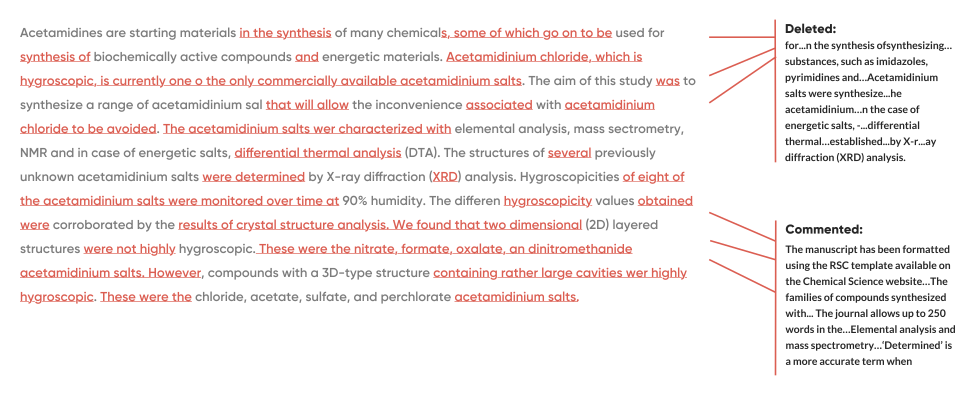
Medical & Scientific Communication
- Medico Legal Services
- Educational Content
- Academic Editorial Services
- Sample Work
Academic Editorial Services
- Educational Editorial Service
-
Education Editorial Services
- Sample Work
Education Editorial Services
-
- Industries
- Subjects
- About Us
- Academy
- Insights
- Contact Us
How Publication Support Services in New Zealand Improve Journal Acceptance Rates
How Publication Support Services in New Zealand Improve Journal Acceptance Rates
The competition to publish in high-impact journals has grown more intense. Researchers must demonstrate complete proficiency in their methodology, reporting, formatting and ethical compliance as global submission volumes are increasing, while journal standards are becoming more stringent. The Publication Support Services New Zealand help academics from Auckland, Wellington, Christchurch and beyond, to connect their research work with successful publication outcomes. This study investigates three main areas which include the impact of structured support systems on journal acceptance rates in New Zealand, the reasons why researchers prefer professional guidance and what criteria is used by the Best publication support services for researchers in NZ stand out.
1. The Growing Challenge of Journal Acceptance
Journal rejection rates worldwide range from 40% to 90% which varies according to each journal’s specific scope and impact factor.
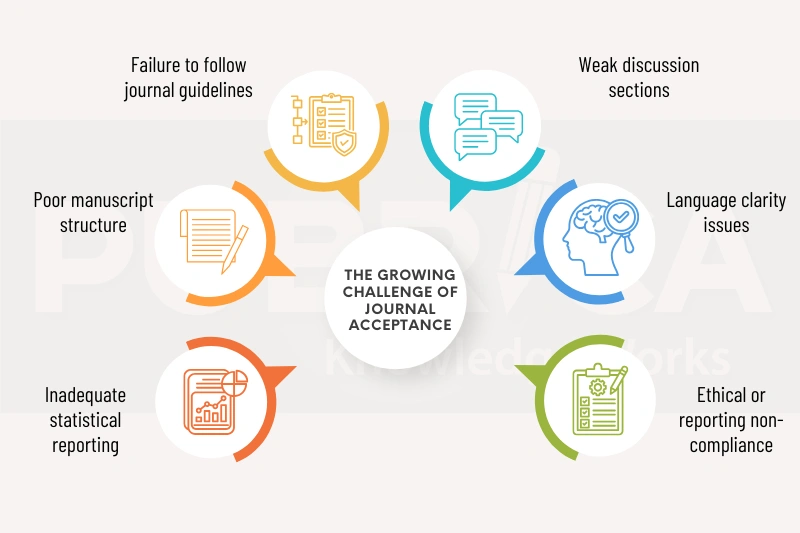
Even high-quality research can be rejected due to presentation gaps, particularly in clarity and structural alignment. This is where Journal submission support for NZ researchers becomes a strategic advantage.
What Editors Really Look For
Journal editors typically prioritize:
- Methodological rigor
- Clear reporting standards (CONSORT PRISMA STROBE)
- Logical flow and structure
- Journal-specific formatting
- Ethical transparency
Acceptance probability decreases significantly when any area of these requirements is not met.
2. Strategic Manuscript Structuring
Professional Publication support services New Zealand ensure that manuscripts are structured according to international publication standards. The requirements include the following elements:
- The IMRaD format requires complete scientific study
- Abstracts must be written as short yet powerful summaries
- Discussions must use evidence to support their claims
- An analysis should present evidence from both sides without making any claims.
Structured reporting has been shown to improve transparency and manuscript quality, thereby enhancing publication outcomes. By refining logical flow and argument coherence, support services elevate manuscript readability — a key factor in peer review success.
Example: Reporting Standards and Acceptance
Study: Moher, D., Liberati, A., Tetzlaff, J., & Altman, D. G. (2009)
The PRISMA guidelines which Moher et al. introduced in 2009 serve to enhance systematic review studies through their ability to show all aspects of the research. The study shows that structured reporting frameworks improve manuscript clarity and reproducibility and editorial confidence which results from using these frameworks to review submitted work. The authors emphasize that incomplete reporting is one of the major barriers to peer-review approval. The researchers who use standardized reporting checklists to align their research manuscripts with these standards will achieve a major reduction in desk rejection chances according to Moher et al. 2009.
This example highlights why Publication support services New Zealand prioritize reporting guideline compliance to help Improve journal acceptance rates NZ.
3. Advanced Language and Technical Editing
Although researchers in New Zealand typically speak English fluently, academic writing requires much greater precision beyond conversational fluency
Editing services offer:
- Tone refinement to meet academic requirements
- Removal of redundant words
- Terminology consistency
- Simplification of the description of complex research methodologies
The clarity of the written language influences the way the reviewers receive the manuscripts, which determines the outcome of the editorial process. Technical editing relieves the reviewer’s cognitive burden, which improves the probability of a positive review.
The revised version enhances clarity, precision, and data emphasis — critical for peer review.
BEFORE EDITING:
The results show improvement in several factors which are statistically significant and demonstrate positive trends across multiple patient groups.
AFTER EDITING:
Statistically significant improvements were observed across all primary endpoints, particularly among patients aged 40–65 (p < 0.05).
4. Compliance with Reporting Guidelines
The Failure to adhere to Standard Reporting Guidelines such as CONSORT, PRISMA and STROBE is one of the main reasons for desk rejection.
The best publication support services for researchers in NZ will ensure:
- Checklist integration
- Flow diagram accuracy
- Structured methodology alignment
- Supplementary documentation preparation
This proactive approach to compliance will directly assist researchers in improving the acceptance Rate of their Journals in NZ.
5. Target Journal Selection Strategy
The process of selecting a journal for publication holds equal importance to the actual writing of the manuscript. The professional services deliver services which include
- Scope alignment analysis
- Impact factor assessment
- Open access vs subscription evaluation
- Predatory journal screening.
Research that has been conducted on the patterns that are followed by scholars while publishing has shown that journal mismatches can cause unnecessary publication delays (Björk & Solomon, 2013). Submitting to unsuitable journals reduces efficiency and delays impact.
Example: Journal Selection and Publication Strategy
Study: Björk, B. C., & Solomon, D. (2013)
Björk and Solomon (2013) analyzed publishing delays in peer-reviewed journals and found that mismatched journal targeting significantly increases publication timelines. Their findings suggest that strategic journal selection improves review efficiency and reduces resubmission cycles.
This evidence supports why the publication support services for researchers in NZ conduct journal suitability assessments before submission. Strategic targeting reduces rejection risk and enhances overall publication success.
Why Journal Matching Matters
Submitting to a journal outside your research scope can result in:
- Immediate desk rejection
- Delayed resubmission timelines
- Reduced funding impact
- Lower citation potential
The process of strategic targeting leads to higher chances of first-round acceptance.
6. Manuscript Formatting and Technical Compliance
Among the most preventable reasons for rejection are formatting errors. A professional Manuscript Formatting Service in NZ guarantees:
- Accuracy of referencing style (APA, AMA, Vancouver, etc.)
- Resolution and formatting of figures
- Table formatting
- Word count
- Structured headings according to the template provided
It is expected that editors will adhere to the guidelines provided very strictly. Even minor infractions may indicate poor quality of the manuscript.
7. Ethical and Plagiarism Compliance
Ethical transparency is not open to negotiation within academic publishing. Clear ethical disclosures and conflict of interest statements are key to publication integrity, according to COPE (2019). Publication support services include:
- Conflict of interest statements
- Ethics committee documentation
- Plagiarism screening
- Data availability statements
Ethical alignment is key to establishing trust with editors and increasing the credibility of a manuscript. Pre-submission similarity checks:
- Reduce risk of editorial rejection
- Improve paraphrasing quality
- Enhance citation completeness
- Protect academic reputation
8. Peer Review Response Support
Even strong manuscripts often receive revision requests. Professional Journal Submission Support for NZ Researchers includes:
- Reviewer Comments Analysis
- Well-structured Response Letters Development
- Evidence-based Response Justification
- Tone Control for Professional Communication
Well-structured response letters can greatly impact the final decision by the editor.
9. Increasing Global Competitiveness for NZ Researchers
Although the research environment in New Zealand is considered one of the best, the level of competition is always on the rise. The broader scholarly publishing landscape shows increasing submission volumes and competitive selection standards.
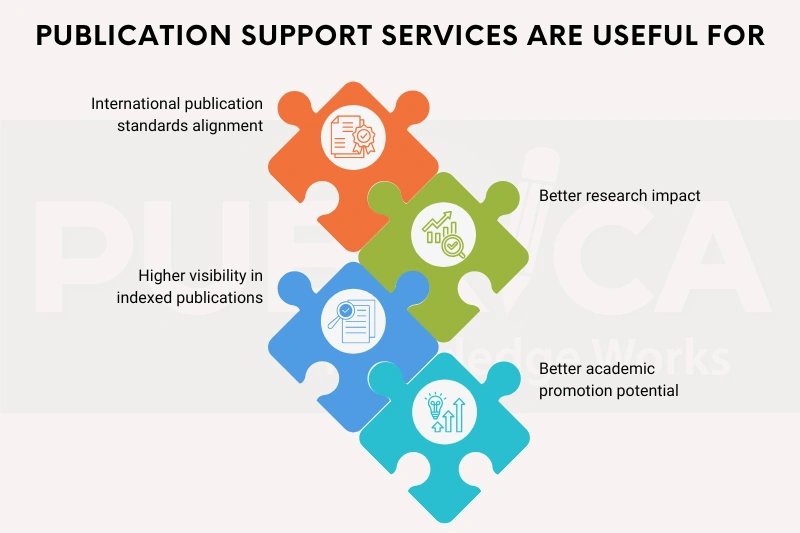
Strategic editorial assistance is useful for improving research performance.
A biomedical researcher in Wellington submitted a manuscript independently and faced desk rejection due to formatting inconsistencies and insufficient reporting clarity. After engaging Pubrica’s Publication support services New Zealand:
- Reporting guidelines were integrated
- Discussion was strengthened
- Formatting aligned with journal standards
- Ethical statements were clarified
The revised manuscript was accepted after minor revisions — demonstrating how structured support can measurably Improve journal acceptance rates NZ.
Conclusion
Refinement of the manuscript with a structured approach ensures better readability and improves the logical presentation of the research findings. Technical editing helps in better perception by the reviewer, ensuring the manuscript is clear, precise, and consistent with academic standards. Adherence to guidelines reduces the risk of desk rejections, while strategic journal selection helps in saving valuable time and ensuring better acceptance. Technical formatting ensures better technical compliance, while ethical transparency helps build trust with the editor, which is essential for publication success. When all the components are integrated, it ensures a complete framework for publication success. By utilizing the benefits of structured professional guidance, the researcher can better position his work in the global academic landscape. All the components, therefore, together improve journal acceptance rates NZ, which makes the strategic value of publication support more prominent.
Ready to Publish with Confidence? Turn your research into a publication-ready manuscript with expert guidance that helps improve journal acceptance rates. [Get Expert Publishing Support] or [Schedule a Free consultation].
References
- Moher, D., Liberati, A., Tetzlaff, J., & Altman, D. G. (2009). Preferred reporting items for systematic reviews and meta-analyses: The PRISMA statement. PLoS Medicine, 6(7), e1000097. https://doi.org/10.1371/journal.pmed.1000097
- Björk, B.-C., & Solomon, D. (2013). The publishing delay in scholarly peer-reviewed journals. Journal of Informetrics, 7(4), 914–923. https://doi.org/10.1016/j.joi.2013.09.001