Contents
Academy · Research
Why Perform A Meta – Analysis Evidence Based Research?
Table of Contents1. The Need Of Performing Meta-Analysis 2. Steps To Perform A Meta-Analysis 3. References 4. Related Topics 5. Tags
Table of Contents
1. The Need Of Performing Meta-Analysis
2. Steps To Perform A Meta-Analysis
3. References
4. Related Topics
5. Tags
Meta-Analysis refers to the statistical procedure for collaborating data from different studies based on a particular topic. Meta-analysis is used to study and identify the common effect of a particularly same treatment wherein the effect of the treatment remains consistent through multiple cases of study. Meta-analysis performs a crucial role in evidence-based health care. In comparison to other study designs like cohort studies or randomized controlled trails Meta-analysis is placed at the top of ‘levels of evidence’ in the pyramid of evidence-based healthcare. The pyramid particularly helps analyze the different levels of evidence that are available.

Fig 1. Graphical summary of Meta-analysis
As one proceeds to the top from every level of evidence in the evidence pyramid the evidence becomes less biased as compared to previous level. Thus, Meta-analysis can be regarded as the apex of healthcare evidence (Haidich, 2010) .
Meta-analyses began to appear as a leading part of research in the late 70s. Since then, they have become a common way for synthesizing evidence and summarizing the results of individual studies(Chalmers et al., 1977) .
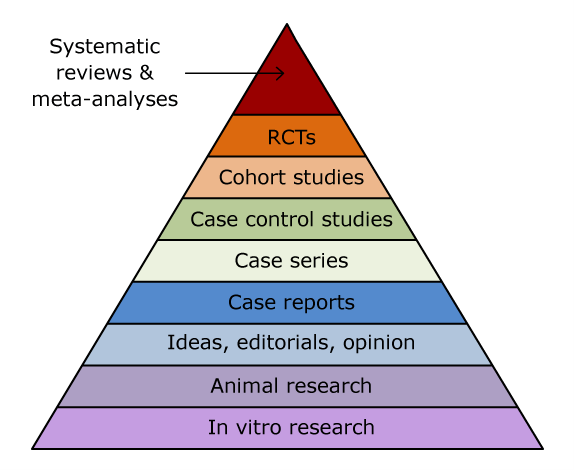
Fig 1. Graphical summary of Meta-analysis
The Need Of Performing Meta-Analysis
The validity of hypothesis cannot be based on outcomes of a single study. The results keep varying from one study to another. The results can differ due to multiple reasons like different study samples used and, confounding factors. Therefore, a mechanism is needed for synthesizing data across multiple studies. Narrative reviews are used for this purpose. The major drawbacks associated with narrative reviews is that these reviews are largely subjective i.e. different experts come to different conclusions based on their methods of study and results. It becomes more difficult when multiple studies are involved. Meta-analysis on the contrary makes use of objective formulas i.e. apply statistics to a single study. This method can be used for multiple studies.
The combination of different studies which indirectly provide more data can prove beneficial and also help in improving and achieving precision and accuracy in individual studies. Alternately if the individual studies are underpowered their combination in a meta-analysis can improve the total statistical power used to detect a particular effect.
Steps To Perform A Meta-Analysis.
Following are the basic steps involved in carrying out basic Meta-analysis (Field & Gillett, 2010)
1. Identify or formulate the problem
Determine the question to be answered.
2. Carry out a literature review.
This step involves the study and search of different databases that include various reviewed articles. A few of the platforms can be PubMed, Embase, Scopus, etc.
3. Decide the inclusion or selection criteria.
One should set a inclusion and exclusion criteria that will provide you with high quality evidence and provide direct relevance to your problem statement.
4. Data extraction.
One needs to extract data that highlights the results of your area of interest that need to be combined in the final set of analysis.
5. Carry out basic Meta-analysis.
One can select from the multiple soft wares that are available to carry out the process. Review Manager and Comprehensive Meta-Analysis Software are a few of them.
Need support with this?
Pubrica’s writers, editors and statisticians work with authors on research and related publication tasks. The authors keep ownership of the work and responsibility for its content. Talk to the team.