
- Services
- Discovery & Intelligence Services
- Publication Support Services
- Sample Work
Publication Support Service
- Editing & Translation
-
Editing and Translation Services
- Sample Work
Editing and Translation Service
-
- Research Services
- Sample Work
Research Services
- Physician Writing
- Sample Work
Physician Writing Service
- Statistical Analyses
- Sample Work
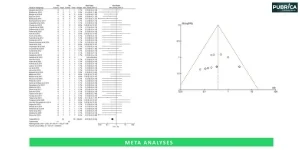
Statistical Analyses
- Data Collection
- AI and ML Services
- Sample Work
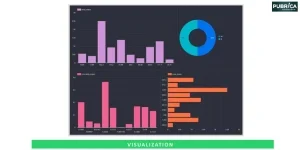
AI and ML Services
- Medical Writing
- Sample Work
Medical Writing
- Research Impact
- Sample Work
Research Impact
- Medical & Scientific Communication
- Sample Work
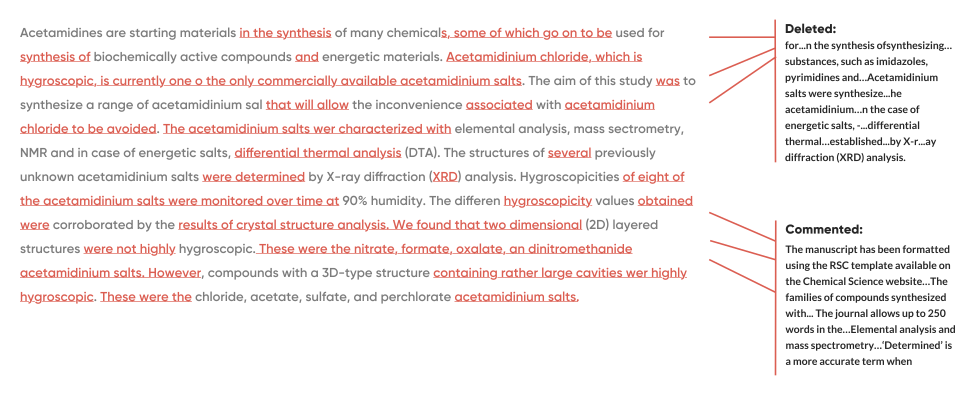
Medical & Scientific Communication
- Medico Legal Services
- Educational Content
- Academic Editorial Services
- Sample Work
Academic Editorial Services
- Educational Editorial Service
-
Education Editorial Services
- Sample Work
Education Editorial Services
-
- Industries
- Subjects
- About Us
- Academy
- Insights
- Contact Us
Pre-Submission Peer Review: An Independent Expert Read Before You Risk Desk Rejection
High-Impact Journals
- What Is Pre-Submission Peer Review?
- Why Pre-Submission Peer Review Matters
- Key Components of an Effective Pre-Submission Review
- Common Reasons for Desk Rejection
- Benefits of Independent Expert Review
- Pre-Submission Review Workflow
- Best Practices Before Journal Submission
- Challenges and Limitations
- Future of Pre-Submission Peer Review
- Conclusion
Interesting topics
Pre-Submission Peer Review: An Independent Expert Read Before You Risk Desk Rejection
Publishing articles in high impact journals has become increasingly difficult with lots of articles being rejected before even being sent for external peer reviews. The reason for this decision made by the editor, which is termed as a desk rejection, usually concerns the problems associated with the quality of research, appropriateness for the journal, methodology, poor scientific writing and non-compliance with the journal guidelines rather than with novelty of the research.
Pre-submission peer review, including a pre-submission peer review service, is an independent review carried out prior to manuscript submission. It helps authors receive an objective review of scientific, methodological, reporting, language and journal appropriateness aspects. An independent expert manuscript review greatly improves the quality of manuscript and chances of getting it to peer review. [1]
1. What Is Pre-Submission Peer Review?
Pre-submission peer review refers to external evaluation performed by experts in the subject field before submission of the article for consideration in a journal. This type of evaluation is voluntary and differs from journal peer review in that the latter makes decisions on publication. The evaluation normally addresses:[2]
- Originality of scientific work
- Methodology of research
- Statistical analysis
- Interpretation of results
- Quality of reporting
- Conformity with journal guidelines
The main goal is to identify flaws which might cause editorial rejection.
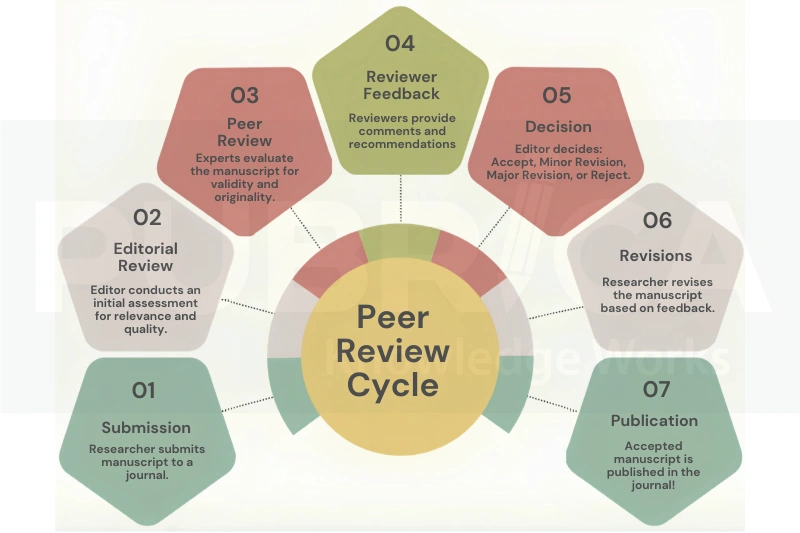
The main goal is to identify flaws which might cause editorial rejection. A comprehensive pre submission review report provides authors with detailed recommendations for improvement and supports desk rejection prevention.
2. Why Pre-Submission Peer Review Matters
The editors of academic journals receive a great number of submissions on a yearly basis, and sometimes they make their decision regarding the rejection or acceptance of a manuscript within several days.
An independent review before submitting your manuscript will enable researchers to:
- Makes the research more scientifically clear.
- Makes methodological description stronger.
- Ideally correlates research results.
- Conforms to reporting guidelines.
- Fit for the journal.
This way, you will not be wasting your time anymore. A mock peer review before journal submission helps authors experience reviewer-style evaluation and improves overall journal readiness check before submission.
3. Key Components of an Effective Pre-Submission Review
A comprehensive review examines multiple aspects of the manuscript.[3]
| Review Component | Purpose | Outcome |
| Scientific Novelty | Assess research contribution | Demonstrates originality |
| Research Methodology | Evaluate study design | Improves methodological rigor |
| Statistical Analysis | Verify analytical accuracy | Reliable interpretation |
| Literature Review | Assess evidence support | Stronger scientific context |
| Writing Quality | Improve readability | Better reviewer experience |
| Journal Compliance | Check formatting and reporting | Reduced technical rejection |
Each component contributes to improving overall manuscript quality before journal submission. A structured pre-submission peer review service ensures every component is carefully evaluated.
4. Common Reasons for Desk Rejection
Manuscripts are often rejected prior to peer review due to avoidable factors.
Reasons for rejection may include:
- A bad fit for the journal’s scope.
- Good research design.
- Bad statistical analysis.
- Lack of novelty.
- Bad writing in English or science.
- Incomplete reporting.
- Failure to adhere to author guidelines.
Many of these can be found and fixed in pre-submission reviews, significantly contributing to desk rejection prevention and improving publication readiness.
5. Benefits of Independent Expert Review
The independent review process ensures the objective scientific review free from editorial influence.
The advantages are as follows:
- Identifying any potential weakness in methodology.
- Sound scientific reasoning.
- Effective communication of findings.
- Effective discussion and conclusions.
- Greater adherence to reporting guidelines.
- Increased confidence prior to submission.
This process usually imitates the demands of the journal reviewers. An independent expert manuscript review together with peer reviewer feedback before submission allows authors to strengthen their manuscript before journal evaluation.
6. Pre-Submission Review Workflow
A structured review process ensures comprehensive manuscript evaluation.[4]
| Stage | Activity | Expected Output |
| Manuscript Assessment | Initial scientific evaluation | Review scope established |
| Methodology Review | Assess research design | Methodological improvements |
| Statistical Evaluation | Verify analyses | Accurate interpretation |
| Language Editing | Improve scientific writing | Clear communication |
| Journal Compliance | Check formatting and reporting | Submission-ready manuscript |
| Final Quality Check | Review revisions | Improved publication readiness |
This workflow minimizes the likelihood of editorial rejection.
7. Best Practices Before Journal Submission
These methods will improve the chances of being published through adherence to several best practices: [5]
- Choosing a relevant journal in accordance with the scope of research.
- Safeguarding all the author’s guidelines.
- Following guidelines for scientific reports (CONSORT, PRISMA, STROBE, CARE, etc.).
- Verifying all statistics.
- Guaranteeing proper citation and referencing.
- Achieving a mock peer review before journal submission and obtaining peer reviewer feedback before submission.
Sufficient preparation will increase the quality of the paper.
8. Challenges and Limitations
While pre-submission review presents several benefits, there are still some issues involved. Independent reviewers may hold different scientific views, and the author must critically analyse the varying advice provided. Pre-review will also add to the preparation time before the actual submission of the manuscript. Additionally, while pre-review decreases chances for desk rejection, it cannot assure that the manuscript will be accepted since the decision will depend not only on the quality of work but also on the editorial considerations.
However, dealing with scientific problems prior to submission is much easier than fixing mistakes after desk rejection. A detailed pre submission review report helps authors prioritize revisions before submission.
9. Future of Pre-Submission Peer Review
New technologies for digital publication are revolutionizing manuscript review processes.
- AI-assisted manuscript review.
- Mechanisms to ensure conformity with reporting guidelines.
- Statistical validity software.
- Software for language quality evaluation.
- Online peer review collaboration sites.
All these systems aid human reviewers by providing consistency, efficiency, and improved quality in publications while complementing pre-submission peer review service workflows.
Connect with us to explore how we can support you in maintaining academic integrity and enhancing the visibility of your research across the world!
Conclusion
Pre-submission peer review plays a critical role in ensuring that quality is maintained in research papers before their submission to scientific journals. Through the independent expert manuscript review, quality is assured in the scientific nature of research, methodology used, statistical validity, clarity of reporting, and adherence to journal guidelines. Early identification of problems with the manuscript supports desk rejection prevention and prevents it from being desk rejected.
With scientific publishing becoming increasingly competitive, including pre-submission peer review in the research publication process would be a good proactive approach towards generating publishable research papers.
Pre-Submission Peer Review: An Independent Expert Read Before You Risk Desk Rejection.Our Pubrica consultants are here to guide you. [Get Expert Publishing Support] or [Schedule a Free Consultation]
Frequently Asked Questions (FAQs)
A pre-submission peer review service is an independent evaluation of a research manuscript before it is submitted to a journal. Subject experts assess the manuscript’s scientific quality, methodology, statistical analysis, reporting, language, and compliance with journal guidelines to improve its chances of progressing to external peer review.
A mock peer review before journal submission simulates the journal peer review process by providing constructive feedback from independent experts. It helps authors identify weaknesses, strengthen their manuscript, address reviewer concerns in advance, and improve overall publication readiness.
Yes. A comprehensive pre-submission peer review service supports desk rejection prevention by identifying issues such as poor journal fit, methodological weaknesses, reporting deficiencies, formatting errors, and language problems before submission. Addressing these issues increases the likelihood of the manuscript being sent for external peer review.
An independent expert manuscript review typically includes an evaluation of the study’s originality, research methodology, statistical analysis, interpretation of results, scientific writing, adherence to reporting guidelines, and journal suitability. Authors also receive a detailed pre submission review report with recommendations for improving the manuscript.
A journal readiness check is a final assessment performed before manuscript submission to ensure that the article meets the target journal’s requirements. It verifies formatting, reporting standards, references, ethical compliance, and overall manuscript quality. Combined with peer reviewer feedback before submission, it helps authors submit a stronger, publication-ready manuscript.
References
- Künzli, N., von dem Knesebeck, O., Madarasova Geckova, A., Park, S., & Woodrow, C. (2026). Desk Rejection Decisions – Do Co-Editors-In-Chief of This Journal Agree?. International journal of public health, 71, 1608909. https://doi.org/10.3389/ijph.2026.1608909
- Drozdz, J. A., & Ladomery, M. R. (2024). The Peer Review Process: Past, Present, and Future. British journal of biomedical science, 81, 12054. https://doi.org/10.3389/bjbs.2024
- DeHart, W. B., Griffin, E., Sundaram, S., Wood, B. E., & Flynn, M. G. (2022). An Introduction to Reviewing Research Articles for Academic Journals. HCA healthcare journal of medicine, 3(6), 355–362. https://doi.org/10.36518/2689-0216
- Johnson, M. O., Neilands, T. B., Kegeles, S. M., Gaffney, S., & Lightfoot, M. A. (2020). The Architecture of an Internal, Scientific, Presubmission Review Program Designed to Increase the Impact and Success of Grant Proposals and Manuscripts. Academic medicine : journal of the Association of American Medical Colleges, 95(2), 200–206. https://doi.org/10.1097/ACM.000
- Ochner, C. N., & Mineo, J. (2020). A Brief Tutorial on Manuscript Preparation: From Journal Selection to Manuscript Review. HCA healthcare journal of medicine, 1(1), 3–10. https://doi.org/10.36518/2689-0216.1023