
- Services
- Discovery & Intelligence Services
- Publication Support Services
- Sample Work
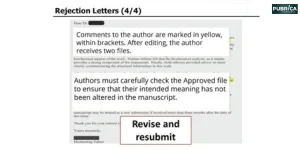
Publication Support Service
- Editing & Translation
-
Editing and Translation Services
- Sample Work
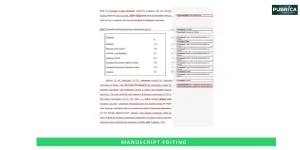
Editing and Translation Service
-
- Research Services
- Sample Work
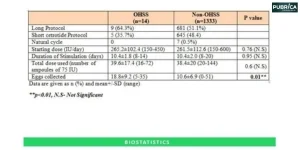
Research Services
- Physician Writing
- Sample Work
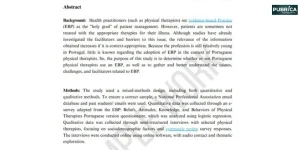
Physician Writing Service
- Statistical Analyses
- Sample Work
Statistical Analyses
- Data Collection
- AI and ML Services
- Sample Work
AI and ML Services
- Medical Writing
- Sample Work
Medical Writing
- Research Impact
- Sample Work
Research Impact
- Medical & Scientific Communication
- Sample Work
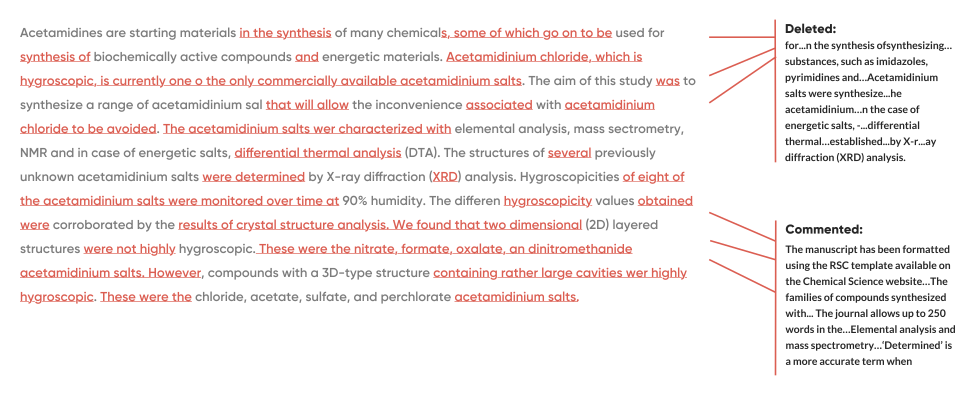
Medical & Scientific Communication
- Medico Legal Services
- Educational Content
- Academic Editorial Services
- Sample Work
Academic Editorial Services
- Educational Editorial Service
-
Education Editorial Services
- Sample Work
Education Editorial Services
-
- Industries
- Subjects
- About Us
- Academy
- Insights
- Contact Us
Writing a scientific research article that meets the standards of a journal, requires more than simply presenting data – it requires clarity, structure, accuracy, and ethical integrity. For first-time authors and researchers alike, understanding how to write, structure and submit a manuscript is vital for having your work published in peer-reviewed journals
How to Bridge the Gap Between Submission and Acceptance Using Peer Review
- Home
- academy
- Medical Writing
- How to Bridge the Gap Between Submission and Acceptance Using Peer Review
Peer Review
Interesting topics
How to Bridge the Gap Between Submission and Acceptance Using Peer Review
1. Introduction: Turning Rejection into Acceptance
2. Understanding the Peer Review Ecosystem
3. Pre-Submission Peer Review: The Hidden Advantage
4. Choosing the Right Journal: Fit Before Submission
5. Respond Strategically to Reviewer Comments
6. Mastering the Art of Revision
7. Engaging With Editors: Effective Communication is Crucial
8. Learn from Rejection: Transforming Setbacks into Stepping Stones
9. Use Technology and Tools
10. Maintain Ethical Standards Throughout
11. Conclusion: Peer Review as a Pathway, Not a Hurdle
12. References
Introduction: Turning Rejection into Acceptance
Submitting a manuscript to a peer-reviewed journal is one of the most important moments in the research publication process. However, many are stuck in the limbo between submission and acceptance, with peer review acting as the bottleneck. Instead of perceiving peer review as a barrier, researchers need to think of peer review as a bridge to help refine and elevate their work. [1],[2]
This article provides actionable approaches to turning peer review into a bridge from submission to acceptance.
1. Understanding the Peer Review Ecosystem
| Authors | Provide clear, ethical, and organized work. |
| Reviewers | Experts who provide a robust evaluation of the strengths and weaknesses of the manuscript. |
| Editors | Final decision-makers, or facilitators, of the review process are involved. |
Insight: The peer review is not a barrier but a collaborative dialogue aimed at refining your research.
2. Pre-Submission Peer Review: The Hidden Advantage
One of the most effective but not commonly used strategies is an informal peer review before submission. [5],[6]
How do you do it?
- Obtain feedback from mentors, colleagues, or research groups.
- Use ResearchGate/Academia.edu or internal journal clubs.
- Use professional manuscript editing services.
Benefits:
- Identifies methodology issues early.
- Enhances clarity and coherence.
- Facilitates constructive criticism in a low-stakes format.
Tip: Create a checklist from frequent reviewer comments in your discipline (clarity of objectives; adequacy of literature review).
3. Choosing the Right Journal: Fit Before Submission
Poor journal selection is a common reason for desk rejections. Peer reviewers make decisions based on the journal’s scope. [7]
Strategies to Ensure Journal Fit:
- Be certain you have aligned your manuscript with the Aims and Scope of the journal.
- Read some editorials and a few recently published articles.
- Use the journal selection tools like:
- Elsevier Journal Finder
- Springer Journal Suggester
- JANE (Journal/Author Name Estimator)
Before You Submit:
- Is your research topical and timely for this journal?
- Are your references current and relevant to the journal?
Does your writing conform to the journal’s style, format, and tone?
“Manuscript-journal mismatch is a preventable cause of early rejection.”
4. Respond Strategically to Reviewer Comments
It can be overwhelming to receive feedback from reviewers, especially when the comments are quite critical. However, how you respond will influence what the next decision will be from the editor. [9]
How to Respond Effectively:
Read and Reflect First: Don’t be defensive. Give yourself 24-48 hours to reflect on the feedback.
Categorizing Comments:
- Minor – Typos, formatting issues, clarity issues
- Moderate – Add more references or clearer justification
- Major – New methodology or data analysis
Sample Table: Response Strategy
| Type of Comment | Recommended Action | Example Response (in Revision Letter) |
| Minor | Implement quickly and confirm in a letter | “Corrected typo on page 5 and reformatted Table 2 as suggested.” |
| Moderate | Clarify, justify, or revise | “Added Smith et al. (2020) to support our framework, as recommended.” |
| Major | Address comprehensively or explain limitations | “We reanalysed the dataset using ANOVA as suggested. Results are updated.” |
5. Mastering the Art of Revision
Reviewers respect thoughtful and comprehensively revised manuscripts. They will notice if revisions are superficial and will likely reject them.
Revision Checklist:
- Did you address all comments thoroughly?
- Did you highlight changes in the manuscript?
- Did you improve the clarity and consistency arguments?
- Have you checked for redundancies or contradictions?
Best Practice: Use Microsoft Word’s “Track Changes” and just highlight text so the manuscript is transparent.
6. Engaging With Editors: Effective Communication is Crucial
Editors are very important in guiding the peer review and decision process.
Tips for Author–Editor Communication:
- Be clear and direct in your cover letter and revision notes.
- If you are rejecting a revision suggestion, provide a rationale with supporting data or references.
- Tone and respect are crucial even if you disagree.
Tips: A persuasive cover letter can shape the editor’s judgment of the value of your manuscript.
7. Learn from Rejection: Transforming Setbacks into Stepping Stones
A rejection is not a dead end – it is part of the publication process. Most of the time, an accepted article was first rejected and revised.
How to Recover:
- They analyze editor and reviewer comments.
- Revise based on those comments and then submit the article to another suitable journal.
- Do not submit the same version of the article without addressing the initial comments.
Tips: A manuscript rejected today may become a landmark publication tomorrow if revised well.
Connect with us to explore how we can support you in maintaining academic integrity and enhancing the visibility of your research across the world!
8. Use Technology and Tools
Multiple platforms can help refine your manuscript before submission:
9. Maintain Ethical Standards Throughout
Publishing with integrity is essential, and the same applies to your engagement in the peer-review process.
| Do’s | Don’ts |
| Declare all conflicts of interest | Do NOT submit to multiple journals at the same time |
| Fairly cite sources | Do NOT fabricate data or identities of reviewers |
Conclusion: Peer Review as a Pathway, Not a Hurdle
Mastering peer review is not about overcoming criticism but instead recognizing it as an important step in your progression as a scholar. By responding professionally, revising properly, and reacting wisely, researchers can traverse the gulf of submission to acceptance; accordingly, good research can become a great publication.
Elevate your research publication journey with expert peer review guidance from Pubrica. Start refining your manuscripts with expert insights now!
References
- Taylor & Francis. (n.d.). Understanding peer review. Taylor & Francis Author Services. Retrieved May 17, 2025, from https://authorservices.taylorandfrancis.com/publishing-your-research/peer-review/
- ZB MED – PUBLISSO. (n.d.). Peer review: Why is it important?. Retrieved May 17, 2025, from https://www.publisso.de/en/advice/publishing-advice-faqs/peer-review
- International Committee of Medical Journal Editors (ICMJE). (n.d.). Responsibilities in the submission and peer-review process. Retrieved May 17, 2025, from https://www.icmje.org/recommendations/browse/roles-and-responsibilities/responsibilities-in-the-submission-and-peer-peview-process.html
- Council of Science Editors. (n.d.). 3 Reviewer roles and responsibilities. Retrieved May 17, 2025, from https://www.councilscienceeditors.org/2-3-reviewer-roles-and-responsibilities
- American Journal Experts (AJE). (2023, June 14). 5 benefits of presubmission review. Retrieved May 17, 2025, from https://www.aje.com/arc/benefits-of-presubmission-review/
- Journal Publishing Expert. (2024, July 3). Improve JPE submissions with pre-submission peer review. Retrieved May 17, 2025, from https://journalpublishingexpert.com/blogs/improve-jpe-submissions-with-pre-submission-peer-review/
- Taylor & Francis. (n.d.). Find the right fit for your research | Journal’s aims and scope. Retrieved May 17, 2025, from https://authorservices.taylorandfrancis.com/publishing-your-research/choosing-a-journal/how-to-use-a-journals-aims-and-scope/
- (n.d.). How to choose a journal to submit an article. Retrieved May 17, 2025, from https://scientific-publishing.webshop.elsevier.com/research-process/how-to-choose-a-journal-to-submit-an-article/
- (n.d.). How to respond to reviewer comments – the CALM way. Retrieved May 17, 2025, from https://www.elsevier.com/connect/how-to-respond-to-reviewer-comments-the-calm-way
- Grammarly. (n.d.). Free AI Writing Assistance. Retrieved May 17, 2025, from https://www.grammarly.com/
- NYU Health Sciences Library. (n.d.). Manuscript Writing – Citation Management: EndNote, RefWorks, Zotero. Retrieved May 17, 2025, from https://hslguides.med.nyu.edu/c.php?g=759389&p=10791039