Manuscript Editing for Multilingual Authors: A Content Analysis Study
- Home
- Academy
- Manuscript editing
- Manuscript Editing for Multilingual Authors: A Content Analysis Study
High-Impact Journals
- The Rise of Multilingual Scholarship
- Why Manuscript Editing Services Matter
- Common Writing Barriers Faced by Multilingual Authors
- Categories of Manuscript Editing Services
- Research Methodology: Content Analysis
- Major Findings of the Study
- Influence of Editing on Journal Acceptance
- Digital Transformation in Academic Editing
- Ethical Dimensions of Editing Support
- Recommendations for Academic Stakeholders
- Conclusion
Interesting topics
Manuscript Editing for Multilingual Authors: A Content Analysis Study
Table of Contents
1. The Rise of Multilingual Scholarship
2. Why Manuscript Editing Services Matter
3. Common Writing Barriers Faced by Multilingual Authors
4. Categories of Manuscript Editing Services
5. Research Methodology: Content Analysis
6. Major Findings of the Study
7. Influence of Editing on Journal Acceptance
8. Digital Transformation in Academic Editing
9. Ethical Dimensions of Editing Support
10. Recommendations for Academic Stakeholders
11. Conclusion
Higher education around the world has led to English becoming the language in which most research is published. This has become an obstacle to the publication process of multilingual writers. There has been an increase in demand for manuscript editing for multilingual authors and research paper editing services. Such support aids multilingual researchers in communicating more effectively through their writing. This thesis will examine how this is accomplished and the ethics involved. [1]
1. The Rise of Multilingual Scholarship
There have been notable increases in academic submissions by scientists based in Asia, Africa, Latin America, and the Middle East. Universities have adopted the use of international publications as a criterion for assessing the performance of institutions. As a result, scientists who can communicate in multiple languages are contributing to English-language journals more than ever. [2]
Although these scientists are conversant with the technicalities of their respective fields, they struggle to present sophisticated ideas in a scientifically acceptable manner in English. Variations in grammatical structures, stylistic approaches, and word choices can impact the quality of manuscripts. This has led to a reliance on scientific manuscript proofreading and editing support for academic authors.
2. Why Manuscript Editing Services Matter
The services provided by manuscript editing for multilingual authors have proven vital in ensuring that scientifically accurate studies can be converted into publication-ready articles. The impact is not limited to grammatical accuracy alone but also encompasses the enhancement of various other facets. [3]
Some of the important contributions made by manuscript editing organisations include:
- Linguistic clarification
- Logical development of arguments
- Conformity to journal specifications
- Correction of any grammatical inaccuracies
- Professional tone
Professional editing makes sure that the reviewer pays attention to the scientific content instead of getting distracted by language issues. In a highly competitive world of publications, even small language discrepancies can have adverse effects on the review process.
3. Common Writing Barriers Faced by Multilingual Authors
Multilingual scholars face a range of linguistic, cultural, and structural difficulties while writing. [2]
Key Problems
- Complexity of Academic English: The use of accurate vocabulary and grammar in scholarly writing demands more than what is learned through native writing.
- Problems in Sentence Structure: Scholars tend to translate sentence patterns of their mother tongue into English writing, resulting in unnatural sentence construction.
- Little Knowledge of Publishing Criteria: Some authors are not aware of journal formatting and reviewing criteria.
- Rejection Fears: Insecurity in language may prevent scholars from publishing papers in renowned academic journals.
- Insufficient Time: Scholars juggling with responsibilities of teaching and administration along with research have limited time for revisions.
These problems indicate the necessity of editing services in scholarly writing.
4. Categories of Manuscript Editing Services
Editing services vary depending on the depth of intervention required by the manuscript.
Editing Service | Primary Function |
Detects spelling, punctuation, and typographical errors | |
Language Editing | Improves grammar, fluency, and sentence clarity |
Structural Editing | Enhances organisation and logical consistency |
Technical Editing | Reviews subject-specific terminology and accuracy |
Some advanced services also include plagiarism checking, reference verification, and peer-review preparation.
5. Research Methodology: Content Analysis
In this research, content analysis will be used as a methodology of studying the subject under investigation, i.e., the role of editing support for academic authors in multilingual contexts. [4]
Sources Analysed
- Academic papers discussing scientific manuscript proofreading
- Instructions issued by publishers/journals
- Recommendations of peer reviewers and editors
- Testimonials by multilingual authors
- Sites of editing firms
Themes studied include language improvement, success, ethical issues, cost-effectiveness, and accessibility.
Objectives of the Study
- The purpose of manuscript editing for multilingual authors in scholarly publishing
- The experiences of authors from multiple language backgrounds
- The impact of editing on publication results
- The ethics and professionalism in the field of editing
6. Major Findings of the Study
There were some key trends observed in the usage of research paper editing services by researchers.
- Greater Reliance on Editing Help: Several multilingual writers found editing services to be a necessity and not just an option. There was an increased reliance on editing help before journal submission.
- Better Quality of the Manuscript: There were improvements in terms of better readability and organisation of the manuscript, as well as compliance with the journal criteria.
- Improved Attitude of Reviewers towards the Manuscripts: The review process was facilitated by the fact that there was an improvement in academic English in the manuscript.
- Budget Limitations: Editing services could be quite costly, which means that they might not be accessible to all researchers.
- Ethical Issues Arising: Commercial editing companies offer too much rewriting.
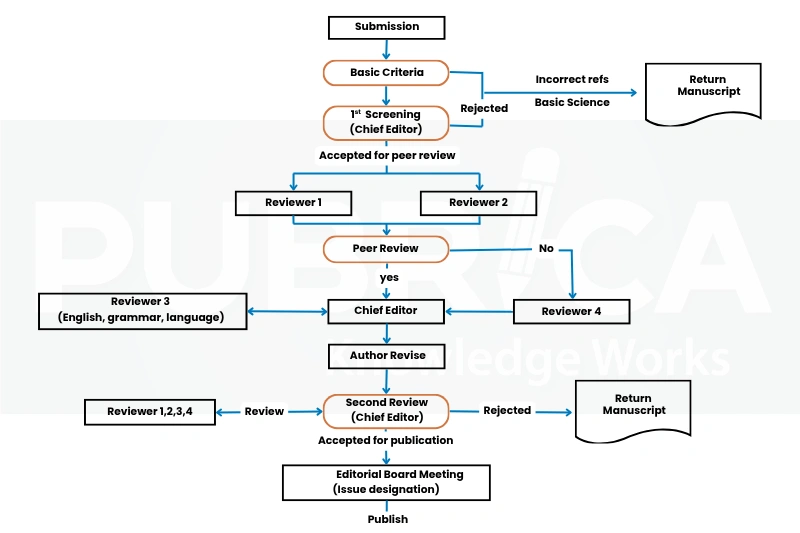
The findings reveal that editing support for academic authors has become deeply integrated into modern academic publishing.
7. Influence of Editing on Journal Acceptance
Manuscripts that lack proper language usage are often rejected by journal editors even before the peer-review process begins, irrespective of their significance. Good communication is important since peer reviewers must be able to easily understand methods, findings, and conclusions. [5]
How editing can assist multilingual authors:
- Gain better clarity on the argumentation
- Prevent any confusion in the peer review process
- Make the manuscript look professional
- Get more confident about submission
- Conform to the international publication standards
Although editing cannot ensure acceptance of an article, it does improve its presentation.
8. Digital Transformation in Academic Editing
The manuscript editing industry has been transformed by technology using artificial intelligence and digital manuscript editing. [6]
Emerging Technologies
- Grammar checker using AI technology
- Citation manager software
- Digital collaborative editing platforms
- Plagiarism detector technologies
- Translation tools using AI
These innovations make scientific manuscript proofreading and academic writing support for multilingual authors easier and more accessible, though human input remains essential.
9. Ethical Dimensions of Editing Support
Commercialisation of editing services is creating significant ethical issues in the academic world.
Ethical Issues
- Overshadowing by the editor
- Concealed ghost-writing masquerading as editing
- Vulnerability to data confidentiality breaches
- Inequitable access for economic reasons
- Hypothetical promises of successful publications
There is a need for all parties involved to clearly define what constitutes ethical editing practices versus manipulative authorship behaviour.
10. Recommendations for Academic Stakeholders
Universities
|
|
Publishers
|
|
Authors
|
|
Connect with us to explore how we can support you in maintaining academic integrity and enhancing the visibility of your research across the world!
Conclusion
The role of manuscript editing for multilingual authors in global academic publishing is important, as it allows for the improvement of clarity and conformity with publishing requirements for those researchers who are not native English speakers to communicate their research worldwide. The analysis conducted shows that editing services help improve the quality of manuscripts and promote inclusive academic dialogue. There are issues regarding ethics and the cost associated with the use of such services.
Manuscript Editing for Multilingual Authors: A Content Analysis Study. OurPubrica consultants are here to guide you. [Get Expert Publishing Support] or [Schedule a Free Consultation]
References
- Kim, S., Park, S., Hale, S. A., Kim, S., Byun, J., & Oh, A. H. (2016). Understanding Editing Behaviors in Multilingual Wikipedia. PloS one, 11(5), e0155305. https://doi.org/10.1371/journal.pone
- Kroll, J. F., & Dussias, P. E. (2017). The Benefits of Multilingualism to the Personal and Professional Development of Residents of The US. Foreign language annals, 50(2), 248–259. https://doi.org/10.1111/flan.12271
- Lim, J. S., Topping, V., Lee, J. S., Bailey, K. D., Kim, S. H., & Kim, T. W. (2019). Effects of providing manuscript editing through a combination of in-house and external editing services in an academic hospital. PloS one, 14(7), e0219567. https://doi.org/10.1371/journal.pone
- Erlingsson, C., & Brysiewicz, P. (2017). A hands-on guide to doing content analysis. African journal of emergency medicine : Revue africaine de la medecine d’urgence, 7(3), 93–99. https://doi.org/10.1016/j.afjem.2017
- Paine, C. E. T., & Fox, C. W. (2018). The effectiveness of journals as arbiters of scientific impact. Ecology and evolution, 8(19), 9566–9585. https://doi.org/10.1002/ece3.4467
- Sun, T., & Yoon, M. (2025). The impact of digital transformation on faculty performance in higher education: the mediating role of digital self-efficacy and the moderating role of task-technology fit. Frontiers in psychology, 16, 1693375. https://doi.org/10.3389/fpsyg.2025
- Pellegrini, G., & Lovati, C. (2025). Stakeholders’ engagement for improved health outcomes: a research brief to design a tool for better communication and participation. Frontiers in public health, 13, 1536753. https://doi.org/10.3389/fpubh.2025