
- Services
- Discovery & Intelligence Services
- Publication Support Services
- Sample Work
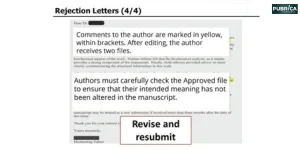
Publication Support Service
- Editing & Translation
-
Editing and Translation Services
- Sample Work

Editing and Translation Service
-
- Research Services
- Sample Work
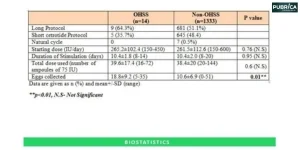
Research Services
- Physician Writing
- Sample Work
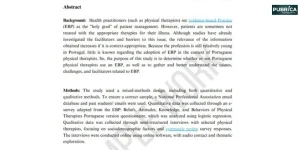
Physician Writing Service
- Statistical Analyses
- Sample Work
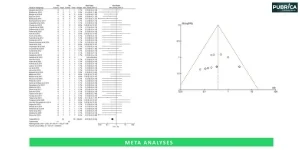
Statistical Analyses
- Data Collection
- AI and ML Services
- Sample Work

AI and ML Services
- Medical Writing
- Sample Work
Medical Writing
- Research Impact
- Sample Work
Research Impact
- Medical & Scientific Communication
- Sample Work
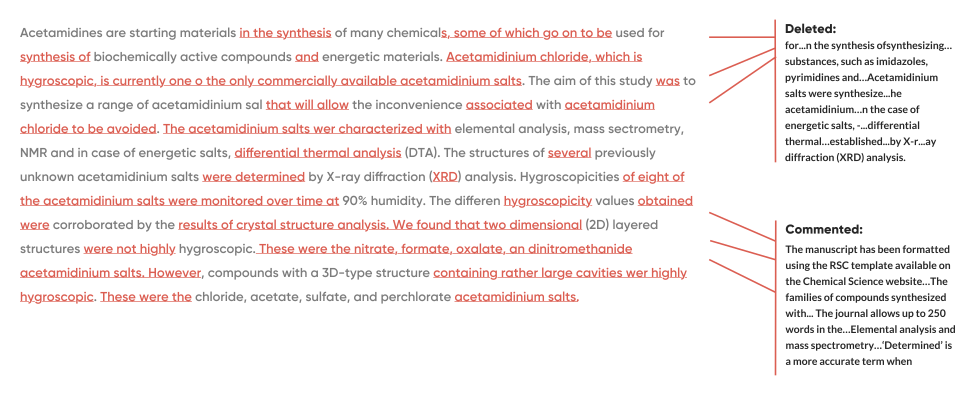
Medical & Scientific Communication
- Medico Legal Services
- Educational Content
- Academic Editorial Services
- Sample Work
Academic Editorial Services
- Educational Editorial Service
-
Education Editorial Services
- Sample Work
Education Editorial Services
-
- Industries
- Subjects
- About Us
- Academy
- Insights
- Contact Us
What Is the Importance of Literature Review in Research?
- Home
- Academy
- Literature Review
- What Is the Importance of Literature Review in Research?
High-Impact Journals
Interesting topics
What Is the Importance of Literature Review in Research?
The literature review forms the cornerstone of any research endeavour, and its importance cannot be overstated. The importance of literature review in research lies in its role as an indispensable part of developing the right direction, legitimacy, and novelty of any study. In today’s advanced research settings, where information is abundant and quickly changing, it has become increasingly imperative to assess and synthesise the available body of knowledge through effective literature review research. Unlike traditional reviews, which are merely a recapitulation of previous research, a literature review sets out the scholarly foundation, pinpoints deficiencies in research, and demonstrates why further research is warranted.[1]
1. What Is a Literature Review?
A literature review refers to the systematic and critical examination of existing studies in a particular research field. It plays a key role in research analysis by evaluating and synthesising scholarly work. [2]
The main reason for conducting a literature review is to:
- Establish background for the study
- Discuss the existing body of knowledge
- Point out the shortcomings
- Set up the theoretical base
- Differences from an Annotated Bibliography
A literature review differs from an annotated bibliography in that a literature review weaves the sources together in support of the research objectives.
2. Importance of Literature Review in Research
The significance of literature review is multifarious within the research process and highlights the overall literature review importance in academic work.[3]
- Importance Aspects: Set up Research Context It puts your research into context within the larger discipline.
- Determine Research Shortcomings: It allows you to find any gaps that exist in the study.
- Avoid Repetitiveness: It ensures that you add value to the field and don’t repeat what others have done.
- Contribute to Theory Building: It enables the building of theoretical frameworks.
- Improve Research Credibility: It shows that you are aware of the credible sources in the field.
An effective literature review can improve your research in many ways.
3. Key Functions of a Literature Review
| Function | Description |
| Contextualisation | Places research within existing academic discussions |
| Critical Evaluation | Assesses strengths and weaknesses of previous studies |
| Theoretical Development | Supports conceptual and theoretical frameworks |
| Gap Identification | Highlights areas requiring further research |
| Methodological Insight | Guides research design and methods |
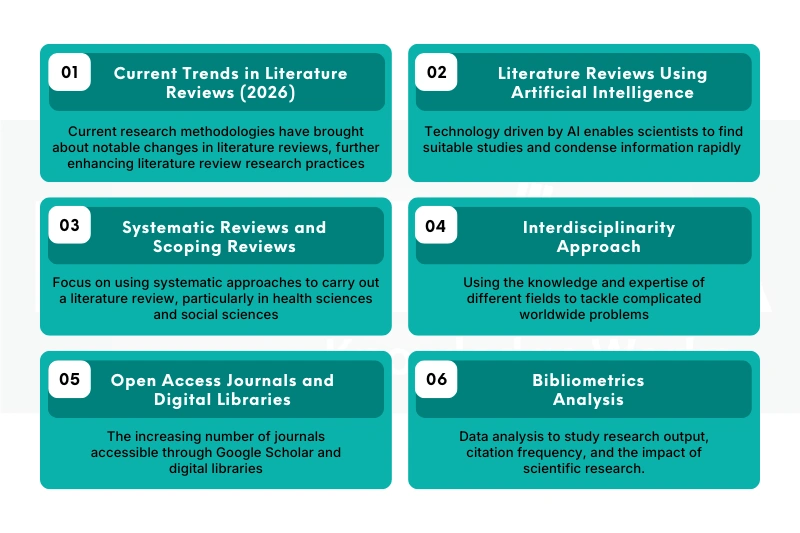
4. Current Trends in Literature Reviews (2026)
Current research methodologies have brought about notable changes in literature reviews, further enhancing literature review research practices. [4]
5. Common Challenges and Solutions
Common Literature Review Process. [5]
| Problems | Solutions |
|---|---|
| Inability to cope with an abundance of academic resources | Save time using bibliographic software (e.g., Zotero, Mendeley) |
| Being unable to synthesise but summarise information | Build a framework for the review before the writing process |
| Failing to critically analyse sources | Identify common themes, not particular sources |
| Making references effectively | Evaluate sources instead of just describing them |
Connect with us to explore how we can support you in maintaining academic integrity and enhancing the visibility of your research across the world!
Conclusion
Literature review is one of the most important aspects of conducting any research because it determines how the research will be structured and what areas it will cover. The importance of literature review in research continues to grow as academic fields evolve. Today, when scientific research changes extremely fast, it not only helps understand what has been discovered in the past but also reinforces the purpose of literature review as a powerful way to make new contributions to science by utilising modern technologies such as the analysis of data using artificial intelligence.
What Is the Importance of Literature Review in Research? Our Pubrica consultants are here to guide you. [Get Expert Publishing Support] or [Schedule a Free Consultation]
References
- Maggio, L. A., Sewell, J. L., & Artino, A. R., Jr (2016). The Literature Review: A Foundation for High-Quality Medical Education Research. Journal of graduate medical education, 8(3), 297–303. https://doi.org/10.4300/JGME-D-16-00175.1
- Goodfellow L. T. (2023). An Overview of How to Search and Write a Medical Literature Review. Respiratory care, 68(11), 1576–1584. https://doi.org/10.4187/respcare
- Romina Brignardello-Petersen, Nancy Santesso, Gordon H Guyatt, Systematic reviews of the literature: an introduction to current methods, American Journal of Epidemiology, Volume 194, Issue 2, February 2025, Pages 536–542, https://doi.org/10.1093/aje
- Morley, C. P., Prunuske, J., Phillips, J. P., Wendling, A. L., Heidelbaugh, J. J., & Grammer, S. (2025). Reviewer Engagement Trends at a Journal: Cause for Concern. PRiMER (Leawood, Kan.), 9, 59. https://doi.org/10.22454/PRiMER
- Gionfriddo, M. R., McClendon, C., Nolfi, D. A., Kalarchian, M. A., & Covvey, J. R. (2024). Back to the basics: Guidance for designing good literature searches. Research in social & administrative pharmacy : RSAP, 20(4), 463–468. https://doi.org/10.1016/j.sapharm