
- Services
- Discovery & Intelligence Services
- Publication Support Services
- Sample Work
Publication Support Service
- Editing & Translation
-
Editing and Translation Services
- Sample Work
Editing and Translation Service
-
- Research Services
- Sample Work
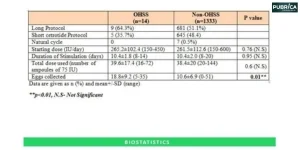
Research Services
- Physician Writing
- Sample Work
Physician Writing Service
- Statistical Analyses
- Sample Work
Statistical Analyses
- Data Collection
- AI and ML Services
- Sample Work
AI and ML Services
- Medical Writing
- Sample Work
Medical Writing
- Research Impact
- Sample Work
Research Impact
- Medical & Scientific Communication
- Sample Work
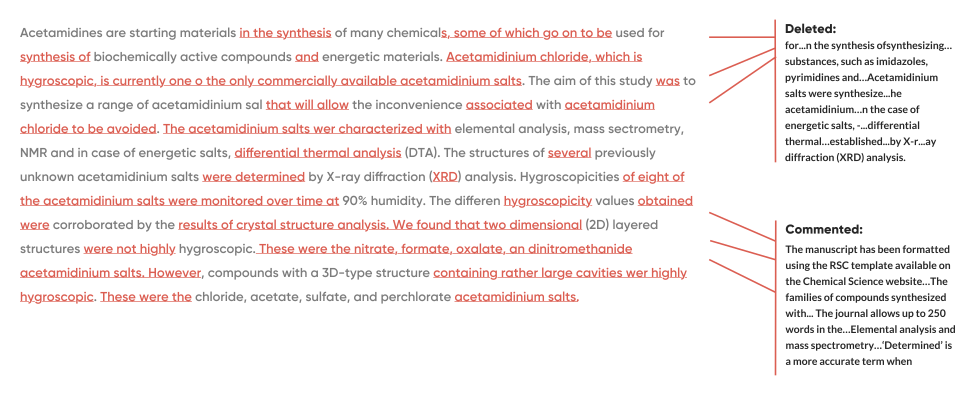
Medical & Scientific Communication
- Medico Legal Services
- Educational Content
- Academic Editorial Services
- Sample Work
Academic Editorial Services
- Educational Editorial Service
-
Education Editorial Services
- Sample Work
Education Editorial Services
-
- Industries
- Subjects
- About Us
- Academy
- Insights
- Contact Us
Academic writing requires reference lists as they provide proper source attribution to build credibility in scholarly work. Reference list errors persist frequently across academic disciplines despite their significance.
How to Minimize Rejection Risks Through Strategic Journal Selection
- Home
- academy
- Journal Selection
- How to Minimize Rejection Risks Through Strategic Journal Selection
Manuscript Formatting
- Scope and Aim of the Journal
- Assess Journal Quality and Impact
- Manuscript Type and Methodology
- Evaluate Journal Audience and Readership
- Open Access vs Subscription-Based
- Guidelines and Requirements
- Publication Speed
- Avoid Predatory and Unethical Journals
- Get Advice from Mentors and Peers
- Use a Journal Selection Matrix
Interesting topics
How to Minimize Rejection Risks Through Strategic Journal Selection
1. Understand the Scope and Aim of the Journal
2. Assess Journal Quality and Impact
3. Match the Manuscript Type and Methodology
4. Evaluate Journal Audience and Readership
5. Consider Journal Type: Open Access vs Subscription-Based
6. Analyze Submission Guidelines and Requirements
7. Consider Journal Turnaround Times and Publication Speed
8. Avoid Predatory and Unethical Journals
9. Get Advice from Mentors and Peers
10. Use a Journal Selection Matrix
11. Conclusion
12. References
1. Understand the Scope and Aim of the Journal
Manuscripts are often rejected, most commonly, due to the topic not being relevant to the journal’s scope.
How to address this?
- Check the journal’s aims and scope on the website of the publisher.
- Review recently published papers to gain an idea of the types of research the journal publishes.
- Use journal finder tools like Elsevier’s (Journal Finder) [1] or Springer’s (Journal Suggester) [2] that utilize the title and abstract to suggest various journals based on your manuscript.
Example: If your manuscript is on AI in healthcare and submitted to a journal focused on just core AI algorithms, you may be rejected. Instead, consider submitting to journals like the Journal of Medical Internet Research or Artificial Intelligence in Medicine.
2. Assess Journal Quality and Impact
High-impact journals are great journals, but they often have higher rejection ratios. It is important to temper ambition with reality.
Strategies:
Tip: Early-career researchers may want to pursue good mid-tier journals with substantial readership instead of only targeting top-tier journals.
3. Match the Manuscript Type and Methodology
Not all journals will accept every type of manuscript. Some only accept empirical studies, while others accept reviews, case studies, or methodological papers. [5]
Checklist:
- Does the journal accept your type of manuscript (e.g., an original article, review, or short communication)?
- Does your research design correspond to the common methods for research within the journal?
- Does the journal accept qualitative and/ or quantitative exploration studies?
Example: If you submit a narrative review to a journal that only accepts systematic reviews, your manuscript will be rejected.
4. Evaluate Journal Audience and Readership
A disconnect between the content of your paper and the audience of the journal could lead to a mismatch, regardless of quality.
Consider:
- Who is reading the journal – academics, practitioners, policy makers?
- What geographical area or demographics is the journal aimed at?
- Are there interdisciplinary audiences?
Tip: Determine a journal its audience will benefit the most from your findings.
5. Consider Journal Type: Open Access vs Subscription-Based
Open Access (OA) journals can enhance the visibility and citation of your work, but may impose Article Processing Charges (APCs). [7]
| Pros | Cons |
| More dissemination and citation potential | High Publication Fees |
| Compliance with funding agency policies | Some OA journals may not have rigorous peer review (check legitimacy) |
6. Analyze Submission Guidelines and Requirements
Not adhering to submission guidelines is one of the most common reasons for desk rejection. [8]
Actions to take:
- Format your manuscript according to the journal’s guidelines (e.g., word limits, references).
- Write ethical statements (e.g., IRB approval, consent).
- Use the journal’s template or checklist if it is provided.
Tip: Use reference managers (EndNote or Zotero) to format the citation style required by the journal.
7. Consider Journal Turnaround Times and Publication Speed
Time-sensitive research (e.g., public health, technology) requires journals that have faster turnaround. [9]
How to Check:
- Check the average time to first decision and average time to publication (typically available under journal statistics).
- Consider journals with online-first or continuous publication models.
Tip: Use third-party websites such as SciRev (www.scirev.org/) to get an overall view of journal timelines based on the experiences of authors.
8. Avoid Predatory and Unethical Journals
Predatory journals accept manuscripts with minimal or no peer review, which threatens the credibility of your research. [10]
How to Identify Legitimate Journals:
- Confirm that the journal is indexed in Scopus, Web of Science, or PubMed.
- Corroborate the publisher with the DOAJ( Directory of Open Access Journals).
- Look at Beall’s List (archived version) or Think. Check. Submit.
Red flags:
- Poor quality website
- Unclear peer-review process?
- Unsolicited emails promising fast publication.
9. Get Advice from Mentors and Peers
Getting insight from colleagues and supervisors can help in your decision-making process regarding suitable journal choices. [11]
Recommendations:
- Consider discussing your manuscript title and abstract with mentors for advice on journal choice.
- Use research networks such as ResearchGate, Academia.edu, or your LinkedIn groups.
- Participate in conferences to learn about where to submit work that is similar to what your peers publish.
10. Use a Journal Selection Matrix
A journal selection matrix helps you analyze journals objectively according to different criteria.
Some example criteria include:
- Aims and scope alignment
- Impact factor or CiteScore
- Acceptance rate
- Submission to decision time
- Open access policy
- Indexing status
Tip: Weight each parameter according to your priorities and calculate a final score.
Connect with us to explore how we can support you in maintaining academic integrity and enhancing the visibility of your research across the world!
Conclusion
Strategic journal selection is a critical step in the publishing process. By considering the journal’s scope, audience, quality, suitability of the manuscript, and logistical factors (e.g. turnaround time), researchers can markedly decrease the chances of rejection. By approaching the submission process with planning and with the help of colleagues and objective tools, it can be more efficiently and systematically carried out.
Ready to publish with confidence? Let Pubrica’s expert journal selection support guide your manuscript to the right journal, minimizing rejections and maximizing impact.
References
- (n.d.). Journal Finder. Elsevier. https://journalfinder.elsevier.com/
- Springer Nature. (n.d.). Journal Suggester. https://journalsuggester.springer.com/
- American Psychological Association. (n.d.). Journal statistics and operations data. https://www.apa.org/pubs/journals/statistics
- (n.d.). CiteScore metrics. Scopus. https://www.scopus.com/sources
- Suiter, A. M., & Sarli, C. C. (2019). Selecting a journal for publication: Criteria to consider. Missouri Medicine, 116(6), 461–465. https://www.ncbi.nlm.nih.gov/pmc/articles/PMC6913840/
- Piwowar, H., Priem, J., Larivière, V., et al. (2018). The state of OA: a large-scale analysis of the prevalence and impact of Open Access articles. PeerJ, 6, e4375. https://doi.org/10.7717/peerj.4375
- Won, C. W., Kim, S., & Swagerty, D. (2018). Why geriatric medicine is important for Korea: Lessons learned in the United States. Journal of Korean Medical Science, 33(26), e175. https://doi.org/10.3346/jkms.2018.33.e175
- Björk, B.-C., & Solomon, D. (2013). The publishing delay in scholarly peer-reviewed journals. Journal of Informetrics, 7(4), 914–923. https://doi.org/10.1016/j.joi.2013.09.001
- Shen, C., & Björk, B.-C. (2015). ‘Predatory’ open access: A longitudinal study of article volumes and market characteristics. BMC Medicine, 13, 230. https://doi.org/10.1186/s12916-015-0469-2
- Nicholas, D., Watkinson, A., Jamali, H. R., Herman, E., & Tenopir, C. (2015). Peer review: Still king in the digital age. Learned Publishing, 28(1), 15–21. https://doi.org/10.1087/20150104