
- Services
- Discovery & Intelligence Services
- Publication Support Services
- Sample Work
Publication Support Service
- Editing & Translation
-
Editing and Translation Services
- Sample Work
Editing and Translation Service
-
- Research Services
- Sample Work
Research Services
- Physician Writing
- Sample Work

Physician Writing Service
- Statistical Analyses
- Sample Work
Statistical Analyses
- Data Collection
- AI and ML Services
- Sample Work
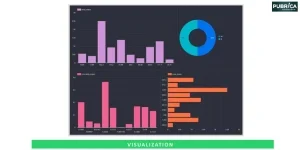
AI and ML Services
- Medical Writing
- Sample Work
Medical Writing
- Research Impact
- Sample Work
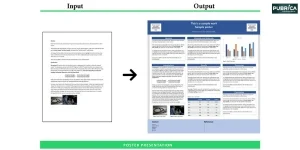
Research Impact
- Medical & Scientific Communication
- Sample Work
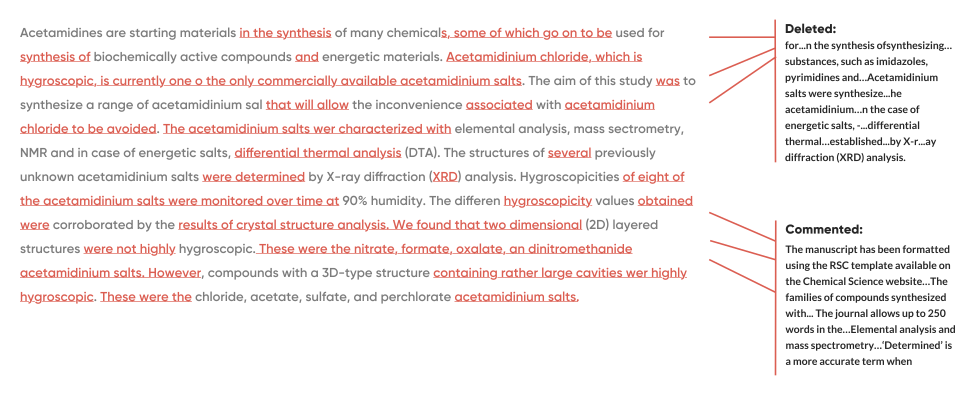
Medical & Scientific Communication
- Medico Legal Services
- Educational Content
- Academic Editorial Services
- Sample Work
Academic Editorial Services
- Educational Editorial Service
-
Education Editorial Services
- Sample Work
Education Editorial Services
-
- Industries
- Subjects
- About Us
- Academy
- Insights
- Contact Us
How to Use Journal Submission Supportive Services Effectively by Pharmaceutical and Medical Device Companies
- Home
- Academy
- Statistical analysis
- How to Use Journal Submission Supportive Services Effectively by Pharmaceutical and Medical Device Companies
High-Impact Journals
- Why Journal Submission Support Matters
- How to Use Journal Submission Supportive Services Effectively
- Why Pharmaceutical and Medical Device Companies Benefit from These Services
- Challenges Faced by Pharmaceutical and Medical Device Companies
- Common Journal Submission Supportive Services and Their Purpose
- Why These Services Are Essential for Pharma & MedTech
- Conclusion
Interesting topics
How to Use Journal Submission Supportive Services Effectively by Pharmaceutical and Medical Device Companies
1. Why Journal Submission Support Matters
2. How to Use Journal Submission Supportive Services Effectively
3. Why Pharmaceutical and Medical Device Companies Benefit from These Services
4. Challenges Faced by Pharmaceutical and Medical Device Companies
5. Common Journal Submission Supportive Services and Their Purpose
6. Why These Services Are Essential for Pharma & MedTech
7. Conclusion
By conducting many types of clinical trials, studies, laboratory research, and health economic analysis, pharmaceutical and medical device manufacturers produce a large amount of scientific evidence. Companies must also publish their scientific papers in peer-reviewed journals that adhere to numerous scientific, ethical, and layout standards. Journal Submission Supportive Services, including journal paper submission service, academic journals submission service, and journal manuscript submission service, are now a major resource for these businesses to help them create better-quality manuscripts, fulfil editorial publication criteria, and manage the complicated submission and peer review process.[1,2]
1. Why Journal Submission Support Matters
- Provides authors with publication-ready, high-quality manuscripts
- Provides authors with guides for compliance with ICMJE, CONSORT, GPP, STROBE, and specific journal requirements
- Provides expert journal matching to help reduce rejection rates
- Provides faster submission, revision, and acceptance timelines
- Provides administrative and editorial assistance to authors
2. How to Use Journal Submission Supportive Services Effectively
Journal submission supportive services help streamline the publication process. Using them effectively can improve the quality, accuracy, and presentation of your manuscript. [3] These services are often paired with research journal submission services and the best journal submission service offerings.
2.1. Define Publication Objectives
- Clarify objectives (evidence distribution, regulatory assistance, credibility)
- Identify target audience (clinicians, researchers, and regulators)
- Verify data availability and internal timeframes
- Establish deadlines for conference journals
2.2. Choose the Right Partner
- Verify knowledge of applicable regulations and publications
- Make sure privacy is safeguarded concerning patient data
- Ensure there will be sufficient resources for writing and managing the publication strategy
- Assess publication history and success
2.3. Collaborate During Manuscript Development
- You must provide a study report that includes all data sets and protocols.
- You must identify the SMEs who will conduct a verification.
- You need to provide any other documentation you have (SOPs, Templates, Brand Requirements).
- You need to keep accurate records of your references throughout the study.
2.4. Leverage Journal Selection Expertise
- Research the journal’s impact factor, indexation, and focus.
- Look at the types of studies typically published in the journal.
- Get information on submission deadlines and the cost of publication.
- Research how similar journals look at comparable studies.
2.5. Utilize Technical Submission Support
- Upload manuscripts, figures, and supplements
- Ensure proper formatting and resolution
- Complete metadata, copyright, and COI forms
- Track submission status
2.6. Optimize Peer-Review Responses
- Prepare evidence-based replies
- Edit revised manuscripts for clarity
- Address statistical queries
- Ensure formatting compliance
2.7. Ensure Compliance & Post-Acceptance Management
- Verify trial registration and data sharing
- Submit ethical and author contribution statements
- Handle open access licensing and fees
- Proofread during production
3. Why Pharmaceutical and Medical Device Companies Benefit from These Services
Organizations that develop medications, medical devices, and similar products typically conduct several clinical investigations at once and will often also conduct post-marketing research as well as health-economic evaluations. There are many challenges associated with managing multiple projects, including: [4]
Need for rapid turnaround on new products and submission to the FDA/EMA
- Limited resources for both writing and managing the publication process
- Larger quantities of data, which require an unambiguous presentation of the scientific content
- The need for uniform quality in all publications
- Different requirements of various journals and editorial systems.
With the right support from professionals, organizations can overcome these challenges and ensure high-quality communication of their scientific findings.
4. Challenges faced by pharmaceutical and medical device companies
There are several challenges faced by pharmaceutical and medical device companies: [5]
- They generate large amounts of scientific data.
- There is pressure to conduct clinical development within tight time frames.
- They must adhere to strict regulations and ethical guidelines.
- There are limited resources available to their internal publication teams.
With the right support from professionals, including medical writing services, regulatory medical writing, regulatory submission, and support for clinical trial documents, organizations can overcome these challenges and ensure high-quality communication of their scientific findings.
5. Common Journal Submission Supportive Services and Their Purpose
Service | Purpose | Benefit to Pharma/MedTech |
Enhances grammar, clarity, and structure | Improves readability and professionalism | |
Statistical Review | Validates data accuracy and reporting | Ensures scientific robustness |
Matches manuscript to suitable journals | Reduces rejection risk | |
Formatting & Compliance Checks | Ensures alignment with journal guidelines | Saves time and minimizes errors |
Submission Management | Handles portal uploads and communication | Streamlines administrative burden |
Manages responses to reviewers | Improves revision quality | |
Publication Ethics Screening [6] | Ensures no plagiarism or conflicts | Protects corporate credibility |
6. Why These Services Are Essential for Pharma & MedTech
Improved accuracy of submissions assures a manuscript has the proper formatting, ethical requirements, and technical requirements for submission to the journal (as defined by the publisher).[7]
- Potential for an increased chance of being accepted: A well-organised manuscript with a strong story from the data will be viewed more favourably by the reviewers.
- Less work for the internal team: Allows scientists and medical affairs staff to concentrate on research and strategy instead of formatting and developing the manuscript.
- Complying with global standards is now easier: A comprehensive service ensures compliance with the following publishing guidelines: ICMJE; CONSORT; GPP3/4; and ISO, as well as device-specific guidelines.
Connect with us to explore how we can support you in maintaining academic integrity and enhancing the visibility of your research across the world!
Conclusion
Journal Submission Supportive Services, including journal paper submission service, academic journals submission service, and research journal submission service, offer pharmaceutical and medical device companies vital assistance to navigate complex publication requirements. When used effectively, supported by medical writing services through early engagement, strong communication, rigorous compliance checks, strategic journal selection, and efficient management of submission and peer review, these services significantly enhance publication quality and improve acceptance rates. Integrating JSSS into a structured publication workflow ensures transparent, ethical, and impactful scientific communication.
How to Use Journal Submission Supportive Services Effectively by Pharmaceutical and Medical Device Companies. Our Pubrica consultants are here to guide you. [Get Expert Publishing Support] or [Schedule a Free Consultation]
References
- Shokraneh, F., Ilghami, R., Masoomi, R., & Amanollahi, A. (2012). How to select a journal to submit and publish your biomedical paper? BioImpacts : BI, 2(1), 61–68. https://doi.org/10.5681/bi.2012.008
- Maresova, P., Penhaker, M., Selamat, A., & Kuca, K. (2015). The potential of the medical device industry in a technological and economic context. Therapeutics and clinical risk management, 11, 1505–1514. https://doi.org/10.2147/TCRM.S88574
- Balch, C. M., McMasters, K. M., Klimberg, V. S., Pawlik, T. M., Posner, M. C., Roh, M., Tanabe, K. K., Whippen, D., & Ikoma, N. (2018). Steps to Getting Your Manuscript Published in a High-Quality Medical Journal. Annals of surgical oncology, 25(4), 850–855. https://doi.org/10.1245/s10434-017-6320-6
- Lexchin, J., Bero, L. A., Djulbegovic, B., & Clark, O. (2003). Pharmaceutical industry sponsorship and research outcome and quality: systematic review. BMJ (Clinical research ed.), 326(7400), 1167–1170. https://doi.org/10.1136/bmj.326.7400.1167
- Nguyen C. (2021). The Drug Manufacturer as a Drug Information Resource. The Journal of pharmacy technology: jPT : official publication of the Association of Pharmacy Technicians, 37(3), 161–164. https://doi.org/10.1177/87551225211005427
- Graf, C., Wager, E., Bowman, A., Fiack, S., Scott-Lichter, D., & Robinson, A. (2007). Best Practice Guidelines on Publication Ethics: a publisher’s perspective. International journal of clinical practice. Supplement, 61(152), 1–26. https://doi.org/10.1111/j.1742-1241.2006.01230.x
- Institute of Medicine (US) Committee on Technological Innovation in Medicine; Gelijns AC, Halm EA, editors. The Changing Economics of Medical Technology. Washington (DC): National Academies Press (US); 1991. (Medical Innovation at the Crossroads, No. 2.) 6, The Dynamics of Medical Device Innovation: An Innovator’s Perspective. Available from: https://www.ncbi.nlm.nih.gov/books/NBK234310/