
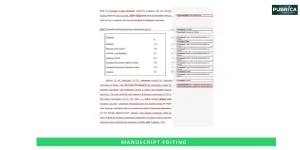
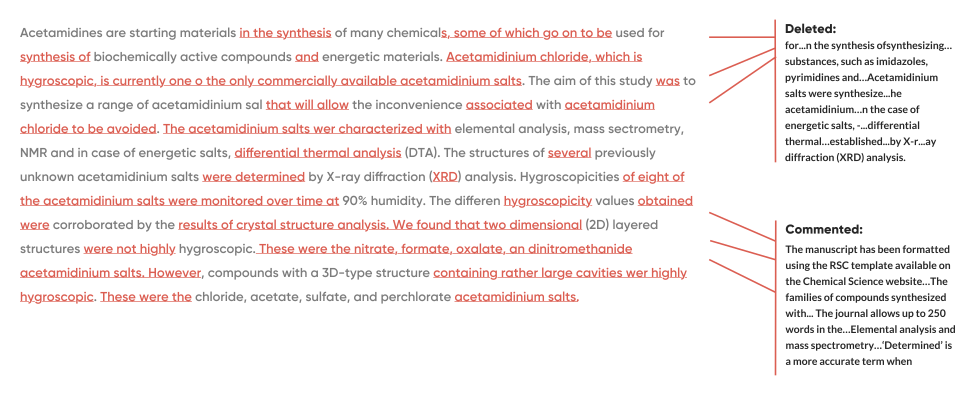










Editing of a manuscript involves language correction, structural correction, clarity improvement, format correction, reference verification, and refinement of the manuscript according to journal requirements and improvement of the quality of presentation.
Manuscript editing improves clarity, structure, professionalism, reduces language errors, ensures compliance, and readability, thus increasing the chances of evaluation and acceptance by reviewers.
A research paper is to be edited after completing the final draft, which is to be submitted to a journal, thus ensuring clarity, structure, compliance, accurate references, and manuscript refinement.
Common issues may include grammatical errors, unclear writing, poor structure, use of incorrect terminology, poor flow, incorrect formatting, citation errors, and a lack of clarity in results and discussion sections.
Many journals advise non-native English-speaking authors to seek professional language editing to enhance clarity and submission standards, although this does not guarantee publication.
Editing a manuscript will enhance structure, clarity, flow, and content quality, and proofreading will correct grammatical errors, spelling mistakes, punctuation errors, and minor formatting errors.
Authors may look for editing services with expertise in the subject area, skilled editors, clear procedures, guarantee of confidentiality, positive reviews, knowledge of journal guidelines, and clear turnaround times.