Medical Devices

Ensure your medical device meets regulatory standards with our expert Clinical Evaluation Reports (CER) services. We provide comprehensive support from data collection to evidence appraisal, helping you achieve compliance efficiently.

Enhancing Compliance and Market Readiness of Medical Devices Through Expert CER, Post-Market Surveillance, and Data Collection Services

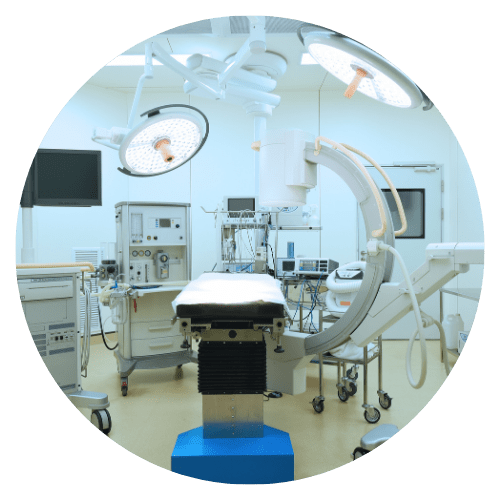
Medical Device Operating Room

The medical device industry plays a critical role in modern healthcare, delivering innovative solutions that enhance patient outcomes, improve diagnostics, and streamline treatment processes. Spanning a wide range of products from simple instruments to complex, technology-driven devices, this industry is at the forefront of medical innovation, combining engineering, biotechnology, and regulatory compliance to meet global health needs.

Navigating regulatory requirements for medical devices can be complex, and CERs play a critical role in demonstrating safety and performance in compliance with international standards such as the EU Medical Device Regulation (MDR 2017/745) and other global frameworks. A well-prepared CER not only supports regulatory submissions but also ensures that medical devices consistently meet the highest standards of clinical safety and effectiveness.

Post-market surveillance (PMS) further strengthens this process by monitoring the performance and safety of medical devices once they are on the market, focusing not only on quality assurance but also on regulatory compliance and timely reporting to local authorities. This proactive vigilance ensures cooperation with national authorities, enhances patient safety, and drives continuous improvement in medical device performance, ultimately safeguarding public health while supporting market sustainability.

Key Features Include:

  • ➔Clinical investigation of the device under evaluation.
  • ➔Clinical investigation or other studies reported in the scientific literature for an equivalent device.
  • ➔Peer-reviewed scientific literature reporting on other clinical experiences of the device being evaluated or an equivalent device.
  • ➔Clinically relevant PMS data with specific emphasis on post-market clinical follow-up (PMCF).

Our Expertise in Medical Devices Includes

We provide end-to-end support for medical device companies, helping them navigate the entire product lifecycle, from research and development to market access and PMS. Our services are designed to ensure compliance, efficiency, and safety, keeping patient welfare at the center of every solution.

Clinical Evaluation Reports (CERs)

Comprehensive preparation and maintenance of CERs to demonstrate safety and performance in line with MDR and ISO 13485 requirements.

Regulatory Submissions

Support for global regulatory compliance, including FDA, CE marking, and other regional approvals.

Post-Market Surveillance (PMS)

Collection, analysis, and reporting of post-market data to ensure ongoing device safety and compliance.

Risk Management & Vigilance Reporting

Guidance on ISO 14971-based risk assessments, incident reporting, and corrective actions.

Technical Documentation & Dossiers

End-to-end support in preparing high-quality technical files and design dossiers.

Medical Writing & Scientific Support

Professional scientific writing, clinical study reports, and regulatory documentation for devices ranging from Class I to Class III.

Medical Device Segments We Serve

At Pubrica, we provide specialized support across a wide range of medical device segments, helping manufacturers navigate regulatory compliance, clinical evaluation, and post-market requirements with precision and efficiency. Our expertise spans multiple device categories, ensuring tailored solutions for every stage of your product lifecycle. Key Segments Include:

Diagnostic & Imaging Devices

MRI, CT, ultrasound systems, X-ray machines, and laboratory diagnostic equipment.

Therapeutic Devices

Surgical instruments, infusion pumps, dialysis equipment, and physiotherapy devices.

Monitoring Devices

Wearable devices, patient monitors, and remote monitoring systems.

Implants & Prosthetics

Orthopaedic implants, cardiovascular devices, dental implants, and prosthetic limbs.

Digital Health & Software

Mobile health applications, AI-based diagnostic tools, and software-as-a-medical-device (SaMD).

Surgical & Hospital Devices

Surgical instruments, operating room equipment, anaesthesia machines, and infusion pumps.

How to Prepare a Clinical Evaluation Report for Medical Devices

A clinical evaluation takes place in four steps:

1
Establishing or Updating the Clinical Evaluation Plan (CEP)

Establishing or Updating the Clinical Evaluation Plan (CEP)

The manufacturer establishes or updates the CEP to define the scope and document the clinical evaluation approach.
2
Identify Relevant Clinical Data

Identify Relevant Clinical Data

Identifying clinical data relevant to the device under evaluation, its intended purpose, and any gaps in the clinical evidence. Potential sources of clinical data include clinical investigation of the device being evaluated, PMS data, particularly PMCF, clinical literature, and equivalence data.
3
Appraise & Generate Data

Appraise & Generate Data

Appraises the relevance, quality, and scientific validity of the clinical data. New or additional clinical data are generated as needed to address any gaps in the clinical evidence.
4
Demonstrate Clinical Evidence Sufficiency

Demonstrate Clinical Evidence Sufficiency

Requires the manufacturer to provide sufficient clinical evidence for each relevant general safety and performance requirement (GSPR) that requires clinical data.

Classes of Clinical Evaluation Report for Medical Devices

CER for medical devices is typically categorized based on the risk class of the medical device under regulations such as the MDR 2017/745 or other regional frameworks. The classes reflect the potential risk a device poses to patients. Here's a detailed breakdown:

ClassDescriptionExamplesCER Focus
Class I Devices (Low Risk)Non-invasive devices or those with minimal risk to the user.Bandages, stethoscopes, examination gloves.• Clinical evaluation is often based mainly on literature review and well-documented experience.
• Clinical data requirements are generally less stringent than those for higher-risk classes.
Class IIa Devices (Medium-Low Risk)Moderately invasive or pose moderate risk.Dental fillings, infusion pumps, ultrasound equipment.• Requires more detailed clinical data than Class I.
• May include post-market clinical follow-up (PMCF) or limited clinical investigations.
Class IIb Devices (Medium-High Risk)Invasive or significant impact on patient health if they fail.Ventilators, anaesthesia equipment,and implantable devices like pacemakers (non-life-sustaining).• CER must rely on robust clinical evidence.
• Usually requires clinical investigations or well-controlled studies in addition to the literature.
Class III Devices (High Risk)Devices that are life-sustaining or life-supporting, or have a high risk of serious health consequences.Heart valves, implantable defibrillators, some orthopaedic implants.• Requires extensive clinical data from trials and real-world evidence.
• CER is a critical component for regulatory approval and must demonstrate safety, performance, and clinical benefit comprehensively.

What Is The Importance Of Post-Market Surveillance For Medical Devices?

PMS is important to ensure the safety, efficacy, and performance of medical devices after they are released to the market and used by the public.

Ensure Safety and Performance

Identifies unforeseen risks and device failures that enable fast mitigation of life-threatening or long-term injuries with the aid of a PMS strategy.

Monitor Real-World Use

Collects real-world performance data to uncover risks and limitations not evident in clinical trials.

Align with Regulatory Requirements

Aligns with EU MDR and US FDA requirements to ensure device safety, quality, and performance across its lifecycle.

What Post-Market Surveillance Guidelines Should The Medical Device Industry Consider?

PMS guidelines for the medical industry include references such as the Medical Device Guidance Documents (MEDDEV) and the Medical Device Coordination Group (MDCG) guidelines in the EU.

PMS guidelines from different organizations are listed below.

MEDDEV Guidelines

MDCG Guidelines

Health Canada

NMPA (National Medical Products Administration)

DSMB (Data Safety Monitoring Boards) Guidelines

IMDRF (International Medical Device Regulators Forum)

MHRA (Medicines and Healthcare Products Regulatory Agency)

COFEPRIS (Federal Commission for Protection against Sanitary Risks)

PMDA (The Pharmaceuticals and Medical Devices Agency)

ANVISA (Brazilian Health Regulatory Agency)

TGA (Therapeutic Goods Administration)

Where Our Authors Publish

Our authors share Pubrica's expert content in top-tier journals, conferences, and platforms, maximizing and amplifying its recognition and reach. Our placement will enhance our visibility and elevate our standing in an authoritative capacity.

Coatings Journal Cover

Paper Title: Novel Approaches to Combat Medical Device-Associated Biofilms

Author: Xin Li, Luyao Sun, Peng Zhang, and Yang Wang

Journal Name: Coatings

Publisher: MDPI

Impact factor: 2.8

Our Expert Medical Editors

Pubrica's team of industry specialists offers unrivalled expertise and perspectives to provide complete solutions with precision and originality. Through a mix of both experience and specialization, they strive for excellence in everything they do.

Dr. Ravi Kumar
Country flag

Dr. Ravi Kumar

PHD, FIAMS, DMRD, DMRE, DNB - Medical

20 years of experience
100+ manuscripts edited
Dr. Isaac Newton
Country flag

Dr. Isaac Newton

MD - Medical

25 Years of Experience
100+ manuscripts edited
Dr. Krishna
Country flag

Dr. Krishna

MD - Medical

15 Years of Experience
100+ manuscripts edited

What Our Client Says About Us

Pubrica's expertise in Clinical Evaluation Reports helped us meet stringent EU MDR requirements without delays. Their team provided in-depth literature reviews, well-structured analysis, and clear documentation that impressed both our internal auditors and regulators.

Portrait of Dr. Anna Müller

— Dr. Anna Müller

Regulatory Affairs Manager,

Germany

Flag of Germany

The CER prepared by Pubrica was comprehensive, evidence-based, and aligned with the latest regulatory expectations. Their subject matter experts ensured our Class II device submission sailed through smoothly.

Portrait of James Carter

— James Carter

Director of Quality & Compliance,

United Kingdom

Flag of the United Kingdom

We were struggling with MDR compliance for our clinical evaluation. Pubrica's team stepped in with outstanding guidance, timely delivery, and high-quality CER documentation. Their support gave us confidence in facing notified bodies.

Portrait of Dr. Marc Dubois

— Dr. Marc Dubois

Clinical & Regulatory Consultant,

France

Flag of France
Enquire now
WhatsApp
Email us