
- Services
- Discovery & Intelligence Services
- Publication Support Services
- Sample Work
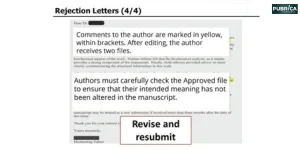
Publication Support Service
- Editing & Translation
-
Editing and Translation Services
- Sample Work

Editing and Translation Service
-
- Research Services
- Sample Work

Research Services
- Physician Writing
- Sample Work
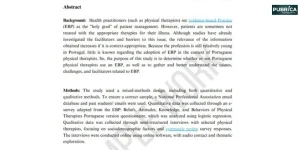
Physician Writing Service
- Statistical Analyses
- Sample Work

Statistical Analyses
- Data Collection
- AI and ML Services
- Sample Work

AI and ML Services
- Medical Writing
- Sample Work
Medical Writing
- Research Impact
- Sample Work
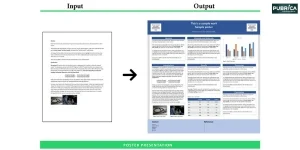
Research Impact
- Medical & Scientific Communication
- Sample Work
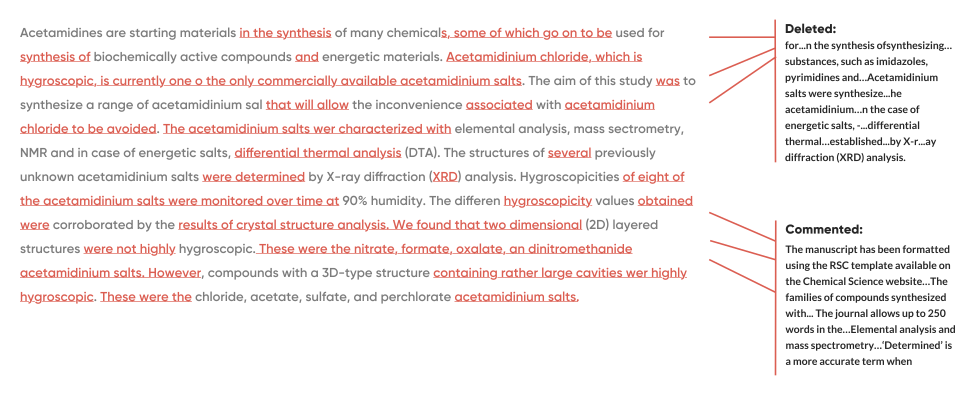
Medical & Scientific Communication
- Medico Legal Services
- Educational Content
- Academic Editorial Services
- Sample Work
Academic Editorial Services
- Educational Editorial Service
-
Education Editorial Services
- Sample Work
Education Editorial Services
-
- Industries
- Subjects
- About Us
- Academy
- Insights
- Contact Us
SPIDER Framework Explained: A Guide to Qualitative Research Question Design
- Home
- Academy
- Research Services
- SPIDER Framework Explained: A Guide to Qualitative Research Question Design
High-Impact Journals
Interesting topics
SPIDER Framework Explained: A Guide to Qualitative Research Question Design
One of the most critical steps in any academic research study is the development of a good qualitative research question. Having a well-defined qualitative research question framework helps to set the foundation for your methodology, guide your data collection, and help ensure that the results of your study meet the overall goal of your study. Many students will be familiar with using the PICO framework to help develop quantitative research questions in the field of health care. However, there is a void within systematic qualitative research methods in terms of having a well-defined, flexible, and exploratory framework to create qualitative research questions. The use of the SPIDER framework will assist you in filling that void. [1]
The SPIDER framework is a tool that was created to help researchers develop qualitative and mixed-method research questions, which often include a variety of types of experiences, perceptions, behaviors, and social processes. The SPIDER framework allows researchers to identify their area of study more clearly to improve their literature search strategies. It also provides practitioners of postgraduate study who engage in interviewing, using focus groups, conducting ethnographic research, and conducting phenomenological research a practical means for structuring their qualitative research design.[2]
1. What Is the SPIDER Framework?
SPIDER is an acronym representing five key components used to formulate qualitative research questions: [3]
| Component | Meaning | Purpose |
| S | Sample | Defines participants or population |
| PI | Phenomenon of Interest | Identifies the experience or issue studied |
| D | Design | Specifies research design or data collection method |
| E | Evaluation | Describes outcomes such as perceptions or attitudes |
| R | Research Type | States a qualitative or mixed-method approach |
The framework was introduced as an alternative to PICO because many qualitative studies do not involve interventions or measurable clinical outcomes.
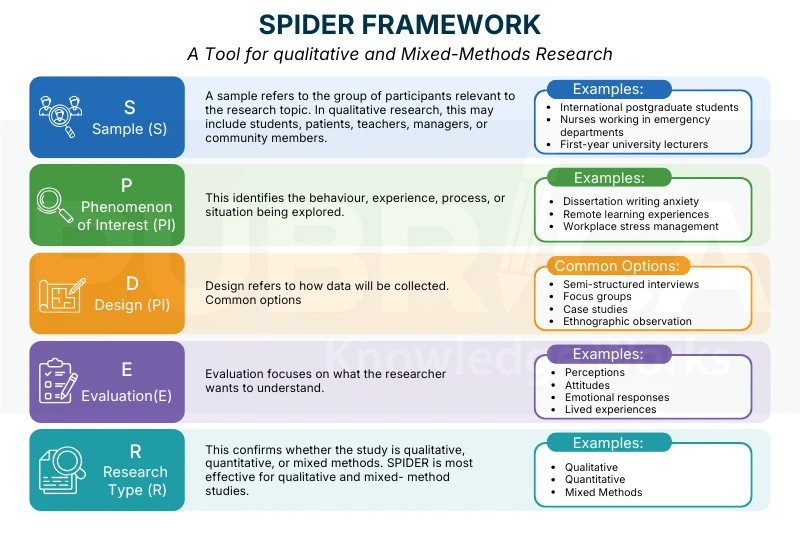
2. Components of the SPIDER Model
The SPIDER framework helps define the key elements needed for the successful formulation of qualitative research questions.[4]
3. Why SPIDER Is Useful for Qualitative Research
The SPIDER Framework provides numerous advantages to both students and researchers: [3]
- Creates concise and manageable research questions
- Aids in the literature search of academic databases
- Links questions to qualitative methodology
- Promotes clarity in the selection of participants
- Assists with the writing of research proposals and communicating with supervisors
Many qualitative dissertations fail due to their use of very broad research questions. The SPIDER framework helps eliminate vagueness by providing clear criteria for breaking down the topic into distinct elements. It is a research planning framework that ensures a more structured approach to qualitative research.
4. SPIDER vs PICO: Key Differences
| Feature | SPIDER | PICO |
| Primary Use | Qualitative research | Quantitative/clinical studies |
| Focus | Experiences and perceptions | Interventions and outcomes |
| Suitable Methods | Interviews, focus groups | Experiments, trials |
| Flexibility | High | Moderate |
If the study explores “how people experience something,” SPIDER is usually more suitable than PICO. This question is specific, researchable, and aligned with qualitative inquiry.
5. Example of a SPIDER Research Question
Topic: Master’s Dissertation Stress
SPIDER Element | Example |
Sample | Master’s students |
Phenomenon of Interest | Dissertation writing stress |
Design | Semi-structured interviews |
Evaluation | Perceived causes and coping strategies |
Research Type | Qualitative |
Final Research Question: How do master’s students perceive the causes of dissertation writing stress, and what coping strategies do they use? This question is specific, researchable, and aligned with qualitative inquiry.
6. Common Mistakes to Avoid
Students should refrain from doing the following things when using the SPIDER framework:
- Choosing an overly broad sample
- Defining a general phenomenon of interest
- Selecting various unrelated methods for investigating phenomena
- Ignoring evaluation criteria
- Combining qualitative with only quantitative goals
Before finalising their proposal, it is recommended that students consult with their supervisor regarding the use of the SPIDER framework.
Connect with us to explore how we can support you in maintaining academic integrity and enhancing the visibility of your research across the world!
Conclusion
Utilising the SPIDER Framework is a very efficient way of developing qualitative research questions. By concentrating on the aspects of the sample a researcher is going to be studying, the phenomenon of interest, the design of the study, the evaluation of the data collected, and finally the type of research being conducted, researchers will be able to create studies that have clearer research questions and better academic rigour. The SPIDER Framework is particularly useful when developing qualitative research questions for dissertations that involve interviews, the study of people’s lived experiences, and exploratory social research. Dissertations produced by students who used the SPIDER Framework early in the proposal process often have stronger research questions, more robust research methodologies, and more logically organised dissertation results.
What Is AMSTAR? Understanding Quality Assessment in Systematic Reviews. Our Pubrica consultants are here to guide you. [Get Expert Publishing Support] or [Schedule a Free Consultation]
References
- Cooke, A., Smith, D., & Booth, A. (2012). Beyond PICO: the SPIDER tool for qualitative evidence synthesis. Qualitative health research, 22(10), 1435–1443. https://doi.org/10.1177/104973231245
- Methley, A. M., Campbell, S., Chew-Graham, C., McNally, R., & Cheraghi-Sohi, S. (2014). PICO, PICOS and SPIDER: a comparison study of specificity and sensitivity in three search tools for qualitative systematic reviews. BMC health services research, 14, 579. https://doi.org/10.1186/s12913-014-0579-0
- Amir-Behghadami M. (2021). SPIDER as a framework to formulate eligibility criteria in qualitative systematic reviews. BMJ supportive & palliative care, bmjspcare-2021-003161. Advance online publication. https://doi.org/10.1136/bmjspcare-2021-003161
- Greiver, M., Dahrouge, S., Manca, D. P., Singer, A. G., Jean-Xavier, C., Kosowan, L., Pathiraja, H., Grandy, M., Lussier, M. T., Aubrey-Bassler, K., O’Brien, T., Authier, M., Dev, R., & Garies, S. (2025). Structured Process Informed by Data, Evidence and Research (SPIDER) framework: Eight legs of success for running projects in primary care practices. Canadian family physician Medecin de famille canadien, 71(9), 572–573. https://doi.org/10.46747/cfp.710957