
- Services
- Discovery & Intelligence Services
- Publication Support Services
- Sample Work

Publication Support Service
- Editing & Translation
-
Editing and Translation Services
- Sample Work

Editing and Translation Service
-
- Research Services
- Sample Work

Research Services
- Physician Writing
- Sample Work
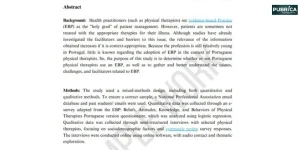
Physician Writing Service
- Statistical Analyses
- Sample Work
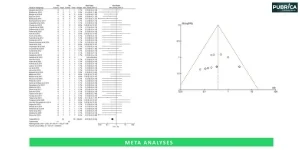
Statistical Analyses
- Data Collection
- AI and ML Services
- Sample Work
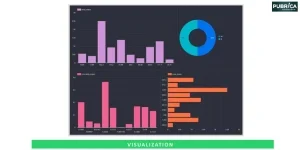
AI and ML Services
- Medical Writing
- Sample Work
Medical Writing
- Research Impact
- Sample Work
Research Impact
- Medical & Scientific Communication
- Sample Work
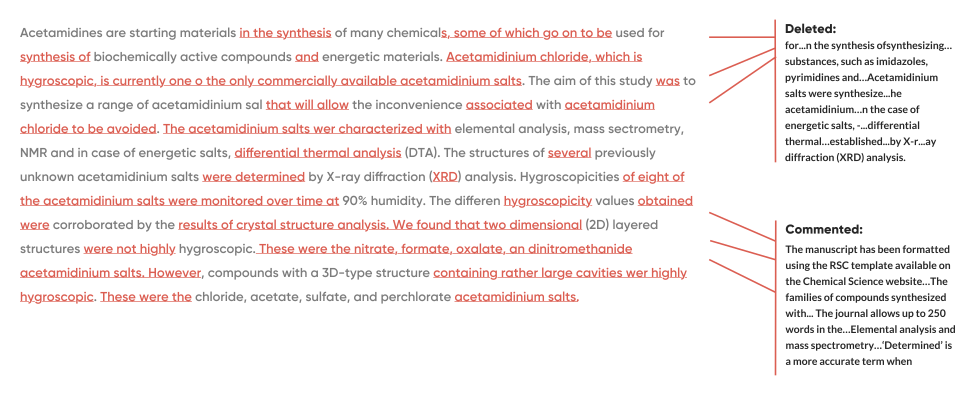
Medical & Scientific Communication
- Medico Legal Services
- Educational Content
- Academic Editorial Services
- Sample Work
Academic Editorial Services
- Educational Editorial Service
-
Education Editorial Services
- Sample Work
Education Editorial Services
-
- Industries
- Subjects
- About Us
- Academy
- Insights
- Contact Us
How to Use and Assess Qualitative Research Methods
High-Impact Journals
- What is Qualitative Research?
- Why Conduct Qualitative Research?
- How to Conduct Qualitative Research
- How to Report Qualitative Research
- How to Combine Qualitative with Quantitative Research
- How to Assess Qualitative Research
- How Not to Assess Qualitative Research
- How Can Pubrica Help in Qualitative Research
- Conclusion
Interesting topics
How to Use and Assess Qualitative Research Methods
Qualitative research investigates in-depth phenomena, using methods such as interviews, focus groups, and observations. Qualitative research aims to investigate what experiences mean and why people behave the way they do. When assessing qualitative research, researchers must assess the transparency of the research method, data collection in qualitative studies, and the researcher’s role. Quality assessment of qualitative research is essential for producing trustworthy and insightful findings. [1]
1. What is Qualitative Research?
Qualitative research is the exploration of a phenomenon’s nature, including its quality, manifestations, context, and vantage points from which it can be perceived, excluding its range, frequency, and causal relationships. Qualitative research emphasizes data in a format of words, rather than a numerical one. It often employs document study and observations in qualitative research to explore real-world contexts deeply. [2]
2. Why Conduct Qualitative Research?
Certain research questions cannot be addressed solely through quantitative methods. An example can be found in a study conducted in Australia, which explored why Aboriginal patients frequently arrive very late, or not at all, to specialist services located at tertiary hospitals. Qualitative interviews with patients and staff highlighted transportation issues as a significant barrier to accessing care, something that a quantitative study may not have identified.
While qualitative research is a common approach across several fields of inquiry, it is less common in health services, which are often steeped in the paradigm of evidence-based medicine that prioritises randomised controlled trials (RCTs). Qualitative interviews, including semi-structured interviews, in qualitative methods. [3,4]
3. How to Conduct Qualitative Research?
The hallmark of qualitative research is its flexibility, open-mindedness, and attention to context, while Data collection in qualitative studies generation and analysis occurs iteratively instead of sequentially. The research process is a cyclical process in which the researcher’s decisions about methods, procedures, and units are not once-and-for-all but change from step to step as new insights emerge. When no new relevant information can be found, the process ends, indicated by a point of saturation. It is important and ethical to be transparent about the decision-making processes engaged in documenting these stages. [5]

Image adopted from Busetto, L., Wick, W., & Gumbinger, C. How to use and assess qualitative research methods. Neurol. Res. Pract. 2, 14 (2020). https://doi.org/10.1186/s42466-020-00059-z
4. How to Report Qualitative Research?
Typical qualitative research papers contain an explicit section of methods for transparency purposes. This section outlines the methods utilized, the rationale for those methods, and how they were carried out. The results section presents common and unique findings accompanied by quotes relevant to contextualizing the findings in real life. Reporting should include reflexivity and stakeholder involvement in qualitative studies, ensuring the researcher’s influence and context are made clear. [1]
5. How to Combine Qualitative with Quantitative Research?
In mixed designs, qualitative methods can be used in conjunction with quantitative methods to triangulate findings, enhance findings, or add breadth to the study. Commonly used mixed methods designs include, commonly used combining qualitative and quantitative designs include: [6]
Convergent Parallel Design | Quantitative and qualitative studies are conducted separately and compared during the interpretation of findings. |
Explanatory Sequential Design | A quantitative study is conducted first, and the results are taken into qualitative research to explain findings. |
Qualitative research is conducted to inform the design of a subsequent quantitative study. |
6. How to Assess Qualitative Research?
Reviewers evaluating qualitative research will want to assess for methodological transparency, quality assessment of qualitative research, reflexivity, and whether reporting is consistent with relevant reporting checklists. Reflexivity is especially important because it can indicate the extent to which the researcher affects the research process, given their background and relationship to the participant(s).
7. How Not to Assess Qualitative Research?
Qualitative research should not be evaluated with the same measures used for quantitative research, such as adherence to structure, sample size, randomising participants, or determining interrater reliability. These aspects are not central characteristics of qualitative studies, since they utilise flexibility, contextual understanding, and focus on research impact. [6]
8. How Can Pubrica Help in Qualitative Research
Pubrica supports researchers in designing, conducting, and reporting qualitative research effectively. Their experts assist with interview guides, data analysis using NVivo or MaxQDA, and ensuring transparency. They help integrate qualitative and quantitative methods for robust mixed-method studies. Pubrica enhances research credibility, structure, and publication readiness through expert guidance.
Connect with us to explore how we can support you in maintaining academic integrity and enhancing the visibility of your research across the world!
Conclusion
A well-structured graphical abstract aids in the discoverability and influence of research articles. By following publisher stipulations on layout and format, distilling information for simplicity, and using trusted designs, researchers can increase the visibility and compatibility of their research across platforms.
Need support with graphical abstracts for your manuscript? Our experts at Pubrica design journal-compliant graphical abstracts tailored to your research field.
References
- Busetto, L., Wick, W., & Gumbinger, C. (2020). How to use and assess qualitative research methods. Neurological research and practice, 2, 14. https://doi.org/10.1186/s42466-020-00059-z
- Aspers, P., & Corte, U. (2019). What is Qualitative in Qualitative Research? Qualitative sociology, 42(2), 139–160. https://doi.org/10.1007/s11133-019-9413-7
- Renjith, V., Yesodharan, R., Noronha, J. A., Ladd, E., & George, A. (2021). Qualitative Methods in Health Care Research. International journal of preventive medicine, 12, 20. https://doi.org/10.4103/ijpvm.IJPVM_321_19
- Zabor, E. C., Kaizer, A. M., & Hobbs, B. P. (2020). Randomized Controlled Trials. Chest, 158(1S), S79–S87. https://doi.org/10.1016/j.chest.2020.03.013
- Denny, E., & Weckesser, A. (2022). How to do qualitative research?: Qualitative research methods. BJOG: an international journal of obstetrics and gynaecology, 129(7), 1166–1167. https://doi.org/10.1111/1471-0528.17150
- Verhoef, M. J., & Casebeer, A. L. (1997). Broadening horizons: Integrating quantitative and qualitative research. The Canadian journal of infectious diseases = Journal canadien des maladies infectieuses, 8(2), 65–66. https://doi.org/10.1155/1997/349145