
- Services
- Discovery & Intelligence Services
- Publication Support Services
- Sample Work
Publication Support Service
- Editing & Translation
-
Editing and Translation Services
- Sample Work

Editing and Translation Service
-
- Research Services
- Sample Work
Research Services
- Physician Writing
- Sample Work
Physician Writing Service
- Statistical Analyses
- Sample Work

Statistical Analyses
- Data Collection
- AI and ML Services
- Sample Work
AI and ML Services
- Medical Writing
- Sample Work
Medical Writing
- Research Impact
- Sample Work
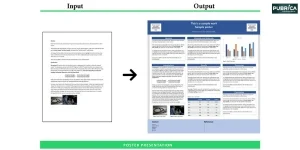
Research Impact
- Medical & Scientific Communication
- Sample Work
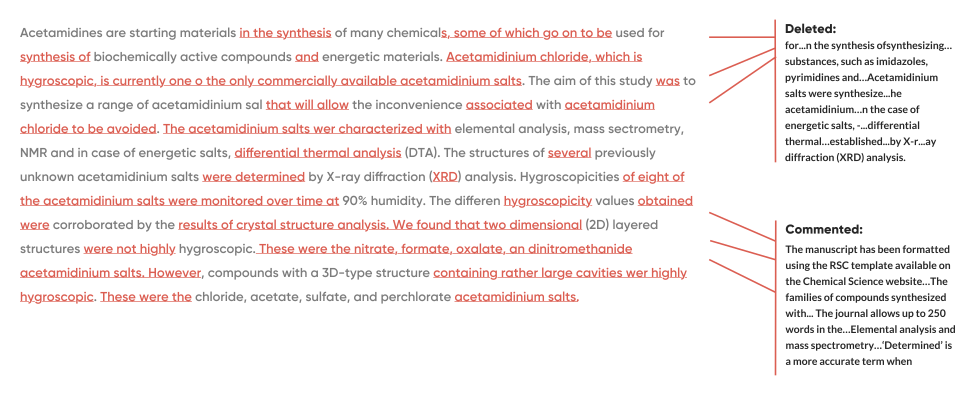
Medical & Scientific Communication
- Medico Legal Services
- Educational Content
- Academic Editorial Services
- Sample Work
Academic Editorial Services
- Educational Editorial Service
-
Education Editorial Services
- Sample Work
Education Editorial Services
-
- Industries
- Subjects
- About Us
- Academy
- Insights
- Contact Us
What are the benefits of an experimental plan in research and experimental research design
- Home
- Publication Support
- Journal Selection
- What are the benefits of an experimental plan in research and experimental research design
An Academy Guide
Interesting topics


What are the benefits of an experimental plan in research and experimental research design
An experimental plan is an essential part of the research process, since it outlines how an experiment will be organized, measured, and analysed. The aim of an experimental research design is to determine cause and effect relationships between variables, in a controlled environment. Below are some key advantages of a well-planned experimental plan.[1]

1. Clear Research Focus
- Clarity of Objectives: A plan for an experiment helps clarify the research’s question, hypotheses and anticipated results. It is essential for keeping the experiment focused on the objectives of the research.
- Operationalizing Variables: Knowing how variables will be manipulated and measured during experimentation helps to operationalize concepts that are otherwise abstract, which creates accuracy in the experiment and keeps a focus.[2]

2. Control Over Variables
- Minimizing Bias: A well-designed experiment – in which extraneous variables are controlled for enables us to make causal statements about the dependent variable being a result of the independent variable, and not any other factor.
- Maximizing Reliability: Controlling for variables, in turn, raises the degree of consistency, which, in turn, facilitates reliability, and reproducibility of the data collected. [3]
3. Systematic Data Collection
Systematic data collection online refers to the structured process of gathering accurate and consistent data using digital tools and platforms. [4]
| Systematic method | Quantitative accuracy |
|---|---|
| An experimental plan will allow you to generate a more systematic method for collecting data, as a consistent approach will be used when taking your measurements. A plan is necessary for generating valid and precise results. | An experimental design usually relies on statistical tools to assess and analyze the data, which allows researchers to generate precise results and determine the significance of their findings. |
4. Replicability
- Reproducible Products: When a detailed experimental plan is provided, other researchers can reproduce the experiment be confirming the results and thus the research validity. Replication is part of the scientific research process.[5]
- Consistent Procedures: By using a structured and pre-defined methodology, future work can be planned in a way that similar conditions are incorporated which would allow you to compare the results.
5. Minimized Errors
- Reduction of Systematic and Random Error: A well-conceived experimental designing minimizes the risk of systematic (predictable) or random (chance) error, which increases the validity of the results. [6]
- Error Anticipation: Knowing what your variables and controls are, you can think through your potential sources of error to minimize their effects and thus enhance the validity of your study.[7]
6. Ethical Considerations
- Ethical Integrity: The experimental design has included ethical obligations such as consent, confidentiality, and limiting risk of harm by experimentation, to help ensure that ethical obligations as part of research have been satisfied.
- Responsible research: Responsible conduct resulting from documenting clear protocols related to the management of data, especially to manage sensitive data, and processes to manage if there was risk.[8]
7. Optimal Resource Allocation
| Efficiently Utilized Resources | An experimental plan specifies the scope of the research, the timing of the research, and the materials required for the research. This ensures that all resources (time, equipment, participants, etc.) are used efficiently and not wasted. |
|---|---|
| Cost-Effective | A written plan will help with budgeting and prioritizing the resources that need to be obtained so the research makes the most financial sense to undertake. |
8. Improved Interpretation of Results
- Explicit Analysis Plan: An experimental plan specifies the statistical techniques and data analysis methods to be used to assess the results. This ensures any kind of conclusion drawn from the data is based on scientific evidence and sound logic.
- Minimisation of Uncertainty: An experimental plan specifies how the data will be analysed, and, in this way, it reduces uncertainty in interpretation and presents solid evidence to support or reject literally any hypothesis.
Conclusion
An experimental plan can help direct good, reliable and reproducible research. It allows you too systematically control variables, reduce bias, minimize errors, manage resources in an ethical and effective way. The systematic approach to experimental research design improves clarity, validity, and quality of research.
What are the benefits of an experimental plan in research and experimental research design? Our Pubrica consultants are here to guide you. [Get Expert Publishing Support] or [Schedule a Free Consultation]
References
- Healey, P., Rothman, H., & Hoch, P. K. (1986). An experiment in science mapping for research planning. Research Policy, 15(5), 233–251. https://doi.org/10.1016/0048-7333(86)90024-7
- Defining your study: How to operationalize variables in research. (n.d.). Research Rebels. Retrieved September 10, 2025, from https://research-rebels.com/blogs/how-to-write-thesis/defining-your-study-how-to-operationalize-variables-in-research
- Understanding control variables: Essential for accurate experiments. (2025, January 9). Assignnmentinneed.com; Assignmenntinneed. https://www.assignnmentinneed.com/blog/understanding-control-variables-essential-for-accurate-experiments
- Wehrlen, L., Krumlauf, M., Ness, E., Maloof, D., & Bevans, M. (2016). Systematic collection of patient reported outcome research data: A checklist for clinical research professionals. Contemporary clinical trials, 48, 21–29. https://doi.org/10.1016/j.cct.2016.03.005
- Ikäheimonen, A., Li, J., Yao, K., Zuo, S., Aledavood, T., & Hölttä-Otto, K. (2024). Replicability and reproducibility of data-intensive design research using workflows – example in facial expression synchrony as a measure of empathy. Journal of Engineering Design, 1–21. https://doi.org/10.1080/09544828.2024.2396194
- Random vs. Systematic error. (n.d.). Umd.edu. Retrieved September 10, 2025, from https://www.physics.umd.edu/courses/Phys276/Hill/Information/Notes/ErrorAnalysis.html
- Error of anticipation. (2016, June 23). Welcome to ASA Standards. https://asastandards.org/terms/error-of-anticipation/
- Field, S. M., Thompson, J., de Rijcke, S., Penders, B., & Munafò, M. R. (2024). Exploring the dimensions of responsible research systems and cultures: a scoping review. Royal Society open science, 11(1), 230624. https://doi.org/10.1098/rsos.230624