
- Services
- Discovery & Intelligence Services
- Publication Support Services
- Sample Work
Publication Support Service
- Editing & Translation
-
Editing and Translation Services
- Sample Work

Editing and Translation Service
-
- Research Services
- Sample Work
Research Services
- Physician Writing
- Sample Work
Physician Writing Service
- Statistical Analyses
- Sample Work
Statistical Analyses
- Data Collection
- AI and ML Services
- Sample Work
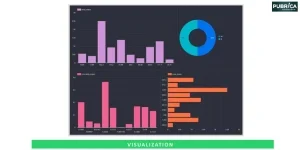
AI and ML Services
- Medical Writing
- Sample Work
Medical Writing
- Research Impact
- Sample Work
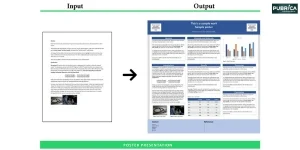
Research Impact
- Medical & Scientific Communication
- Sample Work
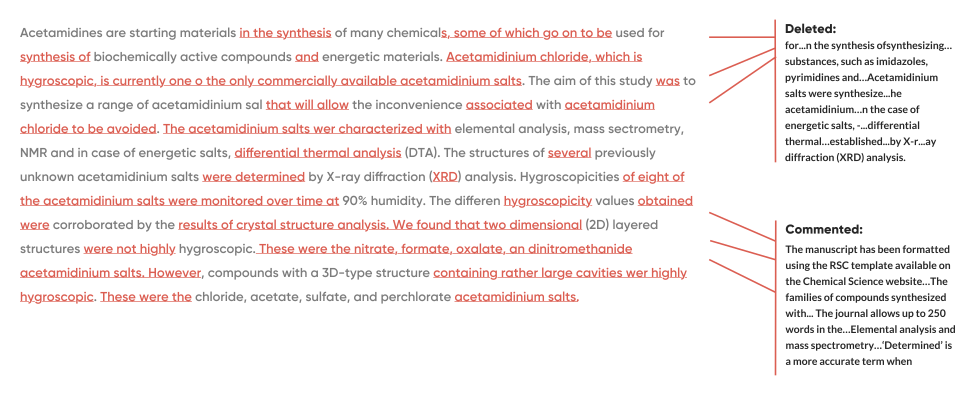
Medical & Scientific Communication
- Medico Legal Services
- Educational Content
- Academic Editorial Services
- Sample Work
Academic Editorial Services
- Educational Editorial Service
-
Education Editorial Services
- Sample Work
Education Editorial Services
-
- Industries
- Subjects
- About Us
- Academy
- Insights
- Contact Us
What is a Correlational Research Design in Research Methodology?
- Home
- Academy
- Journal Submission
- What is a Correlational Research Design in Research Methodology?
Correlational research design
- Definition of Correlational Research Design
- Key Characteristics of Correlational Research
- Types of Correlational Research
- Methods of Conducting Correlational Research
- Data Analysis in Correlation
- Interpretation of Correlation Coefficients
- Applications of Correlational Study
- Example of a Correlational Research Study
Interesting topics
What is a Correlational Research Design in Research Methodology?
1. Definition of Correlational Research Design
2. Key Characteristics of Correlational Research
3. Types of Correlational Research
4. Methods of Conducting Correlational Research
5. Data Analysis in Correlation
6. Interpretation of Correlation Coefficients
7. Applications of Correlational Study
8. Example of a Correlational Research Study
In research methodology, correlational research plays a crucial role in understanding relationships between two or more variables without manipulating them. Unlike experimental study, which involves manipulation of variables, correlational research focuses on identifying patterns, directions, and strengths of associations among naturally occurring variables. It is particularly useful in disciplines such as psychology, education, health sciences, and social sciences, where controlled experiments may not always be ethical or feasible. [1]
1. Definition of Correlational Research Design
Correlational research design is a non-experimental research method used to measure the statistical relationship between two or more variables. The primary goal is to determine whether a change in one variable corresponds with a change in another variable. The strength and direction of this relationship are usually expressed through a correlation coefficient (r), which ranges from -1 to +1. [1]
For example, a researcher might investigate whether there is a relationship between study time and academic performance among university students. The findings may show a positive correlation, indicating that as study time increases, academic performance tends to improve.
2. Key Characteristics of Correlational Research
Feature | Description | Example |
Nature of Variables | Variables are not manipulated; they are observed as they naturally occur. | Measuring stress levels and sleep quality in employees. |
Statistical Analysis | Uses correlation coefficients such as Pearson’s r or Spearman’s rho. | Pearson’s correlation coefficient (r) = 0.78. |
Direction of Relationship | Can be positive, negative, or zero correlation. | Positive: Exercise and health; Negative: Stress and productivity. |
Objective | To determine the strength and direction of relationships between variables. | Relationship between age and technology adoption. |
Research Approach | Non-experimental and quantitative. | Survey-based correlational study on social media use and anxiety. |
3. Types of Correlational Research
The designs vary based on how variables are observed, the number of variables, and the method of data collection. Each of these types of correlational research helps in identifying different patterns and levels of association in correlational research. [2,3]
Types | Description | Example |
Positive Correlation | As one variable increases, the other also increases. | Height and weight: taller people tend to weigh more. |
Negative Correlation | As one variable increases, the other decreases. | Number of cigarettes smoked and lung capacity. |
Zero or No Correlation | No systematic relationship between variables. | Shoe size and intelligence. |
Simple Correlation | Relationship between two variables only. | Income and level of education. |
Multiple Correlation | Relationship among three or more variables. | Relationship between job satisfaction, stress, and productivity. |
Partial Correlation | Relationship between two variables while controlling for the effect of a third variable. | Correlation between exercise and weight while controlling for diet. |
4. Methods of Conducting Correlational Research

Conducting a correlational research design involves several systematic steps, from identifying variables to performing data analysis in correlation. [4]
5. Data Analysis in Correlation
The data analysis in correlation primarily involves calculating the correlation coefficient (r), which determines how strongly variables are related. The formula for Pearson’s r is: [5]
The value of r ranges from -1 to +1, where:
- +1 indicates a perfect positive correlation
- -1 indicates a perfect negative correlation
- 0 indicates no correlation
6. Interpretation of Correlation Coefficients
Correlation Coefficient (r) | Strength of Relationship |
0.00 – 0.19 | Very weak |
0.20 – 0.39 | Weak |
0.40 – 0.59 | Moderate |
0.60 – 0.79 | Strong |
0.80 – 1.00 | Very strong |
For example, an r = +0.75 indicates a strong positive correlation, suggesting that as one variable increases, the other tends to increase significantly.
7. Applications of Correlational Study
Correlational research is valuable in situations where experimental manipulation is unethical or impractical. For example:
- Psychology: Relationship between self-esteem and academic performance.
- Medicine: Link between physical activity and blood pressure.
- Education: Association between student motivation and exam results.
- Business: Correlation between employee satisfaction and productivity.
In these cases, correlational studies help to identify patterns and generate hypotheses for further experimental testing.
8. Example of a Correlational Research Study
Study Example:
A researcher wants to examine the relationship between smartphone usage and sleep quality among college students.
- Variables: Smartphone usage hours (independent variable) and sleep quality scores (dependent variable).
- Data Collection: A questionnaire was distributed to 200 students.
- Data Analysis: Pearson’s correlation analysis.
- Result: A correlation coefficient of r = – 0.55 indicates a moderate negative correlation between smartphone usage and sleep quality, as phone usage increases, sleep quality decreases.
This demonstrates the usefulness of correlational studies in understanding behavioral trends within a quantitative research design.
Connect with us to explore how we can support you in maintaining academic integrity and enhancing the visibility of your research across the world!
Conclusion
In conclusion, the correlational research design serves as a cornerstone of quantitative research design by helping researchers explore the direction and strength of relationships between variables. It plays a vital role in hypothesis generation, trend analysis, and theory development. However, while correlational research can reveal important associations, it must be complemented by experimental or longitudinal methods to establish causality. Effective use of data analysis in correlation, awareness of positive and negative correlation, and accurate interpretation of the correlation coefficient enable researchers to derive meaningful insights that contribute to scientific advancement.
References
- Bhandari, P. (2021, July 7). Correlational research: When & how to use. Scribbr. https://www.scribbr.com/methodology/correlational-research/
- Sreekumar, D. (2024, October 29). What is Correlational Research: Definition, Types, and Examples. Researcher.Life. https://researcher.life/blog/article/what-is-correlational-research-definition-and-examples/
- Putri, L., Rezani, M. R., & Hermina, D. (2025). CORRELATIONAL RESEARCH DESIGN. Jurnal Riset Multidisiplin Edukasi, 2(6), 306–317. https://doi.org/10.71282/jurmie.v2i6.456
- Hassan, M. (2024, March 25). Correlational research – methods, types, and examples. Research Method. https://researchmethod.net/correlational-research/
- Turney, S. (2022, May 13). Pearson correlation coefficient (r): Guide & examples. Scribbr. https://www.scribbr.com/statistics/pearson-correlation-coefficient/