
- Services
- Discovery & Intelligence Services
- Publication Support Services
- Sample Work
Publication Support Service
- Editing & Translation
-
Editing and Translation Services
- Sample Work

Editing and Translation Service
-
- Research Services
- Sample Work
Research Services
- Physician Writing
- Sample Work
Physician Writing Service
- Statistical Analyses
- Sample Work
Statistical Analyses
- Data Collection
- AI and ML Services
- Sample Work
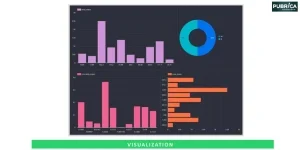
AI and ML Services
- Medical Writing
- Sample Work
Medical Writing
- Research Impact
- Sample Work
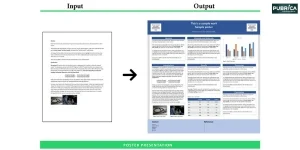
Research Impact
- Medical & Scientific Communication
- Sample Work
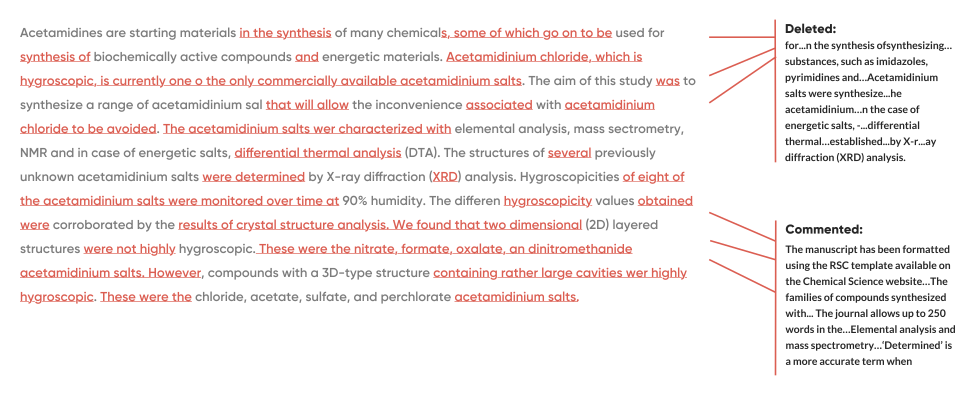
Medical & Scientific Communication
- Medico Legal Services
- Educational Content
- Academic Editorial Services
- Sample Work
Academic Editorial Services
- Educational Editorial Service
-
Education Editorial Services
- Sample Work
Education Editorial Services
-
- Industries
- Subjects
- About Us
- Academy
- Insights
- Contact Us
How to Avoid Sentence Fragments in Medical Writing
- Home
- Academy
- Poster Presentation
- How to Avoid Sentence Fragments in Medical Writing
Research Impact
- What Is a Sentence Fragment?
- Common Types of Sentence Fragments
- Why Sentence Fragments Occur in Scholarly Writing
- How Sentence Fragments Affect Manuscript Quality
- How to Identify Sentence Fragments
- How to Fix Incomplete Sentences in Manuscripts
- Discipline-Specific Considerations
- Best Practices to Avoid Sentence Fragments
Interesting topics
How to Avoid Sentence Fragments in Medical Writing
1. What Is a Sentence Fragment?
2. Common Types of Sentence Fragments
3. Why Sentence Fragments Occur in Scholarly Writing
4. How Sentence Fragments Affect Manuscript Quality
5. How to Identify Sentence Fragments
6. How to Fix Incomplete Sentences in Manuscripts
7. Discipline-Specific Considerations
8. Best Practices to Avoid Sentence Fragments
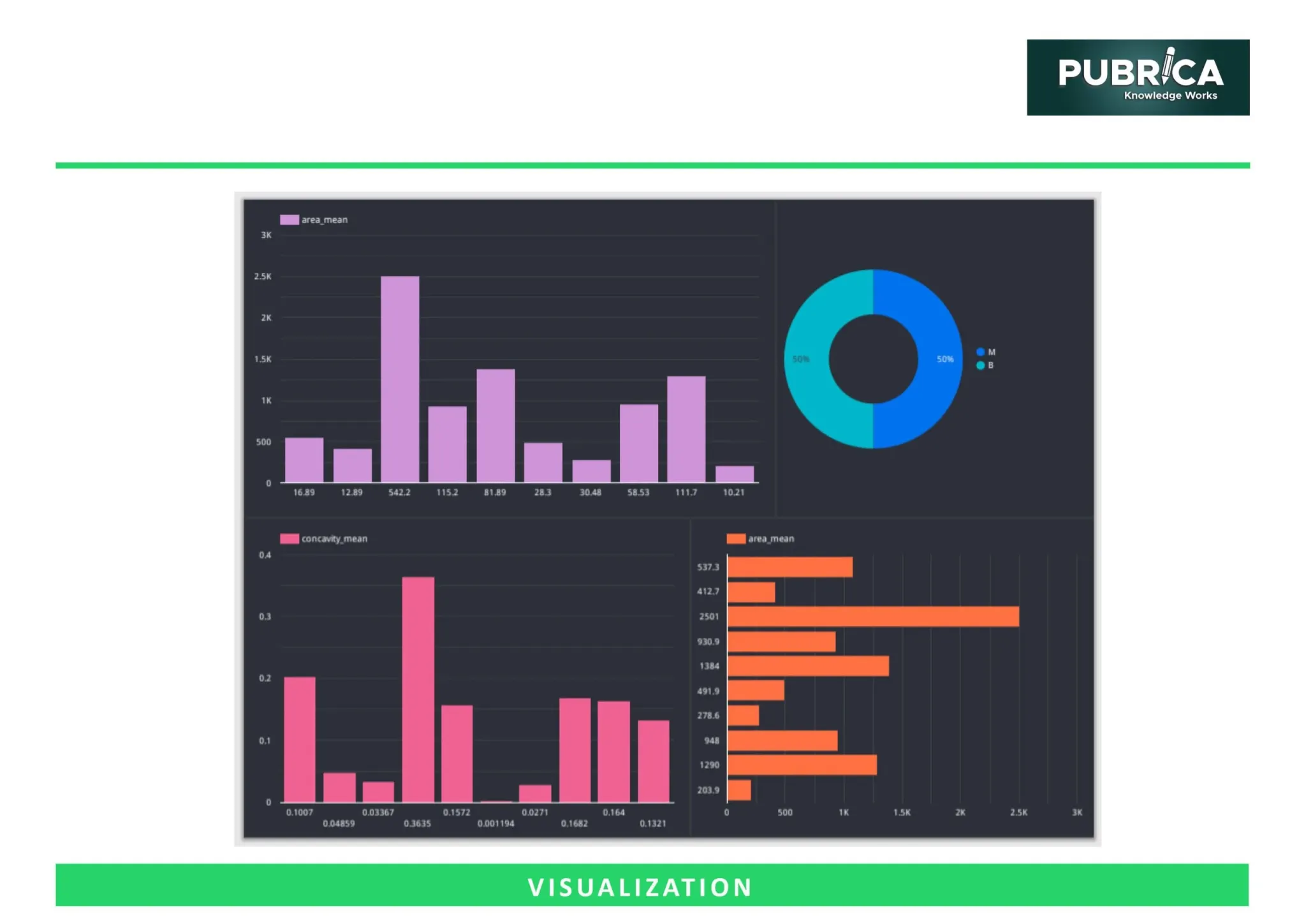
Academic and scientific writing require clarity, precision, and grammatical correctness. Sentence fragments are one of the most made (and most often missed) mistakes in scholarly manuscripts. In discussions of academic writing, sentence fragments are often underestimated despite their frequent appearance in peer-reviewed literature. A sentence fragment is an incomplete structure that conveys a thought. To clearly understand what sentence fragments are, authors must recognize that fragment constructions fail to meet formal grammatical requirements for complete sentences. In essence, sentence fragments hurt the logical flow of your arguments and reduce the reader’s ability to read your manuscript. In addition, they influence how peer reviewers perceive your work with regard to the quality and quantity of evidence for your methodological rigor and authorial competence.[1] Even small fields of syntax (or grammar) that are not correct may cast doubt on the credibility of otherwise solid scientific work[2]. Sentence fragments in academic papers are therefore considered a serious issue in editorial and peer-review evaluation. This article describes what a sentence fragment is, when it appears in an academic manuscript, and how to systematically identify and correct a sentence fragment.
1. What Is a Sentence Fragment?
A sentence fragment is a group of words punctuated as a sentence but lacking one or more essential components of a grammatically complete sentence.[3] In formal academic writing, a complete sentence must typically include:
- A subject
- A finite verb
- A complete independent clause expressing a full idea
At the most fundamental level, academic sentences must demonstrate a clear subject-predicate-verb relationship to be grammatically complete. Fragments often arise when dependent clauses, phrases, or transitional elements are mistakenly separated from their main clauses. This is especially common in cases involving a dependent clause fragment that is incorrectly punctuated as a full sentence.
2. Common Types of Sentence Fragments
Fragment Type | Description | Example (Fragment) |
Dependent clause fragment | Begins with a subordinating conjunction | Although the sample size was small. |
Phrase fragment | Contains no subject or verb | Due to methodological limitations. |
Relative clause fragment | Begins with which, that, or who | Which affected the results. |
Participial fragment | Use of -Ing or -ed verbs incorrectly | Leading to biased outcomes. |
Many of these errors stem from subordinate clause problems, particularly when authors attempt to emphasize findings without completing the sentence structure.
3. Why Sentence Fragments Occur in Scholarly Writing
Many scientific and clinical manuscripts will contain sentence fragments for a variety of reasons, including:
- Complex sentence formation with multiple subordinate clauses, modifiers
- Overuse of transition words (e.g., however, therefore, and because)
- De nominalized verb forms and ungrammatical structures
- Fatigue associated with revisions late in the process of completion
- Support of the spoken language as a source of writing.
These factors often result in incomplete sentences that appear stylistically acceptable but are grammatically unsound in academic prose. Authors from fields such as biomedical sciences or engineering frequently try to compress the very technical, intricate methods into a few short sentences, creating fragments in figures’ captions, results, or discussions.[4]This issue is particularly noticeable in physician writing, where complex clinical reasoning is often condensed into brief statements.
4. How Sentence Fragments Affect Manuscript Quality
From an editorial and peer-review perspective, sentence fragments can have several negative consequences:
- Disrupt logical coherence and argument progression
- Obscure causal relationships and methodological explanations
- Reduce readability and comprehension for interdisciplinary audiences
- Signal weak language control to reviewers and journal editors
Empirical studies in applied linguistics show that grammatical accuracy significantly influences reviewer judgments of manuscript quality, particularly for non-native English authors.[5]As a result, many journals recommend proofreading for sentence fragments as part of pre-submission quality control.
5. How to Identify Sentence Fragments
Before correcting sentence fragments, authors must learn to recognize them systematically.[6]Effective strategies include:
- Clause testing: Ask whether the sentence can stand alone
- Verb identification: Check for a finite verb expressing tense
- Subordinator detection: Look for words like because, although, which
- Read-aloud technique: Fragments often sound incomplete when read aloud
- Reverse outlining: Identify the function of each sentence within a paragraph
Using a reliable sentence correction tool can assist authors in identifying fragment patterns, though manual verification remains essential.
6. How to Fix Incomplete Sentences in Manuscripts
Correcting sentence fragments typically involves one of the following strategies:

These approaches form the foundation of many academic writing improvement tools used by professional editors. The table below provides the illustrative sentence fragments examples, correction strategies and their application in academic writing.
Strategy | Fragment Example | Revised (Complete Sentence) |
Sentence combining | Although the intervention improved outcomes. | Although the intervention improved outcomes, the effect was not statistically significant. |
Sentence expansion | Due to insufficient follow-up. | The study was limited due to insufficient follow-up. |
Editorial simplification | Because the data were incomplete. | The data were incomplete. |
Sentence restructuring | Results suggesting clinical benefit. | The results suggested a clinically meaningful benefit. |
Such revisions are commonly addressed through grammar fixing services that specialize in sentence-level corrections.
7. Discipline-Specific Considerations
There are several sections of a manuscript where the frequency of sentence fragments occurs most often
- Abstract: Often caused by authors trying to compress their writing to fit within the specified word count limit.
- Figure Legends: Written in telegraphic style is often mistakenly viewed as formal prose.
- Discussion: Several authors will use fragmented emphasis sentences to capture and emphasize specific points made earlier in the manuscript.
- Systematic Review: Using long noun phrases instead of verbs can fragmented sentences.
Editors frequently observe sentence fragments in academic papers across these sections during manuscript screening. While sentence fragments can be used in slides and graphical abstracts, they should not be used in the main text of your article when being submitted for peer review.
8. Best Practices to Avoid Sentence Fragments
To reduce your potential for using sentence fragments when preparing your manuscript. [7]
- Use grammar-checking software with caution and verify the suggestions of such programs manually.
- Dedicate time solely to language revisions (i.e. sentence level) separate from content editing. Look to established guidelines for writing in an academic style will help produce clearer sentences.
- For manuscripts intended for submission to high-impact journals, use the services of a professional language editor.
Engaging an Academic editorial service can significantly improve sentence structure accuracy.
Connect with us to explore how we can support you in maintaining academic integrity and enhancing the visibility of your research across the world!
Conclusion
Sentence fragments occur frequently in scholarly writing, but they can be avoided by understanding what comprises a complete sentence, recognizing the common patterns of sentence fragments, and implementing targeted revision methods to enhance manuscript authoring clarity and increase the potential academic authorial impact. For scientists seeking to publish within competitive journals, mastering accuracy at the sentence level is not only a matter of good grammar; it is also an essential component of effective scientific communication.
Struggling with sentence fragments or language issues in your manuscript? Pubrica’s expert academic editors help eliminate grammatical errors, improve clarity, and ensure your research meets journal standards.
References
- Hyland, K. (2016). Academic publishing and the myth of linguistic injustice. Journal of Second Language Writing, 31, 58–69. https://doi.org/10.1016/j.jslw.2016.01.005
- Swales, J. M., & Feak, C. B. (2012). Academic writing for graduate students: Essential tasks and skills. Michigan Series in English for Academic & Professional Purposes. University of Michigan Press. https://atgender.eu/wp-content/uploads/sites/207/2022/03/Academic-Writing-for-Graduate-Students-PDFDrive-.pdf
- Traffis, C. (2017, October 4). What is a sentence fragment? Definition and examples. What Is a Sentence Fragment? (With Examples) | Grammarly; Grammarly Blog. https://www.grammarly.com/blog/sentences/mistake-of-the-month-sentence-fragments/
- Gastel, B., & Day, R. A. (2024). How to write and publish a scientific paper (9th ed.). Cambridge University Press.https://comegic.org.mx/wp-content/uploads/2023/06/Como-escribir-articulo-cientifico.pdf
- Hyland, K., & Jiang, F. (kevin). (2019). Is academic writing becoming more informal? In Academic Discourse and Global Publishing (pp. 207–224). Routledge. https://ueaeprints.uea.ac.uk/id/eprint/66139/1/Accepted_manuscript.pdf
- Identifying Sentence Fragments. (n.d.). Byui.edu. Retrieved December 31, 2025, from https://content.byui.edu/file/b8b83119-9acc-4a7b-bc84-efacf9043998/1/Grammar-1-5-1.html
- Flowerdew, J. (2015). Some thoughts on English for Research Publication Purposes (ERPP) and related issues. Language Teaching, 48(2), 250–262. https://doi.org/10.1017/s0261444812000523