
- Services
- Discovery & Intelligence Services
- Publication Support Services
- Sample Work
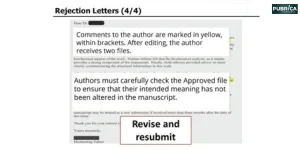
Publication Support Service
- Editing & Translation
-
Editing and Translation Services
- Sample Work
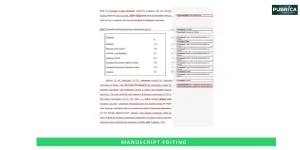
Editing and Translation Service
-
- Research Services
- Sample Work
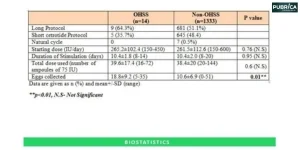
Research Services
- Physician Writing
- Sample Work
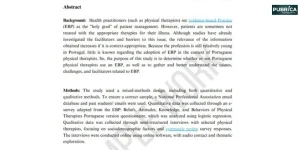
Physician Writing Service
- Statistical Analyses
- Sample Work
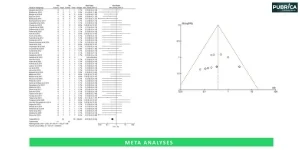
Statistical Analyses
- Data Collection
- AI and ML Services
- Sample Work

AI and ML Services
- Medical Writing
- Sample Work
Medical Writing
- Research Impact
- Sample Work
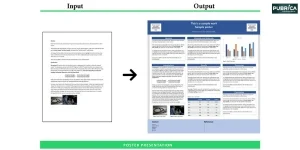
Research Impact
- Medical & Scientific Communication
- Sample Work
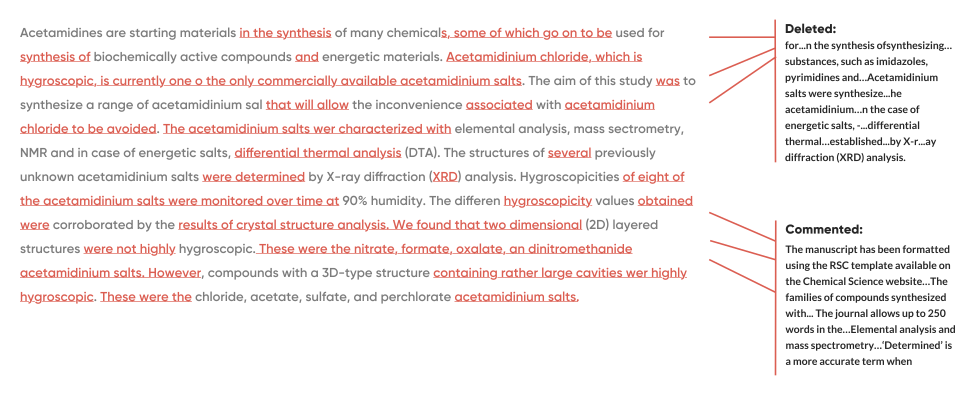
Medical & Scientific Communication
- Medico Legal Services
- Educational Content
- Academic Editorial Services
- Sample Work
Academic Editorial Services
- Educational Editorial Service
-
Education Editorial Services
- Sample Work
Education Editorial Services
-
- Industries
- Subjects
- About Us
- Academy
- Insights
- Contact Us
Why Concise S–V–O Structure Matters in Academic Writing
- Home
- Academy
- Poster Presentation
- Why Concise S–V–O Structure Matters in Academic Writing
Research Impact
- What Is Conciseness in Academic Writing?
- Why the S–V–O Structure Is an Aid to Clear Communication
- S–V–O Structure and Precise Language
- Nominalization and Its Impact on Conciseness
- Active Voice and Sentence-Level Conciseness
- Examples of Concise Academic Sentences
- Paragraph-Level Conciseness in Journals
- Checklist for Writing Concise Academic Sentences
- The Role of Professional Editing Services for Conciseness
Interesting topics
Why Concise S–V–O Structure Matters in Academic Writing
1. What Is Conciseness in Academic Writing?
2. Why the S–V–O Structure Is an Aid to Clear Communication
3. S–V–O Structure and Precise Language
4. Nominalization and Its Impact on Conciseness
5. Active Voice and Sentence-Level Conciseness
6. Examples of Concise Academic Sentences
7. Paragraph-Level Conciseness in Journals
8. Checklist for Writing Concise Academic Sentences
9. The Role of Professional Editing Services for Conciseness
The requirements for writing in an academic field are clarity, accuracy, and conciseness. Academic writers must present this type of information in such a manner that it is easily identifiable to the reader by stating, what action is being taken, and what is affected. Failure to do so could result in decreased comprehension of the text by the reader [1]. Academic writing conciseness is, therefore, a major characteristic for determining the quality of an article submitted for publication[2],and is a major part of manuscript formatting. To write concisely, writers need to take care of grammar, appropriate word selections, and particularly sentence structure for clarity using the S–V–O structure, which enhances both clarity and precise reading comprehension.[3]
1. What Is Conciseness in Academic Writing?
- The content of the work is explained clearly: nothing more or nothing less. [2]
- The written work conveys the complex ideas that we developed through this research by using simple language that provides no more than necessary for advancing the understanding of the research’s results.[4]
- Writing must have clarity without going overboard with your word choices. [5]
2. Why the S-V-O Structure is an Aid to Clear Communication in Academic Writing
The order in which the ‘component parts’ of a sentence appear, is believed to be a significant factor in how effectively English language is read and understood. A predictable ordering of the subject, verb and object of a sentence helps to reduce a reader’s cognitive load and allows them to concentrate on the content of a sentence rather than on how to interpret its structure[6]. Thus, S-V-O sentences serve as the basis for clear, concise writing and is established as a strategy for concise writing. [3]
For example:
- An increase in performance was observed after the intervention.
- The intervention increased performance.
By using a shorter, clearer, and more direct form, this edit shows how the S–V–O structure enhances precise language academic writing [7].
3. S–V–O Structure and Precise Language
Utilizing SVO structures is an effective way for academic writers to choose the most concrete subject and powerfully communicate their ideas. The use of abstract subjects and weak verbs leads to vagueness and inflated formulations in scholarly literature resulting in diminished impact of research findings.
Strong sentence structure also supports argument development at the paragraph level, contributing to a concise paragraph structure for journals, where space and reader attention are limited.
4. Nominalization and Its Impact on Conciseness
A common way to increase word count in a paper is to use nominalization (changing verbs to nouns). In some subjects, using nominalization may be appropriate; however, its excessive use will disrupt the S–V–O format and increase the paper’s word count.[2]
Reducing nominalization is one of the most effective manuscript editing techniques to eliminate redundancy in academic manuscripts.[5]
Nominalized Construction | Concise S–V–O Sentence |
The analysis of the data was conducted by the authors. | The authors analysed the data. |
An evaluation of the method was performed. | The researchers evaluated the method. |
Measurement of temperature was carried out hourly. | The team measured temperature hourly. |
5. Active Voice and Sentence-Level Conciseness
The S–V–O or Subject–Verb–Object structure tends to fit into the active voice. For this reason, many have discussed the advantages of using an active voice in writing, especially for academic writing purposes. [4]. The active voice clearly states who is responsible for performing an action, shortens the length of sentences, and helps support claims made in writing.[3] This explains the active voice benefits in academic writing.
While there are acceptable instances of using passive voice, especially in methods or procedures, many times writers use excessive amounts of passive voice, which can obscure meaning and negatively impact the quality of writing. Consequently, converting passive sentences into the more direct and clearer active S–V–O form has been the primary focus in proofread and edit for conciseness workflows.
6. Examples of Concise Academic Sentences
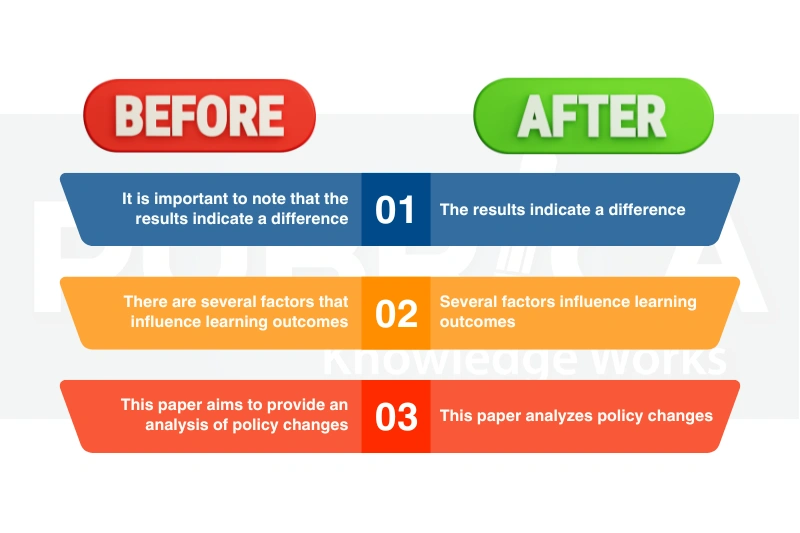
Clear sentence revision is best illustrated through comparison. Below are few re-writes demonstrating how S-V-O will assist in providing a more concise version of writing an academic paper. Such revisions are routinely applied during manuscript editing for academic clarity, especially before journal submission.
7. Paragraph-Level Conciseness in Journals
While individual sentences must be concise, the entire paragraph needs to maintain focus on an idea and have a logical sequence, which is how editors & reviewers evaluate the overall effectiveness of a paper. A concise paragraph structure for journals begins with a clear subject-verb-object or S-V-O topic statement. Each subsequent sentence uses the same subject, creating an cohesively developing narrative while eliminating needless repetition, hence improving overall readability and supporting the arguments presented in the paper.[2]
8. Checklist for Writing Concise Academic Sentences
This checklist is standard practice in academic editing services for conciseness, particularly for manuscripts targeting high-impact journals.[5].Essential questions include:
- Is the subject clearly defined?
- Is the verb specific in its meaning of actions taken?
- Are there nominalization phrases that could be changed into verbs?
- Is passive voice a required function?
- Are there any redundant phrases that could be deleted? questions include:
9. The Role of Academic Editing Services for Conciseness
Professional academic editors work to create the most concise version of the material by addressing both grammatical issues and restructuring sentences for better readability. Professional editors frequently reword sentences to bring back S–V–O structure, to simplify complex sentences, and to enhance logical connections within paragraphs. These services are particularly useful for all authors who need assistance with manuscript editing for academic clarity prior to submitting the paper for peer review [4].
Connect with us to explore how we can support you in maintaining academic integrity and enhancing the visibility of your research across the world!
Conclusion
Using the Subject-Verb-Object (S-V-O) framework is an effective tool that enhances the overall quality of academic writing. Using S-V-O, academic writers can produce clear, concise works that rely less on nominalisation and use more active voice in their writing directly contributing to academic writing conciseness. It is essential for proper academic writing clarity and will help in improving the effectiveness of any individual or organisation’s ability to communicate through academic writing with the use of professional proofread or edit for conciseness services.
Ready to make your academic writing clear and concise? Contact Pubrica’s expert editing services for top-notch manuscript editing today. [Get expert publishing support] or [Schedule free consultation]
References
- (2024). From manuscript to publication: Mastering English for academic success. Journal of Teaching English for Specific and Academic Purposes, 365. https://doi.org/10.22190/jtesap240123030v
- Luby, S., & Southern, D. L. (2022). Achieving clarity and conciseness. In The Pathway to Publishing: A Guide to Quantitative Writing in the Health Sciences(pp. 73–86). Springer International Publishing. https://doi.org/10.1007/978-3-030-98175-4_6
- Gopen, G. D., & Swan, J. A. (1990). The science of writing documents. American Scientist, 78(6), 550–558. https://doi.org/10.22161/IJELS
- Garwood, K. (2013). Metonymy and Plain Language. Journal of Technical Writing and Communication, 43(2), 165-180. https://doi.org/10.2190/TW.43.2.d
- Khirallah, M. (2004). Second Language Writers’ Text: Linguistic and Rhetorical Features. Studies in Second Language Acquisition. https://doi.org/10.1017/S0272263104233058
- Baynes, K., & Long, D. L. (2007). Three conundrums of language lateralization: Language lateralization. Language and Linguistics Compass, 1(1–2), 48–70. https://doi.org/10.1111/j.1749-818x.2007.00006.x
- Barasa, D. (2024). Demystifying the discourse: techniques to effective academic writing. Journal of Research and Academic Writing, 1(1), 13–21. Retrieved from https://www.ajol.info/index.php/jraw/article/view/278636