
- Services
- Discovery & Intelligence Services
- Publication Support Services
- Sample Work
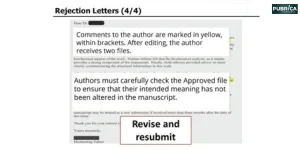
Publication Support Service
- Editing & Translation
-
Editing and Translation Services
- Sample Work
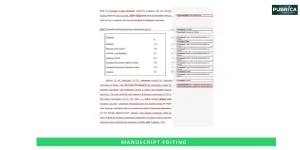
Editing and Translation Service
-
- Research Services
- Sample Work
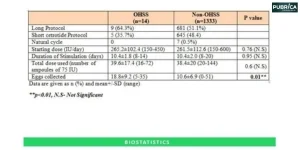
Research Services
- Physician Writing
- Sample Work
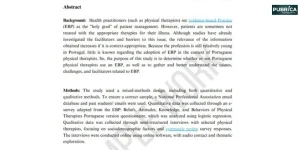
Physician Writing Service
- Statistical Analyses
- Sample Work
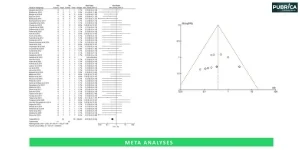
Statistical Analyses
- Data Collection
- AI and ML Services
- Sample Work
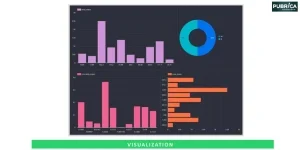
AI and ML Services
- Medical Writing
- Sample Work
Medical Writing
- Research Impact
- Sample Work
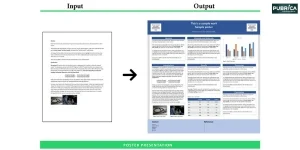
Research Impact
- Medical & Scientific Communication
- Sample Work
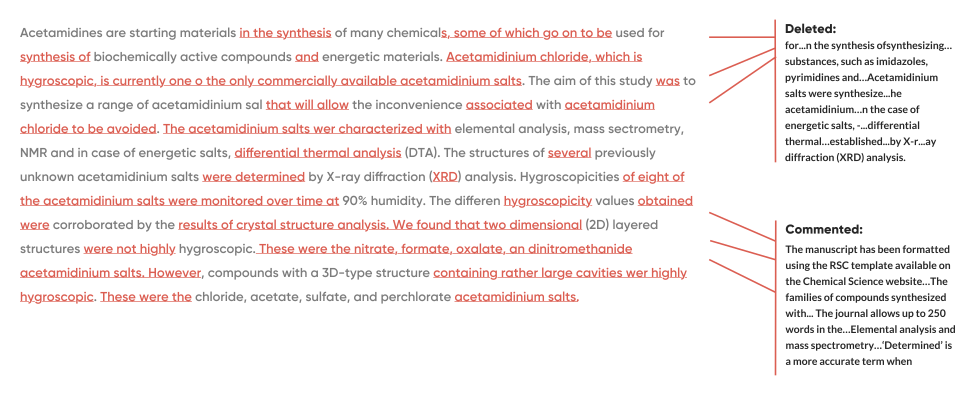
Medical & Scientific Communication
- Medico Legal Services
- Educational Content
- Academic Editorial Services
- Sample Work
Academic Editorial Services
- Educational Editorial Service
-
Education Editorial Services
- Sample Work
Education Editorial Services
-
- Industries
- Subjects
- About Us
- Academy
- Insights
- Contact Us
Targeted literature searches are a fundamental part of writing clinical manuscripts that will meet the standards of high-quality journals and contribute meaningfully to evidence-based practice. When physicians write clinical manuscripts, utilizing a targeted literature search can identify high-quality, relevant, and current evidence. While a general literature review is useful, a targeted literature search is specific to the clinical question and should be completed through frameworks established, such as PICO (Population, Intervention, Comparator, Outcome) and PRISMA [1].
The Importance of Editing and Proofreading Before Manuscript Submission
- Home
- Academy
- Research Impact
- The Importance of Editing and Proofreading Before Manuscript Submission
High-Impact Journals
Interesting topics
The Importance of Editing and Proofreading Before Manuscript Submission
The quality of the manuscript is an important factor in receiving acceptance from academic writing. A detailed, error-free manuscript is a signal of professionalism and enhances the clarity and significance of the research. Manuscript editing & proofreading are two very important stages in the writing process that enhance accuracy, coherence, and readability. Neglecting these stages can result in errors, confusion, indecision, misinterpretation, or rejection from journals and publishers. [1]
1. Understanding Editing and Proofreading
Editing and proofreading are stages that are distinct yet related in preparing a manuscript for submission: [2]
- Editing is concerned with structure, clarity, tone, and style
- Proofreading is concerned with technical accuracy, including grammar, spelling, punctuation, and formatting.
Stage | Focus Area | Activities |
Editing | Structure, content clarity, style, consistency | Rewriting sentences, reorganizing paragraphs, checking logical flow |
Proofreading | Grammar, punctuation, spelling, formatting | Correcting typos, verifying references, and checking consistency in headings and tables |
2. Why Editing is Essential
Editing improves clarity and flow, thus enhancing the quality and readability of a manuscript. Manuscripts that are poorly edited may confuse readers and lead to a loss of credibility with the author.
- Clarity and Flow. The arrangement of sentences, as well as proper structure, means that some complex ideas can be a bit less complex to decipher.
- This will provide continuity of terminology, consistency of tone, and uniformity of formatting.
- Accuracy of Content. Editing can help to ascertain that the argument or data is consistent and there are no gaps.
- Professional Presentation. If the manuscript is polished and clean, the author has demonstrated thoughtfulness and care and thus is more likely to gain acceptance.
3. Importance of Proofreading
Even a thoroughly edited manuscript can have a few distractions for the reader or come off as unprofessional. Proofreading is the process of correcting all these surface issues: [3]

Bullet Points – Quick Proofreading Checklist
- Look for any spelling or grammar errors.
- Check punctuation (commas, semicolons, colons).
- Make sure you are consistent in your use of tense and voice.
- Double-check references or citations, captions, and labels for figures.
- Look for any typos or formatting
4. Consequences of Skipping Editing and Proofreading
Not proofreading and editing has serious consequences: [4]
- Confused Ideas: Sentences that are poorly structured can lead to reader confusion.
- Reduced Author Credibility: Many consistent errors can reduce the author’s credibility even if the article is good.
- Reduced Probability of Being Accepted: Many journals and publishers will reject an article simply because it has avoidable mistakes.
- Distraction for the Reader: Errors and mistakes can become distracting for the reader and diminish the value of the content.
5. Benefits of Thorough Editing and Proofreading
Benefit | Impact on Manuscript |
Higher acceptance rate | Manuscripts are more likely to pass peer review. |
Increased readability | Readers can easily understand and engage with content. |
Enhanced credibility | Demonstrates attention to detail and professionalism. |
Reduced risk of rejection | Avoids rejection due to minor errors. |
Connect with us to explore how we can support you in maintaining academic integrity and enhancing the visibility of your research across the world!
Conclusion
Editing and proofreading are critical steps before submitting your manuscript. Editing focuses on raising clarity, flow, and structure. Proofreading focuses on maintaining accuracy and technical correctness. Avoiding these steps can hurt a manuscript’s readability and credibility, putting acceptance at stake. Spending time editing and proofreading your piece helps you show your work in the best possible light.
The Importance of Editing and Proofreading Before Manuscript Submission. Our Pubrica consultants are here to guide you. [Get Expert Publishing Support] or [Schedule a Free Consultation]
References
- Aga, S. S., & Nissar, S. (2022). Essential Guide to Manuscript Writing for Academic Dummies: An Editor’s Perspective. Biochemistry Research International, 2022, 1492058. https://doi.org/10.1155/2022/1492058
- Arias-Gonzalez J. R. (2018). Writing, Proofreading, and Editing in Information Theory. Entropy (Basel, Switzerland), 20(5), 368. https://doi.org/10.3390/e20050368
- Swain, P. S., & Siggia, E. D. (2002). The role of proofreading in signal transduction specificity. Biophysical journal, 82(6), 2928–2933. https://doi.org/10.1016/S0006-3495(02)75633-6
- Shafto M. A. (2015). Proofreading in Young and Older Adults: The Effect of Error Category and Comprehension Difficulty. International journal of environmental research and public health, 12(11), 14445–14460. https://doi.org/10.3390/ijerph121114445