
- Services
- Discovery & Intelligence Services
- Publication Support Services
- Sample Work
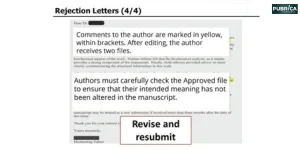
Publication Support Service
- Editing & Translation
-
Editing and Translation Services
- Sample Work

Editing and Translation Service
-
- Research Services
- Sample Work
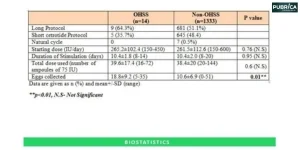
Research Services
- Physician Writing
- Sample Work
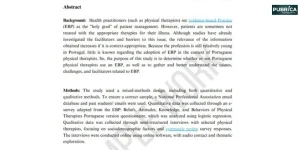
Physician Writing Service
- Statistical Analyses
- Sample Work
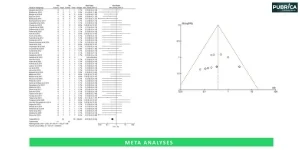
Statistical Analyses
- Data Collection
- AI and ML Services
- Sample Work

AI and ML Services
- Medical Writing
- Sample Work
Medical Writing
- Research Impact
- Sample Work
Research Impact
- Medical & Scientific Communication
- Sample Work
Medical & Scientific Communication
- Medico Legal Services
- Educational Content
- Academic Editorial Services
- Sample Work
Academic Editorial Services
- Educational Editorial Service
-
Education Editorial Services
- Sample Work
Education Editorial Services
-
- Industries
- Subjects
- About Us
- Academy
- Insights
- Contact Us
What is a Literature Review in Research Methodology?
- Home
- Academy
- Poster Presentation
- What is a Literature Review in Research Methodology?
Research Impact
- Definition of Literature Review
- Key Characteristics of a Literature Review
- Types of Literature Review
- Steps in Conducting a Literature Review
- Importance of Literature Review in Research Methodology
- Structure of a Literature Review
- Applications of Literature Review
- Example of a Literature Review Topic
Interesting topics
What is a Literature Review in Research Methodology?
1. Definition of Literature Review
2. Key Characteristics of a Literature Review
3. Types of Literature Review
4. Steps in Conducting a Literature Review
5. Importance of Literature Review in Research Methodology
6. Structure of a Literature Review
7. Applications of Literature Review
8. Example of a Literature Review Topic
In research methodology, a literature review is a comprehensive survey, summary, and critical literature review of existing scholarly work (books, articles, reports) on a specific topic, providing a theoretical framework, identify research gaps, preventing duplication, and showing how your research fits into the broader academic conversation. It’s not just a summary but a synthesis that identifies trends, debates, and unanswered questions to establish context and guide future studies, which is essential for research question justification.
A literature review is one of the most important parts of research methodology. It gives a comprehensive overview of all relevant previous research literature for the intended research area. It helps a researcher understand how to write a literature review, what has been done in that field, identify what is missing or needs to be researched, and put their research in perspective with the rest of the literature. Conducting a thorough and well-organized literature review gives a researcher a strong theoretical basis for their research and supports the requirement for future research. Most disciplines (e.g., Education, Medicine, Social Sciences, Engineering, Management, etc.) utilize literature reviews and often seek literature review help or academic editing services to improve quality. [1]
1. Definition of Literature Review
The process of conducting a literature review is to systematically and critically review all the existing scholarly works regarding a specific research topic or issue, following clear literature review steps. The goal of this process will be to establish the background information needed to complete a new piece of research by providing a summary, analysis, and synthesis of all the knowledge that already exists, which strengthens the theoretical framework of the study.
The primary difference between a typical bibliography and a literature review is that while a bibliography only includes an authors’ past work, a literature review includes the evaluation of the quality of the work produced by each author, including how they conducted the research and what contributions they made, as well as any limitations or cautions related to the research methods used. This evaluative process is central to a critical literature review. [2]
2. Key Characteristics of a Literature Review
This section outlines the key characteristics of a literature review by describing its main features, their purpose, and practical examples.
| Feature | Description | Example |
|---|---|---|
| Scope | Covers relevant and credible scholarly sources | Review of studies on patient satisfaction in hospitals |
| Critical Analysis | Evaluates strengths and weaknesses of previous studies | Comparing methodologies used in similar studies |
| Organization | Structured thematically, chronologically, or methodologically | Grouping studies by research themes |
| Purpose | Identifies research gaps and theoretical frameworks | Highlighting lack of studies in rural healthcare |
| Research Nature | Qualitative, quantitative, or mixed-method synthesis | Integrating findings from surveys and experiments |
3. Types of Literature Review
Different types of literature review are used depending on the research objective and discipline. Each type serves a distinct purpose in research methodology. [3]
| Type | Description | Example |
|---|---|---|
| Narrative Review | Provides a general summary of existing literature | Overview of mental health studies |
| Systematic Review | Uses a structured and replicable method to collect data | Review of clinical trials on diabetes |
| Meta-Analysis | Statistically combines results of multiple studies | Calculating effect size across studies |
| Scoping Review | Maps key concepts and research gaps | Identifying trends in telemedicine research |
| Theoretical Review | Examines theories and conceptual models | Reviewing leadership theories in education |
4. Steps in Conducting a Literature Review
Conducting an effective literature review involves a systematic and organized process, commonly referred to as literature review steps. [4]
To complete a literature review:

5. Importance of Literature Review in Research Methodology
The literature review plays a crucial role in research methodology by: [5]
- Establishing a theoretical framework
- Preventing the repeat of research
- Helping identify research gaps
- Supporting research question justification
- Guiding methodologies developed
A thorough review of literature indicates an understanding of the area being investigated and establishes the author as a reliable source of information, which is why many researchers seek literature review writing service or dissertation writing assistance.
6. Structure of a Literature Review
A typical literature review follows a clear academic structure, often recommended in guides on how to write a literature review:
Section | Description |
Introduction | Explains the topic, scope, and purpose |
Body | Discusses literature thematically or chronologically |
Critical Analysis | Compares findings and methodologies |
Research Gaps | Identifies unanswered questions |
Summary | Links reviewed literature to current research |
7. Applications of Literature Review
Literature reviews play a role in many types of research, including: [6]
- Medicine: To compile clinical evidence about the efficacy of treatment or intervention.
- Education: To evaluate the effectiveness of teaching strategies and the results of students’ learning.
- Social Sciences: To evaluate and understand the effects of social behaviour on society and government policy.
- Business: To investigate the success of an organisation and the trends in leadership.
All these areas of research can benefit from literature reviews by providing support for developing theories, strengthening the theoretical framework, and for making decisions based on scientific evidence, often supported by academic editing services.
8. Example of a Literature Review Topic
This section presents an example of a literature review topic to illustrate how existing scholarly research can be systematically reviewed to establish context, identify research gaps, and justify the proposed study.
A literature review on this topic may examine previous studies on service quality, patient-provider communication, healthcare infrastructure, and cultural factors influencing satisfaction, highlighting gaps in patient-centred care research and supporting research question justification.
Connect with us to explore how we can support you in maintaining academic integrity and enhancing the visibility of your research across the world!
Conclusion
The conclusion of the literature study is that the literature review is a crucial part of the methodology used in research, providing a thorough understanding of all the existing body of knowledge on a particular subject. The literature review helps develop hypotheses and frame theories through a strong theoretical framework, as well as to support the research design and make methodological choices. The literature review serves to identify research gaps and justify future studies. A properly developed, structured, and critical literature review will improve the quality, credibility, and scholarly value of the final completed research product. A researcher must master how to write a literature review, or seek literature review help, dissertation writing assistance, or academic editing services to achieve success in academic or scientific endeavours.
Need expert support for your literature review? Partner with Pubrica for professional literature review help, research methodology guidance, and academic editing services. [Get Expert Publishing Support] [Schedule a Free Consultation]
FAQ QUESTIONS
1. What is a literature review?
a critical summary and synthesis of existing scholarly work (books, articles, theses) on a specific topic, providing an overview of what’s known, identifying key debates, and highlighting gaps for future research, often as a chapter in a larger thesis or a standalone paper to establish a foundation for new research.
2. How do you write a literature review?
Writing a literature review involves a systematic process of searching for, evaluating, synthesizing, and summarizing existing scholarly research on a specific topic. The goal is to provide an overview of the current state of knowledge, identify gaps or controversies in the field, and establish a context for your own research.
3. What are the main steps in a literature review?
Defining your scope, searching and selecting relevant literature, analysing and synthesizing themes, gaps, and debates, and finally structuring and writing the review with an introduction, body (organized by themes/arguments), and conclusion.
4. What are the different types of literature review?
Narrative (broad overview), Systematic (rigorous, unbiased method), Scoping (mapping the field/gaps), Meta-analysis (statistical combination of quantitative studies), Critical (evaluating quality/strengths), and Rapid (time-efficient, focused).
References
- Snyder, H. (2019). Literature review as a research methodology: An overview and guidelines. Journal of Business Research, 104, 333–339. https://doi.org/10.1016/j.jbusres
- Maggio, L. A., Sewell, J. L., & Artino, A. R., Jr (2016). The Literature Review: A Foundation for High-Quality Medical Education Research. Journal of graduate medical education, 8(3), 297–303. https://doi.org/10.4300/JGME-D-16-00175.1
- Paré G, Kitsiou S. Chapter 9 Methods for Literature Reviews. In: Lau F, Kuziemsky C, editors. Handbook of eHealth Evaluation: An Evidence-based Approach [Internet]. Victoria (BC): University of Victoria; 2017 Feb 27. Available from: https://www.ncbi.nlm.nih.gov/books
- Khan, K. S., Kunz, R., Kleijnen, J., & Antes, G. (2003). Five steps to conducting a systematic review. Journal of the Royal Society of Medicine, 96(3), 118–121. https://doi.org/10.1177/01410768030
- Kiani, A. K., Naureen, Z., Pheby, D., Henehan, G., Brown, R., Sieving, P., Sykora, P., Marks, R., Falsini, B., Capodicasa, N., Miertus, S., Lorusso, L., Dondossola, D., Tartaglia, G. M., Ergoren, M. C., Dundar, M., Michelini, S., Malacarne, D., Bonetti, G., Donato, K., … INTERNATIONAL BIOETHICS STUDY GROUP (2022). Methodology for clinical research. Journal of preventive medicine and hygiene, 63(2 Suppl 3), E267–E278. https://doi.org/10.15167/2421-4248/jpmh2022.63.2S3.2769
- Hutchings, E., Loomes, M., Butow, P. et al.A systematic literature review of researchers’ and healthcare professionals’ attitudes towards the secondary use and sharing of health administrative and clinical trial data. Syst Rev 9, 240 (2020). https://doi.org/10.1186/s13643-020-01485-5