
- Services
- Discovery & Intelligence Services
- Publication Support Services
- Sample Work
Publication Support Service
- Editing & Translation
-
Editing and Translation Services
- Sample Work
Editing and Translation Service
-
- Research Services
- Sample Work
Research Services
- Physician Writing
- Sample Work
Physician Writing Service
- Statistical Analyses
- Sample Work
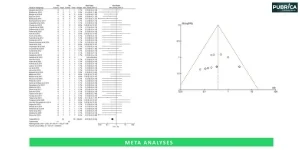
Statistical Analyses
- Data Collection
- AI and ML Services
- Sample Work

AI and ML Services
- Medical Writing
- Sample Work
Medical Writing
- Research Impact
- Sample Work
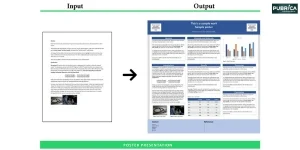
Research Impact
- Medical & Scientific Communication
- Sample Work
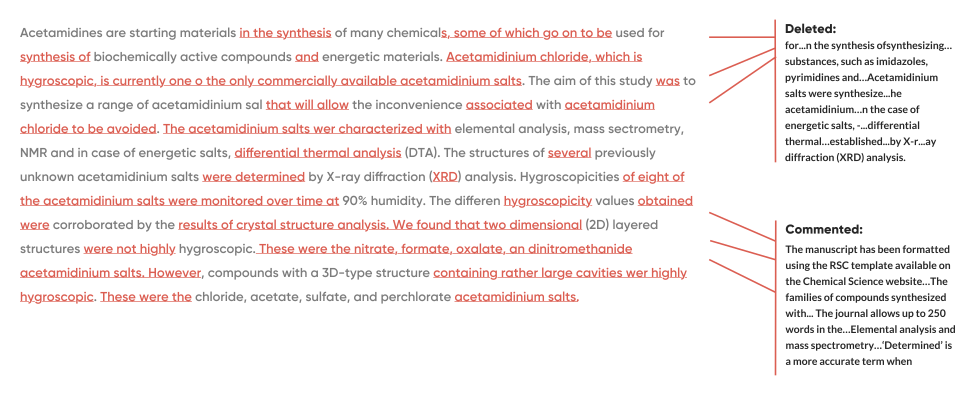
Medical & Scientific Communication
- Medico Legal Services
- Educational Content
- Academic Editorial Services
- Sample Work
Academic Editorial Services
- Educational Editorial Service
-
Education Editorial Services
- Sample Work
Education Editorial Services
-
- Industries
- Subjects
- About Us
- Academy
- Insights
- Contact Us
PRISMA Method explained: Reporting guidelines for systematic review
- Home
- Academy
- Statistical analysis
- PRISMA Method explained: Reporting guidelines for systematic review
High-Impact Journals
Interesting topics
PRISMA Method explained: Reporting guidelines for systematic review
PRISMA (Preferred Reporting Items for Systematic Reviews and Meta-Analyses) is an evidence-based guideline with a checklist and flow diagram to improve the transparency, completeness, and quality of systematic review reporting. Meta-analyses and systematic reviews play an important role in supporting evidence-based practice by integrating the results from many different sources into clear conclusions. For clinicians conducting clinical literature reviews, PRISMA guidelines ensure that the review is comprehensive, unbiased, and useful for evidence-based practice.[1] The PRISMA Method facilitates the integration of heterogenous datasets from randomized controlled trials, observational studies, and cohort analyses, improving the reliability of synthesized evidence.
The PRISMA Method is a standardized format that encourages authors to provide full disclosure of their findings and results, thereby ensuring unbiased and reliable reviews, benefiting both the researcher and the consumer of the systematic review.[2] This article provides an overview of key elements of the PRISMA guidelines and how to apply these guidelines to create a systematic review that is of good quality.[3]
1. What is PRISMA?
The PRISMA Method is a set of reporting guidelines designed to improve the quality of systematic reviews and meta-analyses. First introduced in 2009, PRISMA aims to enhance the clarity and transparency of reporting by providing a 27-item checklist. These items cover key components of a systematic review, from title to conclusions, and help authors present their findings comprehensively.[4]
Prisma is fundamentally structured into three key stages:[5]

- Identification: A thorough search of many different types of scientific literature is conducted by conducting an extensive investigation of all available resources. Automated literature mining tools and bibliometric analysis can be incorporated at this stage to improve search efficiency.
- Screening: Systematic reviews are performed based on predetermined eligibility criteria, requiring the removal of duplicate reports. Additionally, PRISMA flow diagrams are used to provide a visual representation of the exclusion of publications not meeting those criteria.
- Analysis: There are a few established procedures for determining bias in the research cited as part of a systematic review and how to address any discrepancies arising from a piece of literature that was not identified through an initial search. Subgroup analyses, sensitivity testing, and heterogeneity assessments are crucial to ensure robust meta-analytic outcomes.
For systematic reviews that require advanced statistical analysis, meta-analysis services can assist in synthesizing data across studies to draw more robust conclusions. Forest plots, funnel plots, and effect size calculations are commonly used in meta-analyses to visualize outcomes and detect publication bias.
Transparency, credibility, and the possibility of replicating the results of a systematic review are the cornerstones of PRISMA that foster trust and accountability among researchers and their constituencies.[6]
2. Why PRISMA Matters: Upholding Transparency in Systematic Reviews?
Systematic Review plays a vital role in Evidence-Based Medicine and Research, enabling practitioners to base their decisions on researched information. The inaccurate and incomplete accounting of systematic reviews exposes researchers to the potential to inaccurately support their conclusions with the data used in developing a review. This may affect clinical practice, policy-making, or future research, which can ultimately impact public health and safety. [7]
Using the PRISMA Guidelines
- Researchers have increased transparency and consistency in reporting their findings.
- Researchers have meticulously documented each step taken throughout the process of completing the systematic review.
- Researchers have minimized bias and completed an exhaustive analysis of all relevant studies.
3. Key Components of the PRISMA Checklist
The PRISMA checklist includes 27 crucial items, clustered into several categories. Below are the key sections and what they entail:
PRISMA Section | Key Components |
Title & Abstract | Clear and concise title and abstract summarizing the review’s objectives and methods. |
Introduction | Background on the topic, rationale for the review, and research questions. |
Methods | Detailed description of search strategy, inclusion/exclusion criteria, study characteristics and data analysis methods. |
Results | Summary of findings, including the number of studies included, study characteristics, and data synthesis. |
Discussion | Interpretation of findings, comparison with previous reviews, limitations, and implications. |
Funding & Conflicts | Disclosure of funding sources and potential conflicts of interest. |
These components are essential for creating a high-quality systematic review that meets the standards set by the research community.
4. PRISMA Flow Diagram
The PRISMA Flow Diagram is a graphic representation of how information flows throughout a systematic review. This process provides a transparent overview of how many studies were identified, screened, determined to be eligible for inclusion, and then ultimately included in the final data analysis.
5. TIPS for implementing PRISMA in systematic reviews
Following the PRISMA literature review guidelines ensures that your review is comprehensive, transparent, and adheres to the highest standards of systematic review reporting
Action | Description |
Developing the PRISMA Checklist | When developing the PRISMA checklist, you must document every step you take to complete this process and keep that information accessible. |
Implementing PRISMA | When implementing PRISMA, consider using a systematic review software program. |
Maintaining Records in Software | When using systematic review software programs, make sure you maintain an accurate record of those studies excluded from your review. |
Consulting Experts | When developing your systematic review, consult with individuals who have experience in either systematic reviews or meta-analysis to validate the quality of your systematic review. |
Documenting Each Step | Document every step you complete to develop your systematic review, e.g., document the types of data you extracted from each study to conduct the systematic literature review. |
Publishing guidance | To ensure your systematic review reaches the right audience, consider using journal selection services to identify the most suitable journals. Pre-submission peer review services can refine your review before submission, ensuring it meets academic standards. Many researchers also opt for journal submission services to streamline the submission process. For additional support, systematic review writing services can help structure your review, while literature review services assist in organizing and synthesizing relevant studies. |
Connect with us to explore how we can support you in maintaining academic integrity and enhancing the visibility of your research across the world!
Conclusion
Researchers conducting systematic reviews or meta-analyses can use the PRISMA guidelines as an essential reference. Following the PRISMA guidelines helps you produce a systematic review/meta-analysis that is transparent and reproducible, and that maintains its integrity as high-quality research. The PRISMA guidelines not only aid individual researchers; by enhancing the credibility of evidence synthesis, PRISMA guidelines also benefit the scientific community and guide future research.
Master the PRISMA Method for High-Quality Systematic Reviews. Our Pubrica experts are ready to assist you. [Get Expert Publishing Support] or [Schedule a Free Consultation]
References
- Swingler, G. H., Volmink, J., & Ioannidis, J. P. A. (2003). Number of published systematic reviews and global burden of disease: database analysis. BMJ (Clinical Research Ed.), 327(7423), 1083–1084. https://doi.org/10.1136/bmj.327.7423.1083
- Page, M. J., McKenzie, J. E., Bossuyt, P. M., Boutron, I., Hoffmann, T. C., Mulrow, C. D., Shamseer, L., Tetzlaff, J. M., Akl, E. A., Brennan, S. E., Chou, R., Glanville, J., Grimshaw, J. M., Hróbjartsson, A., Lalu, M. M., Li, T., Loder, E. W., Mayo-Wilson, E., McDonald, S., … Moher, D. (2021). The PRISMA 2020 statement: an updated guideline for reporting systematic reviews. BMJ (Clinical Research Ed.), 372, n71. https://doi.org/10.1136/bmj.n71
- Moher, D., Liberati, A., Tetzlaff, J., Altman, D. G., & PRISMA Group. (2009). Preferred reporting items for systematic reviews and meta-analyses: the PRISMA statement. PLoS Medicine, 6(7), e1000097. https://doi.org/10.1371/journal.pmed.1000097
- Selçuk A. A. (2019). A Guide for Systematic Reviews: PRISMA. Turkish archives of otorhinolaryngology, 57(1), 57–58. https://doi.org/10.5152/tao.2019.4058
- Aderla, N. R. (2025, August 28). Using PRISMA guidelines to strengthen systematic reviews in the social sciences. com. https://www.linkedin.com/pulse/using-prisma-guidelines-strengthen-systematic-reviews-aderla-la3oc
- Liberati, A., Altman, D. G., Tetzlaff, J., Mulrow, C., Gøtzsche, P. C., Ioannidis, J. P., Clarke, M., Devereaux, P. J., Kleijnen, J., & Moher, D. (2009). The PRISMA statement for reporting systematic reviews and meta-analyses of studies that evaluate health care interventions: explanation and elaboration. PLoS medicine, 6(7), e1000100. https://doi.org/10.1371/journal.pmed.1000100
- Dwan, K., Altman, D. G., Arnaiz, J. A., Bloom, J., Chan, A.-W., Cronin, E., Decullier, E., Easterbrook, P. J., Von Elm, E., Gamble, C., Ghersi, D., Ioannidis, J. P. A., Simes, J., & Williamson, P. R. (2008). Systematic review of the empirical evidence of study publication bias and outcome reporting bias. PloS One, 3(8), e3081. https://doi.org/10.1371/journal.pone.0003081