
- Services
- Discovery & Intelligence Services
- Publication Support Services
- Sample Work
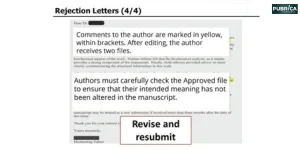
Publication Support Service
- Editing & Translation
-
Editing and Translation Services
- Sample Work

Editing and Translation Service
-
- Research Services
- Sample Work
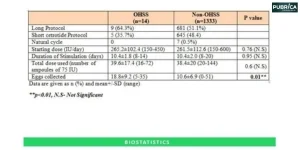
Research Services
- Physician Writing
- Sample Work
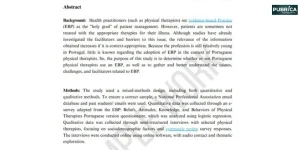
Physician Writing Service
- Statistical Analyses
- Sample Work

Statistical Analyses
- Data Collection
- AI and ML Services
- Sample Work
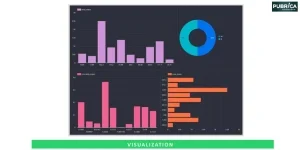
AI and ML Services
- Medical Writing
- Sample Work
Medical Writing
- Research Impact
- Sample Work
Research Impact
- Medical & Scientific Communication
- Sample Work
Medical & Scientific Communication
- Medico Legal Services
- Educational Content
- Academic Editorial Services
- Sample Work
Academic Editorial Services
- Educational Editorial Service
-
Education Editorial Services
- Sample Work
Education Editorial Services
-
- Industries
- Subjects
- About Us
- Academy
- Insights
- Contact Us
The editing stages of a manuscript explain
- Home
- Academy
- Editing & translation
- The editing stages of a manuscript explain
High-Impact Journals
Interesting topics
The editing stages of a manuscript explain
Editing is an important step in preparing a manuscript. Regardless of whether a manuscript is intended for journal publication, a thesis, or a professional book, editing is necessary to ensure clarity, accuracy, coherence, and professionalism. Many authors rely on manuscript editing services to refine their work before submission. Editing is often misunderstood as simply correcting grammar and spelling errors. However, the manuscript editing process is a multi-step procedure that aims to improve a document from conceptualisation to finalisation.[1]
Each stage of editing focuses on a different aspect of the manuscript. Understanding these stages is essential for producing a high-quality manuscript that meets academic and professional standards. In this article, we discuss the main steps involved in professional manuscript editing and their objectives in creating a polished and publication-ready text.[2]
1. Overview of Manuscript Editing Stages
Manuscript editing usually follows a structured progression. Each stage builds upon the previous one to improve the overall quality of the document. These stages form the foundation of the manuscript editing process used by professional editors and manuscript editing services. [2]
| Editing Stage | Primary Focus | Key Objective |
| Developmental Editing | Content and ideas | Strengthen argument and structure |
| Structural Editing | Organization | Improve logical flow |
| Copy Editing | Language accuracy | Correct grammar and consistency |
| Proofreading | Final corrections | Remove typographical errors |
| Final Quality Check | Presentation | Ensure publication readiness |
These stages ensure that a manuscript evolves from a raw draft into a professionally written and clearly structured piece of work through professional manuscript editing.
2. Developmental Editing
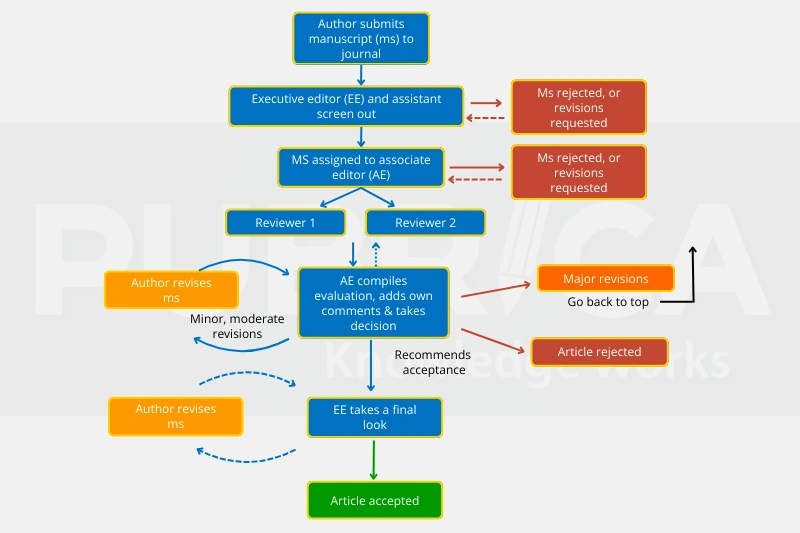
The first and most comprehensive stage of editing is developmental editing. At this stage of editing, emphasis is placed not on language and presentation, but on content, purpose, and intellectual contribution.[3]
The manuscript is reviewed to assess whether the main argument is well articulated, logically developed, and backed by relevant evidence.
- Checking whether the main argument is well articulated
- Checking whether there are gaps in evidence and reasoning
- Checking whether there are suggestions for improvement in terms of chapter organisation
- Checking whether the manuscript is appropriate for its intended audience
Developmental editing is particularly important for academic research papers, dissertations, and books where theoretical depth and analytical clarity are critical. Many authors seek academic manuscript editing services to improve these elements before submission.
3. Structural Editing
The structural editing stage is concerned with the structure of the work, including its logical flow. A manuscript may be well researched, but its message may not come across clearly if its structure is poor or its transitions are not logical.
During this stage, editors evaluate how each section contributes to the overall narrative or argument of the manuscript. This stage is often provided through specialised structural editing services.
- Reorganisation of sections for logical coherence
- Improvement of transitions between chapters or paragraphs
- Improvement of the accuracy of headings and subheadings
- Removal of repetitive information
The process of structural editing helps to ensure that the reader can follow the argument of the work from the introduction to the conclusion.
4. Copy Editing
Copy editing is concerned with the technical side of writing. At this point, the emphasis of the work is no longer on ideas or even structure but on language usage and style.
Editors review the manuscript line by line to correct grammar, punctuation, spelling, and sentence structure. This stage is commonly referred to as manuscript proofreading and copy editing within the overall manuscript editing process. [4]
- Correcting grammatical and punctuation mistakes
- Enhancing sentence clarity and readability
- Maintaining academic tone
- Simplifying referencing and citation
Copy editing is a key aspect that makes a work look professionally written.
5. Proofreading
The final stage of the editing process is known as proofreading. This stage comes after all the necessary revisions have been made to the document. At this stage, the focus is to find and correct minor mistakes that may have been missed during previous stages of editing.[5]
Proofreading, often included in manuscript proofreading and copy editing, focuses on:
- Typographical errors
- Formatting issues
- Most minor punctuation mistakes
- Mistakes in page numbers and headings
While this process may seem too simple, it is, however, very important since minor mistakes can affect the professionalism of a manuscript.
6. Final Quality Check and Publication Preparation
A quality check prior to submission or publication ensures that the manuscript complies with the requirements set forth by the institution or publication. [6]
- Checking the references for accuracy
- Checking the consistency of table and figure formats
- Checking the citation styles used
- Checking the manuscript for alignment with submission requirements
Many authors consult manuscript editing services at this stage to ensure the manuscript is fully prepared for submission. Authors may also consider the academic manuscript editing services pricing to select the most suitable editing package for their needs.
Connect with us to explore how we can support you in maintaining academic integrity and enhancing the visibility of your research across the world!
Conclusion
The stages of editing are essential for transforming a manuscript into a polished and professional document. The structured manuscript editing process, which includes developmental editing, structural editing services, manuscript proofreading and copy editing, and final quality checks, significantly improves both the clarity and credibility of academic writing.
By following these stages or using professional manuscript editing support, authors can greatly improve the quality of their work and increase their chances of successful publication. Understanding the role of manuscript editing services and evaluating academic manuscript editing services pricing can also help authors choose appropriate support for producing high-quality manuscripts suitable for academic and professional publication.
The editing stages of a manuscript explain. Our Pubrica consultants are here to guide you. [Get Expert Publishing Support] or [Schedule a Free Consultation]
References
- Lawton, J. S., Robich, M., & Holmes, S. D. (2025). Writing a Manuscript for Beginners. Annals of thoracic surgery short reports, 3(3), 814–817. https://doi.org/10.1016/j.atssr.2025.03
- Desai M. (2008). Writing an effective manuscript: Editor’s perspective. Indian journal of pharmacology, 40(4), 135–136. https://doi.org/10.4103/0253-7613.43157
- FORMAL TONE, ADVANCED GRAMMAR, & STYLE GUIDE. (2025, December 8). The role of developmental editing in academic publishing. Enago Academy. https://www.enago.com/academy/
- Aga, S. S., & Nissar, S. (2022). Essential Guide to Manuscript Writing for Academic Dummies: An Editor’s Perspective. Biochemistry research international, 2022, 1492058. https://doi.org/10.1155/2022/1492058
- Wegmüller, B., Lüthy, J., & Candrian, U. (1995). 3′-5′ proofreading-induced detection of point mutations by PCR using Tli DNA polymerase. Nucleic acids research, 23(2), 311–312. https://doi.org/10.1093/nar/23.2.311
- Wong, B. M., & Sullivan, G. M. (2016). How to Write Up Your Quality Improvement Initiatives for Publication. Journal of graduate medical education, 8(2), 128–133. https://doi.org/10.4300/JGME-D-16-00086.1