
- Services
- Discovery & Intelligence Services
- Publication Support Services
- Sample Work
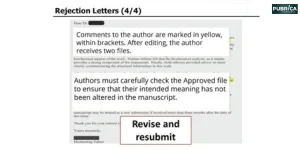
Publication Support Service
- Editing & Translation
-
Editing and Translation Services
- Sample Work

Editing and Translation Service
-
- Research Services
- Sample Work
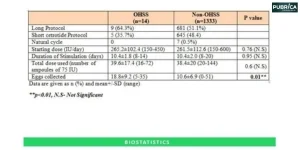
Research Services
- Physician Writing
- Sample Work
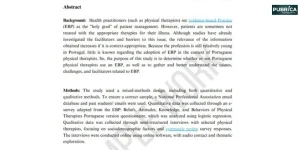
Physician Writing Service
- Statistical Analyses
- Sample Work
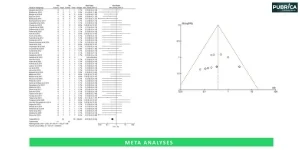
Statistical Analyses
- Data Collection
- AI and ML Services
- Sample Work
AI and ML Services
- Medical Writing
- Sample Work
Medical Writing
- Research Impact
- Sample Work
Research Impact
- Medical & Scientific Communication
- Sample Work
Medical & Scientific Communication
- Medico Legal Services
- Educational Content
- Academic Editorial Services
- Sample Work
Academic Editorial Services
- Educational Editorial Service
-
Education Editorial Services
- Sample Work
Education Editorial Services
-
- Industries
- Subjects
- About Us
- Academy
- Insights
- Contact Us
AI in Scientific Research: From Hypothesis Generation to Data-Driven Insights
- Home
- Academy
- Poster Presentation
- AI in Scientific Research: From Hypothesis Generation to Data-Driven Insights
Research Impact
- What Is AI in Scientific Research?
- Role of AI in Hypothesis Generation and Research Design
- AI-Powered Literature Review and Knowledge Discovery
- Machine Learning for Research Data Collection and Management
- AI in Data Analysis, Pattern Recognition, and Predictive Modelling
- Ensuring Accuracy, Reproducibility, and Transparency Using AI
- Ethical, Regulatory, and Data Privacy Considerations in AI-Based Research
Interesting topics
AI in Scientific Research: From Hypothesis Generation to Data-Driven Insights
1. What Is AI in Scientific Research?
2. Role of AI in Hypothesis Generation and Research Design
3. AI-Powered Literature Review and Knowledge Discovery
4. Machine Learning for Research Data Collection and Management
5. AI in Data Analysis, Pattern Recognition, and Predictive Modelling
6. Ensuring Accuracy, Reproducibility, and Transparency Using AI
7. Ethical, Regulatory, and Data Privacy Considerations in AI-Based Research
Artificial Intelligence(AI) is revolutionizing scientific research by accelerating discovery through advanced data analysis, hypothesis generation, and simulation, impacting fields from genomics and drug discovery to materials science and climate modelling, acting as a partner to automate complex tasks, find hidden patterns, and even design experiments, fundamentally changing how knowledge is generated and validated.
As a result of the exponential growth of AI (Artificial Intelligence) and ML (Machine Learning) technologies, the current paradigm in scientific research is undergoing a significant transformation. AI could allow scientists to analyse complex datasets, identify hidden correlations within data, and create reliable data-driven conclusions. In fact, AI can be used at every stage of the research life cycle; from formulating hypotheses, to making data-driven decisions [1,2],In this paper the authors will provide an overview of how AI is integrated into various aspects of scientific studies. They will outline the advantages, challenges, and potential future developments of AI for research.
1. What Is AI in Scientific Research?
In the realm of scientific research, AI employs a suite of computational algorithms and tools to enhance and automate tasks in all aspects of science. Machine learning in research plays a key role by offering predictive modelling in science, pattern recognition algorithms, and AI-driven data analysis.
For example,
- Machine learning algorithms are used for predictive modelling or classification of data based on previous observations.
- Natural Language Processing (NLP) helps to translate, read, and interpret publication abstracts.
- Deep Learning is a form of machine learning that enables computers to differentiate data types.
All three technologies can be utilised in data-rich environments such as biology, medical research, environmental research, and social science [3].
The primary areas of AI in Scientific Research include:
- Automation of data processing and finding patterns
- The development of predictive and classification models using machine learning
- Large volume of literature towards knowledge discovery
- Support for decision making under complex multi-dimensional data
AI research workflows often combine these tools into integrated pipelines to automate and streamline the research process.
2. Role of AI in Hypothesis Generation and Research Design
Historically, hypothesis generation was primarily reliant on the available information and manual exploration of existing literature. However, data-driven hypothesis generation is now possible as AI can identify associations and trends that may not have been immediately apparent to humans[4].
AI facilitates the generation of hypotheses through three methods:
- By mining existing datasets to determine novel correlations.
- By assessing large-scale experimental or observational data
- By suggesting likely areas for further investigation based on identified evidence gaps.
Automated hypothesis generation using AI research tools helps scientists formulate testable hypotheses faster and more accurately.
Research Stage | AI Application |
Problem identification | Pattern detection in existing datasets |
Hypothesis generation | Predictive modelling and association analysis |
Study design | Simulation and optimization of variables |
Feasibility assessment | Risk prediction and data availability analysis |
3. AI-Powered Literature Review and Knowledge Discovery
Systematic literature reviews are time-consuming and subject to human error. By utilising Artificial Intelligence (AI) based Natural Language Processing (NLP), researchers can quickly review thousands of abstracts and extract key ideas, identify appropriate studies with an excellent level of accuracy [5].
The advantages of using AI to assist with conducting literature reviews include:
- Faster identification of relevant publications.
- Reduction in selection bias
- Improved transparency associated with the study selection process.
- Ability to efficiently update your living review as your work progresses.
Automated literature review software and AI-driven data analysis tools make this process significantly faster and more reliable.
4. Machine Learning for Research Data Collection and Management
Diverse data sources, including clinical records, genomic datasets, sensor data, and surveys are often used in scientific research. Machine learning models have greatly assisted in the data cleaning, integration, and management of these diverse datasets [6].
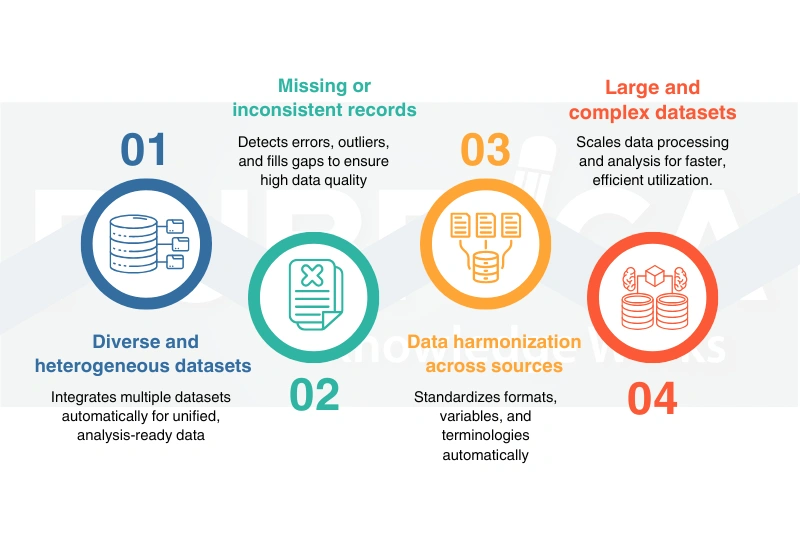
The use of AI enhances the ability to manage large amounts of data collected from multiple sources by:
- Identifying and fixing missing or inconsistent records
- Automating the process of harmonizing information collected from multiple sources.
- Scaling the ability to analyse large amounts of data; thus, enabling the efficient use of complex datasets.
Managing diverse and complex research data can be challenging, from missing records to harmonizing multiple sources. The following depiction illustrates how AI-driven solutions simplify these tasks and improve data quality and usability.
5. AI in Data Analysis, Pattern Recognition, and Predictive Modelling
Data analysis constitutes one of the most developed methods of utilizing AI for scientific research. In this regard, machine learning algorithms are particularly well-suited for detecting non-linear relationships and identifying complex inter-relationships among different variables within the same dataset. Examples of data analysis tasks performed using analytical algorithms include:
- Classification and clustering of research data.
- Predictive modelling of outcomes and trends.
- Feature selection and dimensionality reduction.
The table below compares traditional analytical approaches with AI-based analysis, highlighting key differences in scalability, automation, and predictive performance.
Aspect | Traditional Analysis | AI-Based Analysis |
Data volume handling | Limited | Large-scale and high-dimensional |
Pattern detection | Linear or predefined | Complex and nonlinear |
Automation level | Low to moderate | High |
Predictive accuracy | Variable | Often improved with training |
6. From Data to Decisions: AI-Driven Research Insights
AI not only does the analysis but provides the tools for researchers to visualize, explain and make sense of that analysis and share it with others[7].
AI insights allow researchers to:
- Make decisions based on empirical evidence
- Be more reproducible and robust
- More quickly translate new knowledge into practice
7. Ensuring Accuracy, Reproducibility, and Transparency Using AI
Reproducibility Reproducibility continues to be a significant obstacle to scientific studies. The application of Artificial Intelligence has the potential to improve the reproducibility of research by providing consistent analytical procedures and eliminating most of the manual interactions necessary to conduct a reproducible study. | Transparency Transparency on the other hand, is equally important. Using explainable AI methods, researchers can gain insight into the processes used by a model to produce its outputs, enhancing both confidence and interpretation of those outputs.
|
8. Ethical, Regulatory, and Data Privacy Considerations in AI-Based Research
There are numerous ethical and regulatory issues associated with AI in research, including the collection and storage of user data, algorithmic bias, and accountability [8]. Considerations that should be included in discussions of AI ethics and regulation include:
- The safeguarding of sensitive research and clinical patient data
- Fairness and the mitigation of bias in AI systems
- Adequate compliance with the data protection and research ethics codes of conduct.
Artificial intelligence in scientific discovery must always be implemented with ethical oversight to ensure responsible research outcomes.
Connect with us to explore how we can support you in maintaining academic integrity and enhancing the visibility of your research across the world!
Conclusion
AI is a critical element in the modern scientific process and is utilised across the entire research life cycle to help researchers generate hypotheses and translate them into actionable insights through data. Machine learning tools for researchers and AI-driven data analysis enhance accuracy, scalability, and reproducibility, while automated hypothesis generation accelerates research timelines. The use of AI should also consider ethical standards, privacy, and oversight. As AI in scientific research continues to evolve, it will further strengthen evidence generation and accelerate discoveries across all academic disciplines.
Accelerate your research with Pubrica’s AI and ML solutions — streamline data analysis, predictive modelling, and hypothesis generation today. [Get Expert Publishing Support] or [Schedule a Free Consultation].
References
- Topol, E. J. (2019). High-performance medicine: the convergence of human and artificial intelligence. Nature Medicine, 25(1), 44–56. https://doi.org/10.1038/s41591-018-0300-7
- Rajkomar, A., Dean, J., & Kohane, I. (2019). Machine Learning in Medicine. The New England journal of medicine, 380(14), 1347–1358. https://doi.org/10.1056/NEJMra1814259
- Jordan, M. I., & Mitchell, T. M. (2015). Machine learning: Trends, perspectives, and prospects. Science (New York, N.Y.), 349(6245), 255–260. https://doi.org/10.1126/science.aaa8415
- King, R. D., Rowland, J., Oliver, S. G., Young, M., Aubrey, W., Byrne, E., Liakata, M., Markham, M., Pir, P., Soldatova, L. N., Sparkes, A., Whelan, K. E., & Clare, A. (2009). The automation of science. Science (New York, N.Y.), 324(5923), 85–89. https://doi.org/10.1126/science.1165620
- Marshall, I. J., & Wallace, B. C. (2019). Toward systematic review automation: a practical guide to using machine learning tools in research synthesis. Systematic reviews, 8(1), 163. https://doi.org/10.1186/s13643-019-1074-9
- Chen, J. H., & Asch, S. M. (2017). Machine Learning and Prediction in Medicine – Beyond the Peak of Inflated Expectations. The New England journal of medicine, 376(26), 2507–2509. https://doi.org/10.1056/NEJMp1702071
- Doshi-Velez, F., & Kim, B. (2017). Towards A rigorous science of interpretable machine learning. In arXiv [stat.ML]. http://arxiv.org/abs/1702.08608
- Floridi, L., Cowls, J., Beltrametti, M., Chatila, R., Chazerand, P., Dignum, V., Luetge, C., Madelin, R., Pagallo, U., Rossi, F., Schafer, B., Valcke, P., & Vayena, E. (2018). AI4People-An Ethical Framework for a Good AI Society: Opportunities, Risks, Principles, and Recommendations. Minds and machines, 28(4), 689–707. https://doi.org/10.1007/s11023-018-9482-5