
- Services
- Discovery & Intelligence Services
- Publication Support Services
- Sample Work
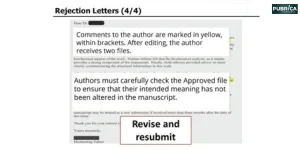
Publication Support Service
- Editing & Translation
-
Editing and Translation Services
- Sample Work

Editing and Translation Service
-
- Research Services
- Sample Work
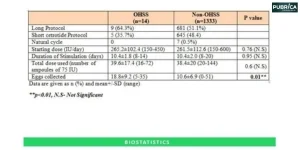
Research Services
- Physician Writing
- Sample Work

Physician Writing Service
- Statistical Analyses
- Sample Work
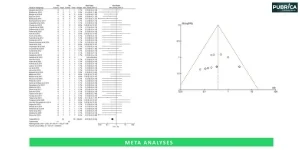
Statistical Analyses
- Data Collection
- AI and ML Services
- Sample Work
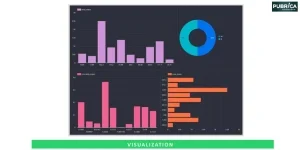
AI and ML Services
- Medical Writing
- Sample Work
Medical Writing
- Research Impact
- Sample Work
Research Impact
- Medical & Scientific Communication
- Sample Work
Medical & Scientific Communication
- Medico Legal Services
- Educational Content
- Academic Editorial Services
- Sample Work
Academic Editorial Services
- Educational Editorial Service
-
Education Editorial Services
- Sample Work
Education Editorial Services
-
- Industries
- Subjects
- About Us
- Academy
- Insights
- Contact Us
How to Choose a Research Paper Title with Examples
- Home
- Academy
- Research Services
- How to Choose a Research Paper Title with Examples
High-Impact Journals
Interesting topics
How to Choose a Research Paper Title with Examples
The selection of an effective research paper title is one of the most important parts of the academic writing process. The title serves as the primary interface between the reader, such as professors, reviewers, and researchers, and the research work. A good title effectively communicates the purpose and scope of the research, emphasising the key variables and concepts, and grabbing the reader’s attention. In the academic environment, the title also plays an important role in the indexing of the research paper on search engines and databases. So, the research paper title must be effective, precise, and appropriate for the academic environment. [1]
A bad title may lead the reader to confusion and misinterpret the scope of the work, while on the other hand, a good and well-structured title helps the reader quickly understand the purpose and scope of the work. This article will guide students and researchers on how to choose a research paper title effectively and provide useful research paper title examples for better understanding.[2]
1. Why a Research Paper Title Matters
A research paper title has some functions in academic communication. To begin with, it gives a brief description of the research topic or focus. Second, it gives an opportunity to identify whether the research paper is of interest to a given reader or academic field of study. [1]
- They give an impression of the research at hand.
- They help to index research papers in academic databases.
- They identify the major topic or variables of research interest.
- They capture the interest of the research paper or its potential citations.
A good research title ensures that the direction of the research is clear from the beginning and aligns well with elements such as the research paper abstract, which summarises the research findings.
2. Key Characteristics of an Effective Research Title
A good research title should have a balance of clarity, specificity, and academic tone. Many effective titles are characterized by specific words that are relevant to the study’s topic, population, method, and outcome.[3]
- Clarity: The title should convey a sense of clarity in relation to the study’s topic.
- Specificity: The title should include specific concepts and variables.
- Concise: The title should not be too long.
- Relevance: The title should reflect the content of the study in a research paper.
- Academic tone: The title should have an academic tone.
Researchers who struggle to develop a strong title often use tools such as a research paper title generator or seek support from research paper editing services or scientific manuscript editing services to refine their titles.
A well-crafted title should enable a reader to get a sense of the study’s purpose without reading the entire study.
3. Steps to Create a Strong Research Paper Title
In crafting an effective research paper title, there is often a process that needs to be followed. A research paper title is often developed through a process of gradual refinement from a broad idea. [4]
Identify the main topic: What is the main topic or subject matter being researched?
Highlight key variables or concepts: What are the main variables or concepts being researched?
Specify the research context: Is there a population, location, or subject matter that is being researched?
Reflect the research method if appropriate: Is there a word such as “analysis,” “comparative study,” or “case study” that should be included?
Keep the title concise and readable: What are the most important words to be included in the title?
Using structured approaches like these helps researchers understand how to choose a research paper title that clearly represents their study.
4. Examples of Effective Research Titles
The following table illustrates how vague research titles can be improved to become clearer and more academically appropriate.
Weak Title | Improved Research Title |
Social Media and Students | The Impact of Social Media Use on Academic Performance Among University Students |
Climate Change Issues | Climate Change Adaptation Strategies in Coastal Communities |
Online Learning | A Comparative Study of Online and Traditional Learning in Higher Education |
Mental Health | Examining the Relationship Between Academic Stress and Mental Health Among Graduate Students |
These improved titles are more specific and clearly indicate the research focus.
5. Common Mistakes to Avoid
Most students face challenges in creating research titles, either by broadening or complicating them. By avoiding common mistakes, you can enhance the quality of your title.
- Using long titles with too much detail
- Using vague or common words
- Using technical terms or abbreviations
- Using titles that do not represent the actual research topic
If researchers find it difficult to refine their titles, professional research paper editing services or scientific manuscript editing services can help improve clarity, readability, and academic tone.[5]
Connect with us to explore how we can support you in maintaining academic integrity and enhancing the visibility of your research across the world!
Conclusion
Developing an effective research paper title is an essential part of academic writing. A well-designed title communicates the research focus clearly and increases visibility in academic databases and search engines. By focusing on clarity, specificity, and relevance, researchers can develop strong and meaningful titles.
Understanding how to choose a research paper title, reviewing strong research paper title examples, and aligning the title with the research paper abstract can significantly improve the overall quality of a research manuscript. Using structured approaches or professional scientific manuscript editing services can further help students and researchers create effective and impactful research titles.
How to Choose a Research Paper Title with an Example. Our Pubrica consultants are here to guide you. [Get Expert Publishing Support] or [Schedule a Free Consultation]
Frequently asked questions
1. Why is a research paper title important?
A research paper title is important because it clearly communicates the study’s focus, attracts readers, and improves visibility in academic databases and search engines.
2. What makes a good research paper title?
A good research title is clear, specific, concise, relevant to the study, and written in an academic tone.
3. How do you create a strong research paper title?
Start with the main topic, include key variables, define the context, optionally mention the method, and keep the title concise and readable.
4. What are examples of effective research titles?
Example: Instead of “Social Media and Students,” use “The Impact of Social Media Use on Academic Performance Among University Students.”
5. What are common mistakes in research paper titles?
Common mistakes include vague wording, overly long titles, excessive jargon, and titles that do not reflect the actual research.
References
- Tullu M. S. (2019). Writing the title and abstract for a research paper: Being concise, precise, and meticulous is the key. Saudi journal of anaesthesia, 13(Suppl 1), S12–S17. https://doi.org/10.4103/sja.SJA_685
- Pottier, P., Lagisz, M., Burke, S., Drobniak, S. M., Downing, P. A., Macartney, E. L., Martinig, A. R., Mizuno, A., Morrison, K., Pollo, P., Ricolfi, L., Tam, J., Williams, C., Yang, Y., & Nakagawa, S. (2024). Title, abstract and keywords: a practical guide to maximize the visibility and impact of academic papers. Biological sciences, 291(2027), 20241222. https://doi.org/10.1098/rspb.2024.
- Tantry, T. P., & Garg, R. (2025). Science and art of writing the title of systematic review and meta-analysis. Indian journal of anaesthesia, 69(9), 848–853. https://doi.org/10.4103/ija.ija_415
- Bowman, D., & Kinnan, S. (2018). Creating effective titles for your scientific publications. VideoGIE : an official video journal of the American Society for Gastrointestinal Endoscopy, 3(9), 260–261. https://doi.org/10.1016/j.vgie.2018.07
- Rivkin A. (2020). Manuscript Referencing Errors and Their Impact on Shaping Current Evidence. American journal of pharmaceutical education, 84(7), ajpe7846. https://doi.org/10.5688/ajpe7846