
- Services
- Discovery & Intelligence Services
- Publication Support Services
- Sample Work
Publication Support Service
- Editing & Translation
-
Editing and Translation Services
- Sample Work

Editing and Translation Service
-
- Research Services
- Sample Work
Research Services
- Physician Writing
- Sample Work
Physician Writing Service
- Statistical Analyses
- Sample Work
Statistical Analyses
- Data Collection
- AI and ML Services
- Sample Work
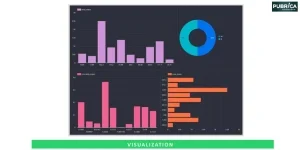
AI and ML Services
- Medical Writing
- Sample Work
Medical Writing
- Research Impact
- Sample Work
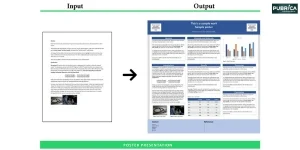
Research Impact
- Medical & Scientific Communication
- Sample Work
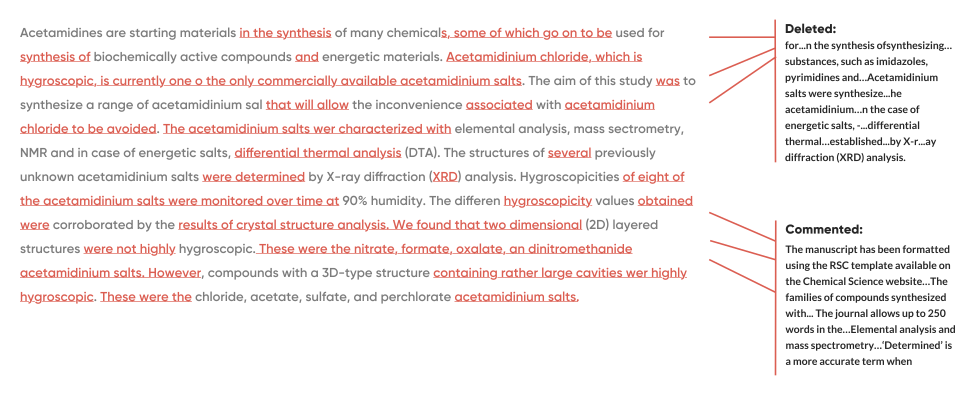
Medical & Scientific Communication
- Medico Legal Services
- Educational Content
- Academic Editorial Services
- Sample Work
Academic Editorial Services
- Educational Editorial Service
-
Education Editorial Services
- Sample Work
Education Editorial Services
-
- Industries
- Subjects
- About Us
- Academy
- Insights
- Contact Us
The PICO Framework for Literature Review: Step-by-Step Guidance for Physicians
- Home
- Academy
- Poster Presentation
- The PICO Framework for Literature Review: Step-by-Step Guidance for Physicians
Research Impact
- PICO as a Methodological Tool for Medical Literature Reviews
- Components of the PICO Framework
- Mapping PICO Components to Key Steps in Literature Reviews
- Step-by-Step Application of PICO in Literature Review Services
- Examples of PICO Questions in Different Clinical Areas
- PICO and Reporting Standards in Literature Reviews
- Common Challenges in Applying the PICO Framework to Literature Reviews
Interesting topics
The PICO Framework for Literature Review: Step-by-Step Guidance for Physicians
1. PICO as a Methodological Tool for Medical Literature Reviews
2. Components of the PICO Framework
3. Mapping PICO Components to Key Steps in Literature Reviews
4. Step-by-Step Application of PICO in Literature Review Services
5. Examples of PICO Questions in Different Clinical Areas
6. PICO and Reporting Standards in Literature Reviews
7. Common Challenges in Applying the PICO Framework to Literature Reviews
Evidence-based medicine (EBM) incorporates the systematic identification, appraisal, and synthesis of existing research to help inform daily clinical practice. A critical opportunity for a physician when conducting a literature review or developing clinical guidelines is to craft a high-quality research question. The PICO framework Population, Intervention, Comparison, and Outcome provide an organizational structure for developing a clinical question from a clinical uncertainty to a search-friendly and Inquiry-answerable format. In literature review phase, PICO serves as a foundational tool for providing researchers and clinicians with evidence-based answers and aid them in evidence synthesis ensuring methodological rigor, transparency, and reproducibility in their processes.
A PICO medical literature review enables physicians to translate clinical uncertainty into a structured and reproducible research pathway. The PICO clinical question framework plays a central role in evidence-based medicine by improving clarity and focus on the question formulation stage.
1. PICO as a Methodological Tool for Medical Literature Reviews
In a lot of cases when an evidence based Literature Review is lacking, it’s not due to a lack of evidence, but due to poor definitions of the Research Questions. An ambiguous Research Question can lead to an unfocused literature search, a mismatch of evidence types (“Heterogeneous”) & a resulting weak Conclusion
By clearly defining the boundaries of your Literature Review, PICO addresses these issues by:
- Defining the Scope of your Literature Review
- Supporting systematic & reproducible Literature Search methods
- Limiting Selection Bias in your Literature Review by providing consistent criteria for selecting studies
- Allowing for better alignment of your Literature Review with PRISMA Reporting Standards
PICO provides assurance to Physicians that their Literature Review Question is methodologically sound & clinically relevant, whether they are conducting narrative Review, Scoping Review or Systematic Review.[1,2].A PICO systematic literature review benefits from the structured nature of the PICO model in evidence-based medicine. Clinical research writing services utilises PICO strategy for literature review to ensure methodological consistency
2. Components of the PICO Framework
Each element of PICO defines a key aspect of the research question and directly informs literature search and study selection decisions.[3]

Each PICO component in research contributes directly to improving search precision and evidence synthesis quality.
3. Mapping PICO Components to Key Steps in Literature Reviews
Each component of the PICO framework plays a distinct role in shaping the design and execution of a literature review, as outlined below.
PICO Element | Definition | Relevance to Literature Review |
Population | Patient group or condition | Determines inclusion/exclusion criteria |
Intervention | Treatment or exposure | Guides keyword and MeSH term selection |
Comparison | Alternative intervention | Enables comparative evidence synthesis |
Outcome | Clinical endpoints | Shapes data extraction and synthesis |
This structured mapping supports PICO framework in clinical research methodologies.
4. Step-by-Step Application of PICO in Literature Review Services
- Converting Clinical Questions Into A PICO Question Format: By converting an initial state of clinical question uncertainty into a structured PICO format, clinicians are able to convert broad questions into well-organised and structured queries, that can be used to search the literature as reported in[4].
- Development of a Systematic Search Approach: The keywords, synonyms and controlled vocabulary (such as MeSH keywords), are created for each of the PICO subcomponents including the P, I, C and O. This method increases the ability of researchers to perform sensitive and specific searches on all electronic databases, including PubMed, Embase, and the Cochrane Library.[5]
- Screening of Studies and Determination of Inclusion/Exclusion of Studies: The use of PICO definitions provides a framework for consistent determination of study titles and abstracts during screening and during the examination of the full text of the studies being screened. PICO also aids in minimizing reviewer bias and maximizing agreement between reviewers when selecting studies for inclusion
- Extraction Of Data and Synthesis of Evidence: The PICO-defined outcomes should be used to create data extraction tables and guide the development of both quantitative and narrative synthesis of the included studies; this will strengthen the ability of researchers to reach valid conclusions[6].
This approach is widely applied within PICO literature review support services and medical literature search services. Systematic review writing help often relies on structured PICO-based workflows.
5. Examples of PICO Questions in Different Clinical Areas.
Representative PICO-based questions across key clinical areas are shown below.
Clinical Area | PICO-Based Research Question |
Cardiology | In patients with atrial fibrillation, does DOAC therapy compared with warfarin reduce stroke risk? |
Gastroenterology | In patients with GERD, does proton pump inhibitor therapy compared with H2 blockers improve symptom control? |
Surgery | In elective colorectal surgery, does ERAS protocol use compared with standard care reduce hospital stay? |
Primary Care | In diabetic patients, does telemedicine follow-up compared with in-person visits improve HbA1c levels? |
6. PICO and Reporting Standards in Literature Reviews
The need for high-quality literature reviews continues to rise and therefore many journals have established international reporting standards. In order to meet these standards, literature reviews must conform to PICO as it closely aligns with
- PRISMA for systematic reviews and meta-analyses
- SWiM for synthesising evidence when there is no need for a meta-analysis
- JBI and Cochrane publications for the methods used to conduct the research
Clearly defining the intended outcome and comparison before the literature review will improve the transparency and method of the review, which is imperative for peer-reviewed publications. PICO review editing supports accurate reporting and evidence-based review support in peer-reviewed publications.
7. Common Challenges in Applying the PICO Framework to Literature Reviews
When performing literature reviews using the PICO framework, physicians can encounter several methodological issues regarding both the definition of scope and evidence. Properly structuring each PICO element helps ensure the review question is clear and able to be answered.
Some other key considerations include:
- To avoid excessive heterogeneity, the population should be defined in as specific a way as possible.
- Prior to conducting the review, clearly define the outcome(s) being looked for and utilize these definitions as a guide for study selection and data extraction.
- Choose appropriate comparators based on current clinical practices.
- All PICO elements must be congruent with the overall objectives and format of the literature review.
By addressing the above bullet points, physicians increase the transparency, consistency, and interpretability of the evidence being synthesized.Physician writing support for PICO reviews helps mitigate methodological inconsistencies in complex reviews.
Connect with us to explore how we can support you in maintaining academic integrity and enhancing the visibility of your research across the world!
Conclusion
While PICO is primarily known as an approach to creating PICO questions, it also serves as a structural methodology for conducting high-quality literature reviews. A physician could utilize the PICO framework to develop both clinical guidelines and/or publish research based on their review of the relevant scientific literature. Furthermore, by utilizing PICO within literature review services, it allows for more accurate searching for relevant sources and improves the integration of evidence from the literature in the form of synthesis into an evidence-based guideline document.
Need expert guidance in structuring your medical literature review? Pubrica’s specialists help physicians apply the PICO framework to produce rigorous, publication-ready reviews.[Get Expert Publishing Support] or [Schedule a Free Consultation].
References
- Richardson, W. S., Wilson, M. C., Nishikawa, J., & Hayward, R. S. (1995). The well-built clinical question: a key to evidence-based decisions. ACP Journal Club, 123(3), A12-3. https://doi.org/10.7326/acpjc-1995-123-3-a12
- Higgins, J., & Welch, V. (n.d.). Cochrane handbook for systematic reviews of interventions. Cochrane.org. Retrieved January 3, 2026, from https://www.cochrane.org/authors/handbooks-and-manuals/handbook
- What is a PICO framework? Ddregpharma. Retrieved January 3, 2026, from https://www.ddregpharma.com/what-is-a-pico-framework
- Schardt, C., Adams, M. B., Owens, T., Keitz, S., & Fontelo, P. (2007). Utilization of the PICO framework to improve searching PubMed for clinical questions. BMC Medical Informatics and Decision Making, 7(1), 16. https://doi.org/10.1186/1472-6947-7-16
- Aromataris, E., & Riitano, D. (2014). Constructing a search strategy and searching for evidence. A guide to the literature search for a systematic review. The American Journal of Nursing, 114(5), 49–56. https://doi.org/10.1097/01.NAJ.0000446779.99522.f6
- Gopalakrishnan, S., & Ganeshkumar, P. (2013). Systematic reviews and meta-analysis: Understanding the best evidence in primary healthcare. Journal of Family Medicine and Primary Care, 2(1), 9–14. https://doi.org/10.4103/2249-4863.109934