
- Services
- Discovery & Intelligence Services
- Publication Support Services
- Sample Work
Publication Support Service
- Editing & Translation
-
Editing and Translation Services
- Sample Work
Editing and Translation Service
-
- Research Services
- Sample Work
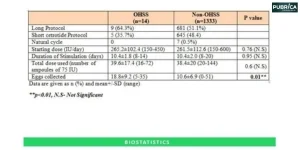
Research Services
- Physician Writing
- Sample Work
Physician Writing Service
- Statistical Analyses
- Sample Work
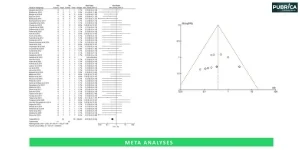
Statistical Analyses
- Data Collection
- AI and ML Services
- Sample Work
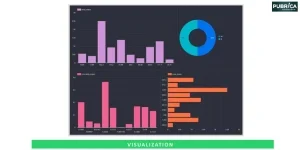
AI and ML Services
- Medical Writing
- Sample Work
Medical Writing
- Research Impact
- Sample Work
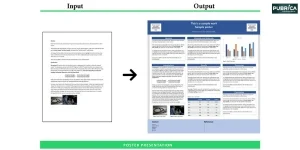
Research Impact
- Medical & Scientific Communication
- Sample Work
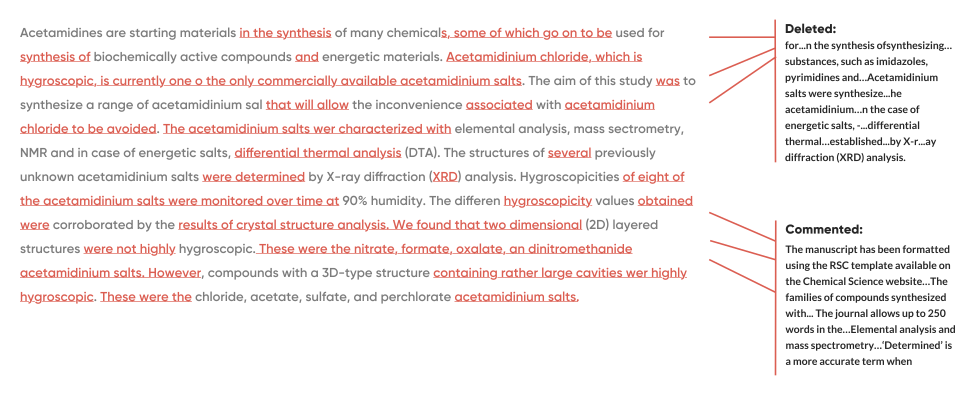
Medical & Scientific Communication
- Medico Legal Services
- Educational Content
- Academic Editorial Services
- Sample Work
Academic Editorial Services
- Educational Editorial Service
-
Education Editorial Services
- Sample Work
Education Editorial Services
-
- Industries
- Subjects
- About Us
- Academy
- Insights
- Contact Us
Targeted literature searches are a fundamental part of writing clinical manuscripts that will meet the standards of high-quality journals and contribute meaningfully to evidence-based practice. When physicians write clinical manuscripts, utilizing a targeted literature search can identify high-quality, relevant, and current evidence. While a general literature review is useful, a targeted literature search is specific to the clinical question and should be completed through frameworks established, such as PICO (Population, Intervention, Comparator, Outcome) and PRISMA [1].
Scientific Editing vs. Academic Editing: Understanding the Differences
- Home
- Academy
- Research Impact
- Scientific Editing vs. Academic Editing: Understanding the Differences
High-Impact Journals
Interesting topics
Scientific Editing vs. Academic Editing: Understanding the Differences
Editing is an important step in the academic and scientific writing process to ensure manuscripts are written with clarity, cohesion, and appropriateness for publication. Although we often use the two phrases, scientific editing and academic editing, to mean the same thing, they are two different types of editing. This article will explore the distinctions between scientific and academic editing, with special attention to differences and similarities, and when each is appropriate.[1]
1. Defining Scientific Editing
Scientific Editing work is a specialized branch of editing that improves the clarity, accuracy, and impact of scientific manuscripts. Scientific Editing encompasses ways to achieve: [1]
- Content Review: Making sure the research is scientifically accurate and the ideas have a logical flow.
- Structure and Organization: Improving the structure of the manuscript to be consistent with the norms of scientific writing.
- Clarity and Precision: Refining the language to express a complicated idea in clear and concise terms.
- Technical Terminology: Accurate use of terminology that is discipline-specific.
Example: Editing a research paper on CRISPR gene editing to ensure the methodology is accurately described and the results are presented clearly.[2]
2. Understanding Academic Editing
Academic editing is a more comprehensive type of editing specifically to improve the quality of scholarly medical writing. This may include editing journal articles, books, theses, and dissertations. These types of editing may address the following important issues. [3]
- Language and Grammar: Correcting grammar, punctuation, and spelling errors.
- Style and Formatting: Formatting according to a specific academic style (e.g., APA, MLA).
- Coherence and Flow: Improving the logical flow of arguments and ideas.
- Citation and Reference: Consistency and accuracy of citations and references.
Example: Editing a thesis to ensure it meets university formatting requirements and presents arguments coherently. [4]
3. Comparative Overview
| Aspect | Scientific Editing | Academic Editing |
|---|---|---|
| Focus | Scientific accuracy and clarity | Language, structure, and formatting |
| Scope | Specific to scientific disciplines | Broad, covering various academic fields |
| Audience | Researchers, scientists, and specialists | Academics, students, and general readers |
| Technicality | High, requires subject-matter expertise | Moderate, depends on the document type |
| Examples | Research papers, grant proposals | Theses, dissertations, academic articles |
4. When to Choose Scientific Editing
Choose scientific editing in circumstances where:
- The manuscript contains intricate scientific concepts or data
- Precision and clarity are important for communicating research findings
- The audience consists of experts or researchers within the scientific field.
5. When to Choose Academic Editing
When is academic editing appropriate?
- When the manuscript is intended for a wider scholarly audience.
- When specific scholarly writing conventions must be followed.
- When the goal is to enhance language, structure, and overall readability.
6. Overlapping Areas
Scientific or academic editing has a different focus, but the same objectives as the following:
- Quality Improvement: Both intend to improve the overall quality of the written document.[5]
- Clarity and coherence: Making sure that the writing retrieves knowledge and is systematically organized in a logical order.
- Conformance to standards: Ensuring that the written document follows associated guidelines and conventions.
Connect with us to explore how we can support you in maintaining academic integrity and enhancing the visibility of your research across the world!
Conclusion
It is helpful to understand the components of scientific versus academic editing as you think about the best editing option for your work. Scientific editing involves editing a manuscript with complex scientific content, and it will often require subject-matter expertise. Academic editing is editing primarily focused on the language, style, structure, or formatting of your manuscript to prepare it for submission to an academic publication. Understanding the specific needs of your own manuscript will help you choose the order of editing that is appropriate and improve the clarity and impact of your work.
Scientific Editing vs. Academic Editing: Understanding the Differences? Our Pubrica consultants are here to guide you. [Get Expert Publishing Support] or [Schedule a Free Consultation]
References
- Scientific Editing. (2024, February 27). Author Services from Springer Nature EN; Author Services from Springer Nature. https://authorservices.springernature.com/scientific-editing/
- Shen, S., Loh, T. J., Shen, H., Zheng, X., & Shen, H. (2017). CRISPR as a strong gene editing tool. BMB reports, 50(1), 20–24. https://doi.org/10.5483/bmbrep.2017.50.1.128
- 5 key benefits of using an academic editing service. (n.d.). Author Services. Retrieved September 23, 2025, from https://authorservices.taylorandfrancis.com/blog/get-published/5-key-benefits-of-using-an-academic-editing-service/
- Thesis editing. (n.d.). Proofreading Services – Ultimate Proofreader. Retrieved September 23, 2025, from https://www.ultimateproofreader.co.uk/blog/thesis-editing
- Puri I, Hollingshead CM, Tadi P. Quality Improvement. [Updated 2023 Nov 13]. In: StatPearls [Internet]. Treasure Island (FL): StatPearls Publishing; 2025 Jan-. Available from: https://www.ncbi.nlm.nih.gov/books/NBK556097/