
Meta-Analysis of RCTs, Observational & Diagnostic-Accuracy Studies (PRISMA 2020)
High-Impact Journals
- What Makes a High-Quality Meta-Analysis?
- Essential Components of a Publishable Meta-Analysis
- Importance of Following Reporting Guidelines
- Statistical Methods That Strengthen Meta-Analysis
- Common Reasons Meta-Analyses Are Rejected
- Best Practices for High-Impact Publication
- Role of Expert Support in Meta-Analysis
- Future Trends in Meta-Analysis
- Conclusion
Interesting topics
Meta-Analysis of RCTs, Observational & Diagnostic-Accuracy Studies (PRISMA 2020)
The technique of meta-analysis has been among the most prominent methodologies of research in the evidence-based science era. By statistically merging the results of several independent investigations, the technique offers more credible evidence than single research studies and allows making well-informed decisions for various fields including medicine, pharmaceuticals, public health, psychology, education, and social sciences. Nevertheless, the publication of a meta-analysis in a prestigious journal presupposes much more than merely merging the results of different investigations. The researchers must guarantee the quality of methodology, reporting, literature search, and statistics. [1]
To be published in high-impact journals, meta-analyses must meet international criteria for reporting and replication of their results. Each stage of the process of conducting a systematic review and meta-analysis affects its chances to be accepted in a high-impact journal.
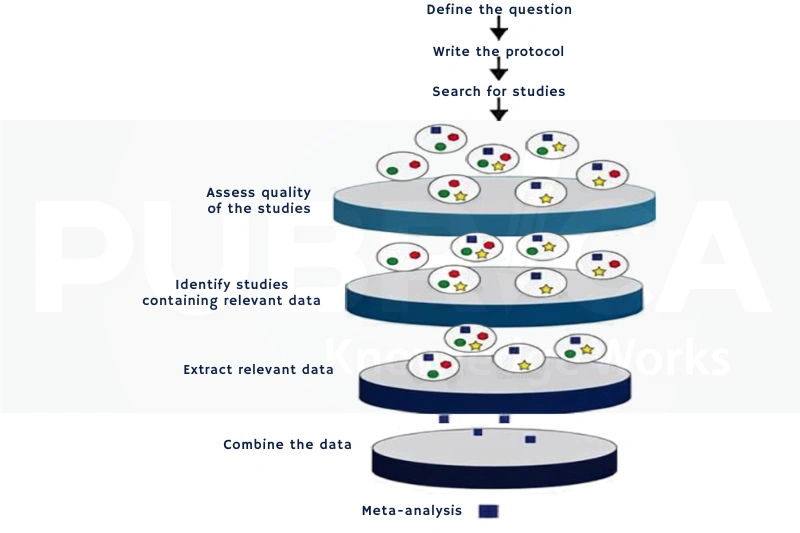
1. What Makes a High-Quality Meta-Analysis?
To be publishable, a meta-analysis study needs to have a well-defined research problem that follows the PICO (Population, Intervention, Comparison, Outcome) approach.[2]
Other important components of an effective meta-analysis include:
- a clinically and scientifically relevant question;
- reproducible search techniques;
- standardised approaches to the risk of bias assessment of the literature;
- proper statistical methods;
- proper statistical methods;
- an accurate reporting of the results.
These components greatly increase chances for publication in high-impact journals.
2. Essential Components of a Publishable Meta-Analysis
Component | Purpose |
Research Question | Defines the scope and objectives |
Literature Search | Identifies all relevant studies |
Study Selection | Applies predefined eligibility criteria |
Quality Assessment | Evaluates risk of bias |
Produces pooled effect estimates | |
Interpretation | Explains clinical or scientific significance |
Transparent Reporting | Ensures reproducibility and credibility |
3. Importance of Following Reporting Guidelines
Guidelines for international reporting increase transparency and standardisation of the methodology. High-impact journals expect authors to adhere to the reporting guidelines before the peer review process. [3]
The popular guidelines are:
- PRISMA 2020 for systematic review and meta-analysis.
- MOOSE for observational studies.
- Cochrane Handbook for intervention reviews, including RCT meta-analysis.
- GRADE for assessing certainty of evidence.
Adherence to the guidelines increases the quality of reporting and editorial assessment.
Selecting appropriate analytical methods improves the reliability and interpretability of pooled estimates in evidence synthesis.
4. Statistical Methods That Strengthen Meta-Analysis
Accurate statistical analysis forms the foundation of reliable meta-analysis results. Researchers should carefully select statistical models based on study characteristics and heterogeneity. [4]
Common statistical techniques include:
Statistical Method | Purpose |
Fixed-Effect Model | Assumes a common true effect |
Random-Effects Model | Accounts for between-study variation |
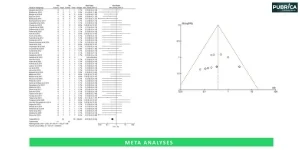
Forest Plot | Visualises pooled effect sizes |
Funnel Plot | Detects publication bias |
Sensitivity Analysis | Tests result robustness |
Subgroup Analysis | Explores differences between populations |
Meta-Regression | Investigates heterogeneity sources |
Selecting appropriate analytical methods improves the reliability and interpretability of pooled estimates.
5. Common Reasons Meta-Analyses Are Rejected
Even scientifically valuable papers can be rejected because of flaws in methodology.
The most common problems are:
- Undocumented literature review.
- Lack of clear inclusion/exclusion criteria.
- Risk of bias in the selected studies.
- Inappropriate statistical models used.
- Non-registration of the protocol registration.
- Violation of reporting standards.
- Insufficient analysis of results.
Early solution of these problems significantly increases chances for publication in high-impact journals.
6. Best Practices for High-Impact Publication
A systematic approach is required by researchers during the review process.
Suggestions include the following:
- Protocol registration before the start of review.
- Search several scientific databases.
- Conduct independent study screening.
- Evaluate study quality with proper instruments.
- Transparently document all stages of review.
- Conduct sensitivity analysis of statistical results.
These suggestions increase scientific validity and reviewer confidence while strengthening research methodology.
7. Role of Expert Support in Meta-Analysis
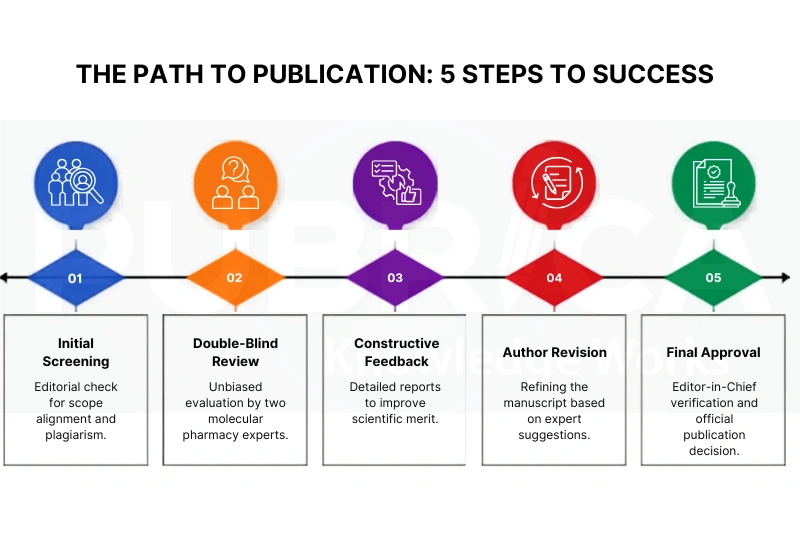
A complex systematic review may involve several fields of expertise. Collaborative efforts with professionals such as experienced researchers, statisticians, and methodologists may increase the credibility of a study by providing the researcher with expertise in designing the protocol, searching through databases, conducting statistics, assessing risk of bias, and writing up their results. [5]
Professional assistance will ensure that the researcher adheres to specific requirements of a particular journal.
8. Future Trends in Meta-Analysis
The future of evidence synthesis is likely to be characterised by advances in technology and automation. Artificial intelligence helps in the process of conducting literature screening, duplicate checking, data abstraction, and evidence mapping. Living systematic reviews, automated evidence synthesis platforms, and machine learning-based screening are making meta-analyses more efficient for observational studies, diagnostic accuracy reviews, and RCT meta-analyses. [6]
Even with all the above developments, it is still very important to have expert critical appraisal and good reporting.
Connect with us to explore how we can support you in maintaining academic integrity and enhancing the visibility of your research across the world!
Conclusion
For the publication of a meta-analysis study in a prestigious scientific journal, there is much more to be considered other than good statistical skills. Good research methodology, thorough search of literature, clear presentation, proper statistical procedures and strict adherence to international standards such as PRISMA 2020, the Cochrane Handbook, and GRADE are essential for successful completion and publication of an important paper. Those researchers who can use a systematic approach and clearly present their results have better chances to publish influential papers in high-impact journals that make valuable contributions to science.
Meta-Analysis of RCTs, Observational & Diagnostic-Accuracy Studies (PRISMA 2020) . OurPubrica consultants are here to guide you. [Get Expert Publishing Support] or [Schedule a Free Consultation]
Frequently Asked Questions (FAQs)
A meta-analysis is a statistical research method that combines the results of multiple independent studies to produce a single, more precise estimate of an intervention, exposure, or diagnostic test effect. It strengthens the overall evidence by increasing statistical power and reducing uncertainty.
PRISMA 2020 (Preferred Reporting Items for Systematic Reviews and Meta-Analyses) is an internationally recognized reporting guideline that helps researchers transparently report systematic reviews and meta-analyses, ensuring reproducibility and methodological quality.
A systematic review identifies, evaluates, and synthesizes all relevant evidence on a research question using a structured methodology. A meta-analysis is the statistical component of a systematic review that quantitatively combines the results of eligible studies when appropriate.
Yes. Meta-analyses can be conducted on randomized controlled trials (RCTs), observational studies, and diagnostic accuracy studies. However, each study type requires appropriate quality assessment tools and statistical methods.
Protocol registration improves research transparency, minimizes reporting bias, prevents unnecessary duplication, and demonstrates that the review methods were planned before the study began.
Researchers commonly follow PRISMA 2020 for systematic reviews and meta-analyses, MOOSE for observational studies, the Cochrane Handbook for intervention reviews, and GRADE for assessing the certainty of evidence.
The two most common models are the fixed-effect model, which assumes a common true effect across studies, and the random-effects model, which accounts for variation between studies. The choice depends on the level of heterogeneity among the included studies.
References
- Page, M. J., McKenzie, J. E., Bossuyt, P. M., Boutron, I., Hoffmann, T. C., Mulrow, C. D., Shamseer, L., Tetzlaff, J. M., Akl, E. A., Brennan, S. E., Chou, R., Glanville, J., Grimshaw, J. M., Hróbjartsson, A., Lalu, M. M., Li, T., Loder, E. W., Mayo-Wilson, E., McDonald, S., McGuinness, L. A., … Moher, D. (2021). The PRISMA 2020 statement: An updated guideline for reporting systematic reviews. PLoS medicine, 18(3), e1003583. https://doi.org/10.1371/journal.pmed.1003583
- Ahn, E., & Kang, H. (2018). Introduction to systematic review and meta-analysis. Korean journal of anesthesiology, 71(2), 103–112. https://doi.org/10.4097/kjae.2018.71.2.103
- Katyayan M. (2025). Reporting guidelines: Elevating standards in scientific communication. Journal of Indian Prosthodontic Society, 25(1), 1–2. https://doi.org/10.4103/jips.jips_481_24
- Kelley, G. A., & Kelley, K. S. (2012). Statistical models for meta-analysis: A brief tutorial. World journal of methodology, 2(4), 27–32. https://doi.org/10.5662/wjm.v2.i4.27
- Glisic, M., Raguindin, P. F., Gemperli, A., Taneri, P. E., Salvador, D. J., Voortman, T., Marques Vidal, P., Papatheodorou, S. I., Kunutsor, S. K., Bano, A., Ioannidis, J. P. A., & Muka, T. (2023). A 7-Step Guideline for Qualitative Synthesis and Meta-Analysis of Observational Studies in Health Sciences. Public health reviews, 44, 1605454. https://doi.org/10.3389/phrs.2023.1605454
- Hadian, M., Rezapour, A., Shafaghat, T., Bahariniya, S., Heidari, E., Jabbari, A., & Khanbebin, M. J. (2025). A scoping review of future research trends and priorities in health systems. Health research policy and systems, 23(1), 133. https://doi.org/10.1186/s12961-025-01404-x