
- Services
- Discovery & Intelligence Services
- Publication Support Services
- Sample Work

Publication Support Service
- Editing & Translation
-
Editing and Translation Services
- Sample Work

Editing and Translation Service
-
- Research Services
- Sample Work

Research Services
- Physician Writing
- Sample Work

Physician Writing Service
- Statistical Analyses
- Sample Work

Statistical Analyses
- Data Collection
- AI and ML Services
- Sample Work
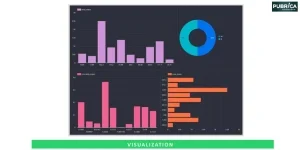
AI and ML Services
- Medical Writing
- Sample Work
Medical Writing
- Research Impact
- Sample Work

Research Impact
- Medical & Scientific Communication
- Sample Work
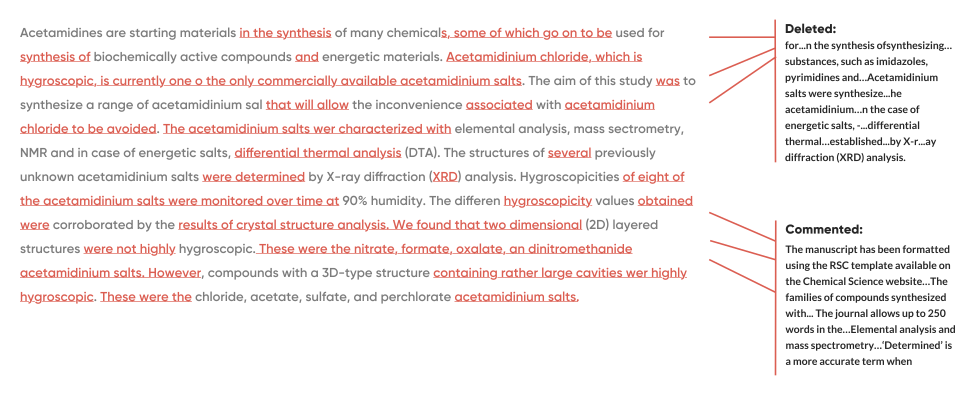
Medical & Scientific Communication
- Medico Legal Services
- Educational Content
- Academic Editorial Services
- Sample Work
Academic Editorial Services
- Educational Editorial Service
-
Education Editorial Services
- Sample Work
Education Editorial Services
-
- Industries
- Subjects
- About Us
- Academy
- Insights
- Contact Us
Digital Health Interventions and Patient Outcomes: A Longitudinal Study
- Home
- Academy
- Original Research Article
- Digital Health Interventions and Patient Outcomes: A Longitudinal Study
High-Impact Journals
- Understanding Digital Health Interventions
- Importance of Longitudinal Studies in Digital Health Research
- Types of Digital Health Interventions
- Impact of Digital Health Interventions on Patient Outcomes
- Methodology of a Longitudinal Study
- Challenges in Digital Health Research
- Ethical and Regulatory Considerations
- Future Trends in Digital Health Interventions
- Conclusion
Interesting topics
Digital Health Interventions and Patient Outcomes: A Longitudinal Study
Table of Contents
1. Understanding Digital Health Interventions
2. Importance of Longitudinal Studies in Digital Health Research
3. Types of Digital Health Interventions
4. Impact of Digital Health Interventions on Patient Outcomes
5. Methodology of a Longitudinal Study
6. Challenges in Digital Health Research
7. Ethical and Regulatory Considerations
8. Future Trends in Digital Health Interventions
9. Conclusion
The use of digital health interventions has brought about tremendous transformation within the delivery of modern healthcare services through the incorporation of technological tools within the patient management process, health conditions monitoring, and medical decisions. The use of telemedicine care, mHealth apps, wearables, electronic healthcare information, and AI healthcare has become common within the healthcare sector in recent years.
A longitudinal study approach is highly recommended when conducting evaluations of digital health interventions due to its focus on the patient’s health condition over an extended period. In contrast to cross-sectional methods, longitudinal studies allow for the evaluation of any variations that occur within patient behaviour
1. Understanding Digital Health Interventions
Digital health interventions are the application of digital technology for enhancing healthcare provision, preventing diseases, and managing patients. Digital health interventions are meant to promote communication between the health provider and the patients while ensuring increased efficiency in healthcare provision. [2]
Some Digital Health Technologies are:
- Telemedicine technology
- Mobile health (mHealth) application
- Health wearable devices
- AI technology in diagnostics
- Electronic health record systems
- Remote patient monitoring system
These interventions are extensively applied in the management of chronic conditions, mental healthcare, rehabilitation, and preventive medicine.
2. Importance of Longitudinal Studies in Digital Health Research
Longitudinal research is very important in healthcare research because it enables healthcare researchers to track the progress and effects on patients. In digital healthcare research, longitudinal research is key to evaluating if the healthcare technology provides any long-lasting benefits. [3]
Strengths of Longitudinal Research:
- Traces behavioural and clinical changes over time
- Test the effectiveness of treatments in the long run
- Monitors patients’ compliance to therapy
- Records any late effects or complications
- Essential in formulating evidence-based healthcare policies
It is especially useful when researching chronic conditions such as diabetes, high blood pressure, heart disease, and mental illnesses.
3. Types of Digital Health Interventions
| Intervention Type | Description | Clinical Application |
| Telemedicine | Virtual healthcare consultations | Remote diagnosis and follow-up |
| Wearable Devices | Continuous health monitoring | Heart rate and glucose tracking |
| Mobile Health Apps | Smartphone-based healthcare tools | Medication reminders and symptom tracking |
| AI-Based Systems | Machine learning clinical support | Diagnostic prediction |
| Remote Monitoring | Digital patient observation systems | Chronic disease management |
These technologies contribute to personalised and patient-centred healthcare delivery.
4. Impact of Digital Health Interventions on Patient Outcomes
Proper use of digital health technologies could lead to more effective patient care. Positive Outcomes for Patients Are: [4]
- Better medication compliance
- Effective management of chronic conditions
- Greater patient involvement
- Lower chances of readmission to hospitals
- Quicker access to healthcare
- Better monitoring of patient symptoms and recovery
The use of wearable devices facilitates real-time monitoring of the patient’s vital signs and any possible medical issues.
5. Methodology of a Longitudinal Study
In general, a longitudinal study consists of regular monitoring of the subjects over a certain amount of time. Data is gathered periodically to understand the trends in health results. [3]
Stages of Research Process:
- Participation recruitment – Selecting and enrolling suitable study participants
- Health assessment at baseline – Collecting initial health data before intervention
- Digital intervention implementation – Applying digital health tools like apps or wearables
- Follow-up health assessment – Monitoring health changes over time
- Statistical trend analysis of health results – Analysing data to identify patterns and outcomes over time
Both quantitative and qualitative data gathering techniques can be applied in this study.
6. Challenges in Digital Health Research
Although it is beneficial for research purposes, many problems are associated with the use of digital technology in health research. [4]
Problems:
- Danger of data privacy – Risk of sensitive patient data being exposed or misused
- Drop out from study participants due to prolonged participation – Participants leaving studies due to long duration or fatigue
- Different levels of access to the required technology – Unequal availability of devices or internet access
- Limited digital literacy among patients – Difficulty using digital tools due to a lack of skills
- Lack of consistency among patients – Irregular use of digital health tools affecting results
- Trustworthiness of self-reported data – Possibility of inaccurate or biased patient-reported information
There are also ethical issues associated with getting consent and the management of healthcare data securely.
7. Ethical and Regulatory Considerations
During digital health care studies, researchers must abide by ethical and legal principles.
Key Issues That Must Be Addressed Ethically:
- The process of informed consent
- Adhering to GDPR in health care data privacy
- Treating patients’ data confidentially
- Making transparent AI in health care
- Ensuring equitable access to digital health care services
Institutions providing health care and their researchers must avoid widening health care disparities.
8. Future Trends in Digital Health Interventions
The digital healthcare industry is forecasted to witness increased usage of artificial intelligence, predictive analytics, and personalised healthcare. [5]
Trends Emerging:
- AI-based decision-making support for clinicians
- IoT-enabled smart biosensors
- Virtual reality for therapeutic purposes
- Big data analytics for healthcare
- Blockchain-powered health record management
- Telerehabilitation platforms
These could be helpful in improving patients’ health conditions at affordable prices.
Connect with us to explore how we can support you in maintaining academic integrity and enhancing the visibility of your research across the world!
Conclusion
Digital health interventions are transforming modern medicine in terms of increasing patients’ engagement, accessibility, and clinical results. Longitudinal studies are a source of essential information about the effectiveness of such innovations for the treatment and management of diseases. Despite the problems that arise in connection with privacy issues, accessibility, and the adaptation of technologies, continuous innovations in digital healthcare will contribute to better healthcare provision.
The further adoption of data-based healthcare models suggests that digital health interventions will become an integral part of modern medicine.
Digital Health Interventions and Patient Outcomes: A Longitudinal Study. Our Pubrica consultants are here to guide you. [Get Expert Publishing Support] or [Schedule a Free Consultation]
References
- Al Mahmud, A., Joachim, S., Jayaraman, P. P., Learmonth, C., Tyagi, S., Forkan, A. R. M., Shuakat, M., Wickramasinghe, N., Wheeler, J., Best, S., & Trainer, A. (2026). Digital Health Interventions to Support Chronic Disease Management: Systematic Scoping Review. JMIR mHealth and uHealth, 14, e63742. https://doi.org/10.2196/63742
- Wienert, J., Jahnel, T., & Maaß, L. (2022). What are Digital Public Health Interventions? First Steps Toward a Definition and an Intervention Classification Framework. Journal of medical Internet research, 24(6), e31921. https://doi.org/10.2196/31921
- Caruana, E. J., Roman, M., Hernández-Sánchez, J., & Solli, P. (2015). Longitudinal studies. Journal of thoracic disease, 7(11), E537–E540. https://doi.org/10.3978/j.issn.2072-1439.2015.10.63
- Polus, M., Keikhosrokiani, P., Korhonen, O., Behutiye, W., & Isomursu, M. (2025). Impact of Digital Interventions on the Treatment Burden of Patients With Chronic Conditions: Systematic Review. Journal of medical Internet research, 27, e66874. https://doi.org/10.2196/66874
- Hu, S., Song, D., Wan, S., Zhang, S., Luo, C., Li, N., Liu, G., da Graça Espírito Santo Vasconcelos, J., de Carvalho, L. L. C., Neobísi, E., da Costa, M. L. B., Etchu Takounjou, J., Neves, K. M. D., Dos Ramos da Conceição, L., da Costa Encarnação, M., & Zhao, L. Y. (2025). Digital health: current applications, challenges, and future directions for enhancing healthcare quality and safety. Frontiers in public health, 13, 1646802. https://doi.org/10.3389/fpubh.2025