
Understanding Different Types of Research Data Sources
- Home
- Research Services
- Systematic Review
- Understanding Different Types of Research Data Sources
High-Impact Journals
- Introduction to Research Data Sources
- The Foundation of Research: Data Sources Explained
- Primary Data Sources: First-Hand Evidence
- Secondary Data Sources: Building on Existing Knowledge
- Tertiary Data Sources: Simplified Knowledge
- Comparative Overview of Data Sources
- Understanding Data by Nature: Quantitative and Qualitative
- Internal and External Data Sources
- Why Data Source Selection Matters
- Challenges in Using Data Sources
- Developing a Strategic Approach
- Conclusion
Interesting topics
Understanding Different Types of Research Data Sources
Every strong research study begins with one critical decision: choosing the right types of research data sources. The quality of data directly influences the accuracy, reliability, and impact of research outcomes. Whether a researcher is conducting a scientific experiment, writing a thesis, or analysing market trends, understanding where the data comes from is essential. Research data sources are not just collections of information; they shape the direction, depth, and credibility of the entire study. The importance of data sources in research cannot be overstated. [1]
1. The Foundation of Research: Data Sources Explained
Data sources for research are defined as sources that serve as the basis for acquiring information. There are many different types of data sources, often referred to as research data types, with each one having its own distinct characteristics, purposes, and levels of reliability. There are three main sources of data collection used in research: primary, secondary, and tertiary.[2]
2. Primary Data Sources: First-Hand Evidence
The first category of sources is primary data. This data can be seen as the direct source of information that will directly relate to the research problem, often used in data collection sources in research.
As compared to other data sources, primary data remains in its raw form. The researcher uses his own techniques of conducting the research, like through survey, interviews, and experimentation. Such a process of gathering data consumes a lot of time and money.
The significance of primary data is mainly seen in research where originality of the information matters, such as behaviour studies, experimental studies, etc. Primary data may pose difficulties when collecting consistent data.
3. Secondary Data Sources: Building on Existing Knowledge
Secondary data sources are widely used in qualitative and quantitative data sources research. [3]
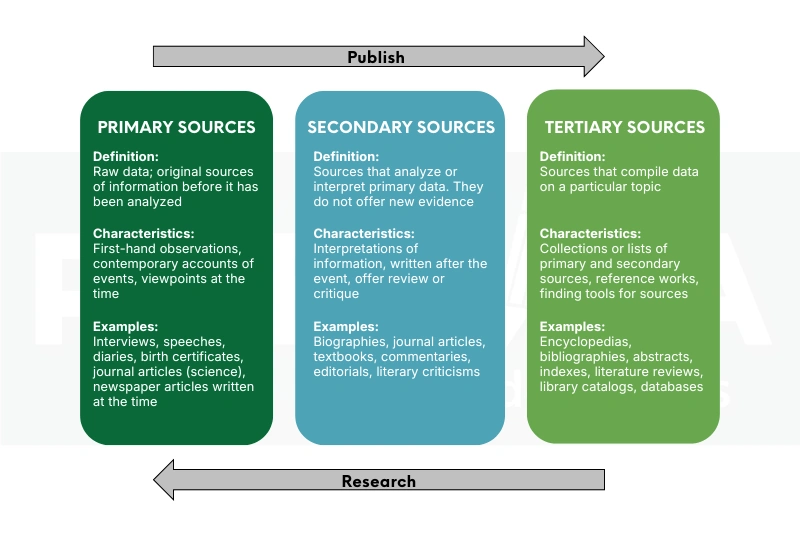
Despite saving time, the use of secondary data requires the information to be relevant to the research. Moreover, a researcher should always consider the source of secondary data to ensure accuracy.
4. Tertiary Data Sources: Simplified Knowledge
Tertiary sources are reference tools that bring together information gathered from primary and secondary sources. The role of tertiary sources is to give an overview of the subject, as opposed to analysing them deeply.
They include encyclopaedias, dictionaries, and indexing services. They provide a good starting point for people who have never studied the subject, supporting an understanding of sources of data collection.[4]
5. Comparative Overview of Data Sources
| Feature | Primary Sources | Secondary Sources | Tertiary Sources |
| Data Type | Original | Interpreted | Summarized |
| Purpose | Specific research | Support research | General understanding |
| Reliability | High | Variable | Moderate |
| Time Investment | High | Low | Very Low |
6. Understanding Data by Nature: Quantitative and Qualitative
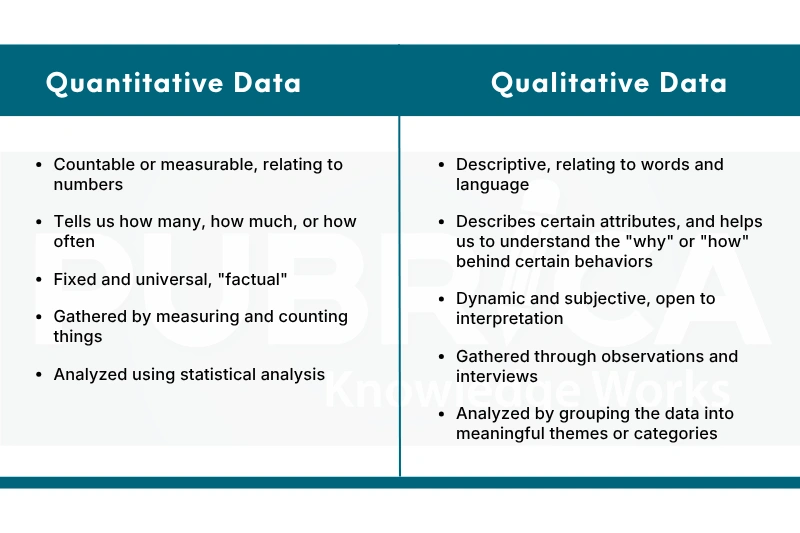
Apart from grouping according to sources, there is also another way to classify research data types depending on their characteristics. This includes qualitative and quantitative data sources, which help researchers analyse data in different formats. [5]
7. Internal and External Data Sources
The second method of categorisation of sources of data is by whether they are internal or external to a particular organisation. Internal sources of data refer to data generated within an organisation, while external sources refer to data collected from outside sources. These are key data collection sources in research.
8. Why Data Source Selection Matters
Choosing the proper source for data is an important task that goes beyond technical aspects. The credibility of research outcomes is greatly affected by how reliable the data is. Poor selection of sources of data collection will negatively affect research outcomes, while strong selection improves accuracy and reliability.[6]
A properly chosen data source guarantees harmony with research goals and strengthens the effectiveness of analysis, highlighting the importance of data sources in research.
9. Challenges in Using Data Sources
Regardless of access to different sources of data, researchers may still face obstacles in collecting information. Data could be obsolete, insufficient, or biased. These issues are common when working with examples of data sources in research.
Conquering these problems requires careful evaluation of research data types and verification of sources.
10. Developing a Strategic Approach
A balanced approach is critical when handling diverse sources of data collection. Using primary data along with secondary data leads to better results. Researchers should follow a structured method starting from tertiary sources, moving to secondary sources, and finally primary research, applying both qualitative and quantitative data sources where needed.[7]
Connect with us to explore how we can support you in maintaining academic integrity and enhancing the visibility of your research across the world!
Conclusion
Understanding the different kinds of research data sources is crucial when doing research. There are different kinds of data sources in research; each one has a specific function within the process of research. Proper use of research data types improves accuracy and reliability.
In any case, what makes research successful is not only how well the questions have been asked but also how the answers have been gathered using the correct sources of data collection and strong awareness of the importance of data sources in research.
Understanding Different Types of Research Data Sources. Our Pubrica consultants are here to guide you. [Get Expert Publishing Support] or [Schedule a Free Consultation]
References
- Hayes S. (2015). The Reference Guide to Data Sources. Journal of the Medical Library Association : JMLA, 103(3), 160–161. https://doi.org/10.3163/1536-5050.103.3.015
- Leavy MB, Swenson A. Data Sources. In: Gliklich RE, Leavy MB, Dreyer NA, editors. Tools and Technologies for Registry Interoperability, Registries for Evaluating Patient Outcomes: A User’s Guide, 3rd Edition, Addendum 2 [Internet]. Rockville (MD): Agency for Healthcare Research and Quality (US); 2019 Oct. Chapter 2. Available from: https://www.ncbi.nlm.nih.gov/books
- Cheng, H. G., & Phillips, M. R. (2014). Secondary analysis of existing data: opportunities and implementation. Shanghai archives of psychiatry, 26(6), 371–375. https://doi.org/10.11919/j.issn.1002-0829.214171
- Gliklich RE, Leavy MB, Dreyer NA, editors. Registries for Evaluating Patient Outcomes: A User’s Guide [Internet]. 4th edition. Rockville (MD): Agency for Healthcare Research and Quality (US); 2020 Sep. Chapter 6, Data Sources for Registries. Available from: https://www.ncbi.nlm.nih.gov/books
- Verhoef, M. J., & Casebeer, A. L. (1997). Broadening horizons: Integrating quantitative and qualitative research. The Canadian journal of infectious diseases = Journal canadien des maladies infectieuses, 8(2), 65–66. https://doi.org/10.1155/1997/349145
- Kornegay C, Segal JB. Selection of Data Sources. In: Velentgas P, Dreyer NA, Nourjah P, et al., editors. Developing a Protocol for Observational Comparative Effectiveness Research: A User’s Guide. Rockville (MD): Agency for Healthcare Research and Quality (US); 2013 Jan. Chapter 8. Available from: https://www.ncbi.nlm.nih.gov/books
- Morciano, C., Errico, M.C., Faralli, C. et al.An analysis of the strategic plan development processes of major public organisations funding health research in nine high-income countries worldwide. Health Res Policy Sys 18, 106 (2020). https://doi.org/10.1186/s12961-020-00620-x