











The pre-submission peer review is a process whereby experts review your work before submitting it to a journal in order to clarify your work, methodology, structure, and overall quality.
The journal submission and peer review process may take a few weeks to a few months depending on various factors such as journal policies and timelines.
A researcher can comply with ethical standards by respecting a journal’s ethical policies, declaring conflicts of interest, seeking approvals such as ethics committee clearance, obtaining informed consent, avoiding plagiarism, and reporting results accurately.
Prepare a cover letter that entails a brief description of your study, its importance, and whether it is original, your conflicts of interest, and why it is a good fit for the journal.
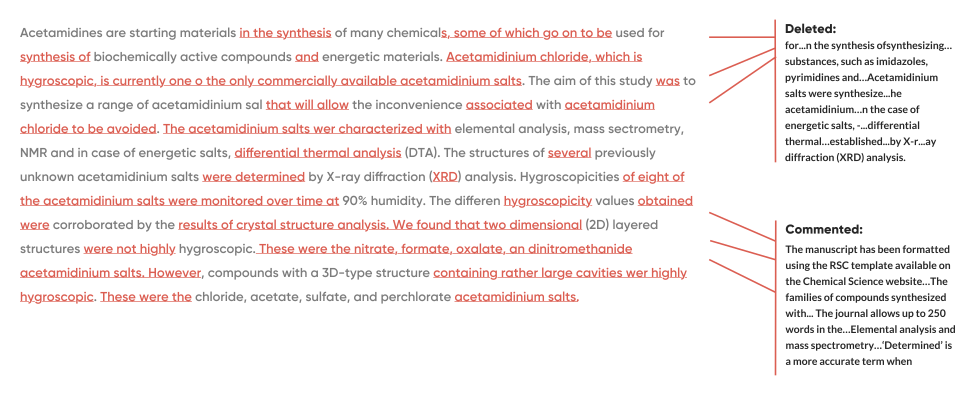
Expert review will help in clarity, methodology, gaps in information, structure and language quality, and preparation for journal evaluation and peer review.
Pre-submission peer review is an optional process, where experts review your manuscript to improve it, while journal peer review is a formal process conducted by experts to determine whether your manuscript is worthy of publication.
Pre-submission peer review enables the avoidance of unclear writing, poor methodology, inadequate reporting, formatting issues, non-compliance with the guidelines, logical gaps, and potential issues that may result in the rejection of the manuscript from the journal.
The authors can expect feedback on the clarity of the writing, structure, methodology, data presentation, logical gaps, compliance with the guidelines, language quality, and suggestions on how to improve the quality of the manuscript.
Research groups prepare for submission by refining their study, reviewing journal guidelines, refining the manuscript for clarity and structure, reviewing references, ensuring compliance with guidelines, and possibly conducting internal or expert reviews.
Researchers can improve their manuscript by refining the research question, improving structure and clarity, ensuring data accuracy, aligning it with journal guidelines, and seeking feedback from experts.
Yes, pre-submission peer review may help in increasing the probability of acceptance by helping identify potential flaws in the study, improving clarity and methodology, ensuring that it aligns with journal guidelines, and improving overall quality.
Before submission, it is important to assess whether it aligns with journal scope, formatting requirements, word count, reference style, ethical approvals, conflict of interest statements, data accuracy, and overall quality.
Journal reviewers usually consider originality, methodological quality, clarity of the manuscript, validity of the data, ethical standards, relevance, and contribution of the research to the discipline.