
- Services
- Discovery & Intelligence Services
- Publication Support Services
- Sample Work
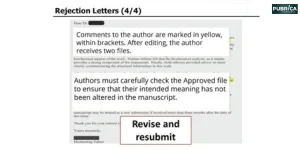
Publication Support Service
- Editing & Translation
-
Editing and Translation Services
- Sample Work
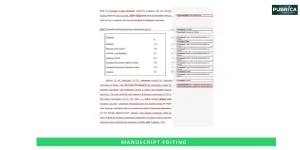
Editing and Translation Service
-
- Research Services
- Sample Work
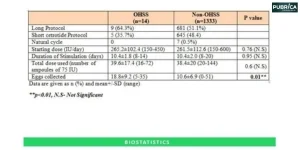
Research Services
- Physician Writing
- Sample Work
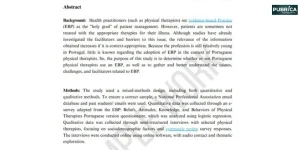
Physician Writing Service
- Statistical Analyses
- Sample Work
Statistical Analyses
- Data Collection
- AI and ML Services
- Sample Work
AI and ML Services
- Medical Writing
- Sample Work
Medical Writing
- Research Impact
- Sample Work
Research Impact
- Medical & Scientific Communication
- Sample Work
Medical & Scientific Communication
- Medico Legal Services
- Educational Content
- Academic Editorial Services
- Sample Work
Academic Editorial Services
- Educational Editorial Service
-
Education Editorial Services
- Sample Work
Education Editorial Services
-
- Industries
- Subjects
- About Us
- Academy
- Insights
- Contact Us
Targeted literature searches are a fundamental part of writing clinical manuscripts that will meet the standards of high-quality journals and contribute meaningfully to evidence-based practice. When physicians write clinical manuscripts, utilizing a targeted literature search can identify high-quality, relevant, and current evidence. While a general literature review is useful, a targeted literature search is specific to the clinical question and should be completed through frameworks established, such as PICO (Population, Intervention, Comparator, Outcome) and PRISMA [1].
Journal Peer Review Process After Submission: What Authors Need to Know
- Home
- Academy
- Research Impact
- Journal Peer Review Process After Submission: What Authors Need to Know
High-Impact Journals
Interesting topics
Journal Peer Review Process After Submission: What Authors Need to Know
In academic publishing, understanding the peer review process is important for navigating the path from journal submission to final decision. Many authors are in the dark once they submit their article and are uncertain about how a manuscript is going to be assessed, the duration of the review, and which review type will be employed. This article provides an outline of the academic review cycle, including the growing use of double-blind peer review, and how journals reach decisions on manuscripts. [1]
1. Overview of the Academic Peer Review Cycle
The peer review cycle typically aims to evaluate the quality, originality, and validity of manuscripts submitted for publication. Most scientific journals use either a single-blind, double-blind, or open review process. In a double-blind process, the author and the reviewer remain anonymous, which safeguards against bias. [2]
2. Steps in the Peer Review Process
| Stage | Description |
|---|---|
| Submission Acknowledgement | The author submits the manuscript via the journal system. |
| Editorial Screening (Desk Review) | Editor checks for scope, format, novelty, and quality. |
| Desk Rejection or Forward for Review | Manuscripts may be desk-rejected without review. |
| Reviewer Assignment | If passed, reviewers are invited; typically, 2–3 experts. |
| Double-Blind Peer Review | Reviewers and authors remain anonymous. |
| Review Completion | Reviewers provide feedback and recommendations (accept/minor/major/reject). |
| Editor Decision After Review | The editor considers feedback and decides the outcome. |
| Revision Cycle | If invited, authors submit a revised manuscript addressing the reviewer comments. |
| Final Decision and Publication | Accepted papers proceed to production. |
3. What Happens After Submission?
Once your manuscript is submitted, the editorial team will evaluate it for its fit with the journal. At this point, the potential outcomes are:[3]
- Page Rejection: No external review; due to lack of novelty, formatting issues, contents not in-scope.
- Page Peer Review: The manuscript is forwarded to contact reviewers for anonymous review; this usually takes 4–8 weeks.
If your review is double-blind, neither the reviewers nor the authors will know the other party’s identity, which helps maintain objectivity.
4. Types of Peer Review Models
- Single-Blind: Reviewers know author identities; authors do not know reviewers
- Double-Blind: Both parties know nothing about identities (blinded peer review)
- Open Review: It is a transparent approach to literature reviewing where both the identities of authors and reviewers are disclosed. This model encourages accountability, constructive feedback, and collaboration between researchers.
5. Editor Decisions After Review
Following the peer review, editors compile and synthesize the peer review reports, and these will result in the editors making these four potential decisions: [4]
- Accept without revision (rare)
- Minor revision
- Major revision
- Reject after review
If the author received revisions, they were to respond with a point-by-point rebuttal and submit a revised manuscript.
6. Tips to Improve Peer Review Outcomes
- Ensure manuscript clarity and originality
- Follow journal guidelines exactly
- Suggest qualified reviewers (some journals permit)
- Adhere to ethical standards (no plagiarism or duplicate submission)
7. Desk Rejection vs. Peer Review: Key Difference
| Aspect | Desk Rejection | Peer Review |
|---|---|---|
| Decision by | Editor only | Editor + external reviewers |
| Based on | Scope, format, writing, and novelty | Scientific merit, methodology, impact |
| Time taken | 1–2 weeks | 4–8+ weeks |
| Feedback provided | Minimal or none | Detailed reviewer comments |
Connect with us to explore how we can support you in maintaining academic integrity and enhancing the visibility of your research across the world!
Conclusion
The peer review process is a key quality control point in academic publishing. Knowledge of each part of the process, especially in a double-blind way, prepares authors for each stage of completion. Timely, well-formatted, and original submissions help authors avoid desk rejection and run the 1/3 risk of the submission being rejected for review. Reviewer feedback must be addressed in detail for acceptance of the manuscript. In the end, knowing the academic review cycle provides important information when publishing research manuscripts.
Journal Peer Review Process After Submission: What Authors Need to Know? Our academic consultants are here to guide you. [Get Expert Publishing Support] or [Schedule a Free Consultation]
References
- Tumin, D., & Tobias, J. D. (2019). The peer review process. Saudi Journal of Anaesthesia, 13(Suppl 1), S52–S58. https://doi.org/10.4103/sja.SJA_544_18
- Wouters, P. (1997). Citation cycles and peer review cycles. Scientometrics, 38(1), 39–55. https://doi.org/10.1007/bf02461122
- Shah, J., & Smart, P. (2015). An author’s guide to submission, revision and rejection. Annals of the Royal College of Surgeons of England, 97(8), 546–548. https://doi.org/10.1308/rcsann.2015.0046
- William L. Baker, Robert J. DiDomenico, Stuart T. Haines, Improving peer review: What authors can do, American Journal of Health-System Pharmacy, Volume 74, Issue 24, 15 December 2017, Pages 2076–2079, https://doi.org/10.2146/ajhp170187