








































Use professional translation with academic translation tools, maintain terminology, consider context, follow journal requirements, and post-edit the translation with utmost accuracy before submitting.
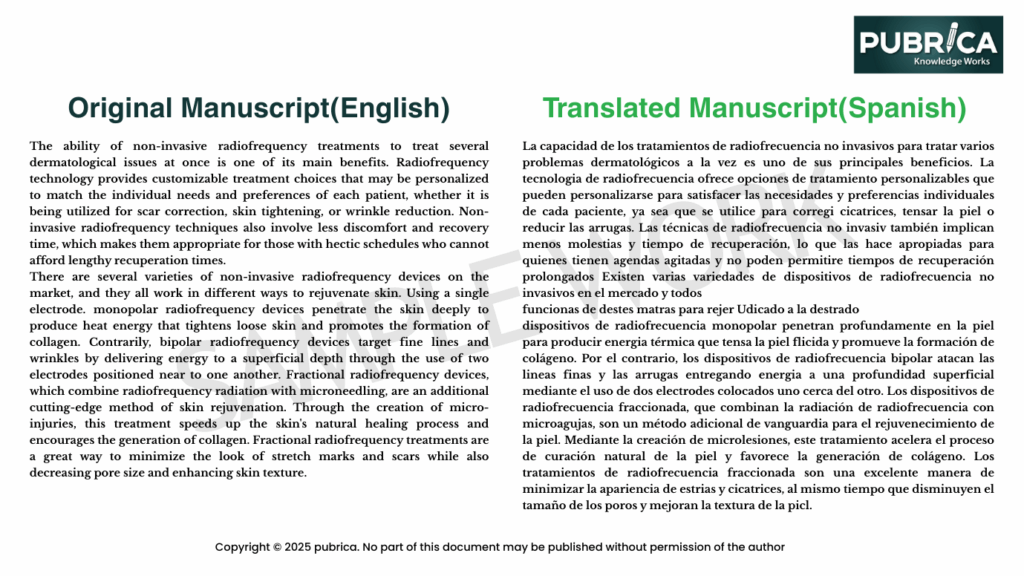
Academic translation is the translation of content from one language to another with utmost accuracy, whereas language editing is the improvement of grammar, content, writing style, and readability of already written content.
Yes, translated manuscripts may be edited professionally with regard to language accuracy, clarity, terminology, formatting, etc., for the purpose of publication in a journal.
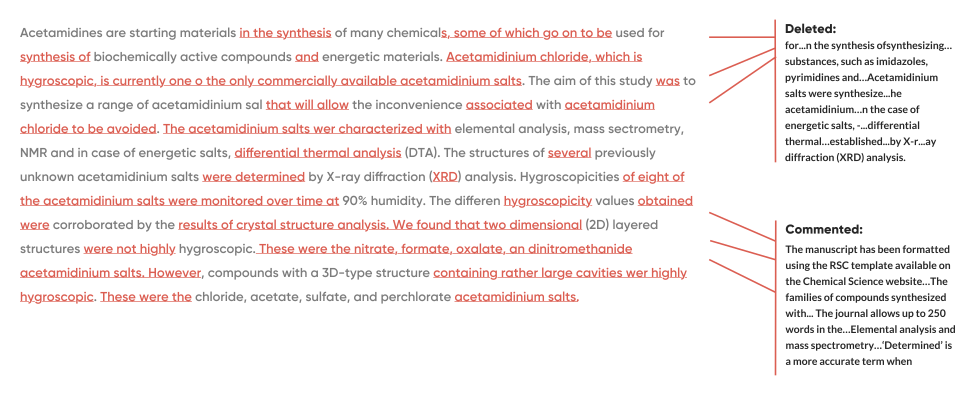
Professional editing ensures that translated papers are not only accurate, contextually appropriate, grammatically polished, and terminologically precise but also perfectly aligned with journal requirements before they are submitted for publication.
Trustworthy academic translation and editing services can be accessed through university writing centers, professional language service firms, research support firms, and individual freelance academic editors.
Translation and editing of an academic manuscript enhance it by ensuring linguistic accuracy, clarity, consistency, structure, and presentation, and conformity to academic and journal standards.
Yes, they accept translated manuscripts as long as they are original, ethical, well-translated, well-edited, and completely compliant with the submission guidelines of the journal.
Grammatical errors, unnatural wording, terminology, literal translation, unclear sentence structure, poor readability, and contextual errors are some of the common problems that may occur.
Non-native authors may improve their manuscripts by engaging professional language services, proofreading, following the submission guidelines, using clear language, avoiding ambiguity, and ensuring the manuscript is of good quality before submission.