





What is the Biostatistical programming Framework for Regulatory Research
- Home
- Publication Support
- Journal Selection
- What is the Biostatistical programming Framework for Regulatory Research
An Academy Guide
- Core Principles of the Biostatistical Programming Framework for Regulatory Research
- Study Design and Pre Specification in Regulatory Research
- Statistical Methodologies and Regulatory Considerations
- Toolset for Implementing the Framework in Regulatory Research
- Best Practices in the Biostatistical Framework for Regulatory Research
Interesting topics

What is the Biostatistical programming Framework for Regulatory Research
The biostatistical programming framework for regulatory research is a systematic approach to designing, conducting, analyzing, and reporting clinical studies that ensures data validity, reliability, and compliance with regulatory standards (e.g., FDA and EMA guidelines). Specific methodologies and industry-standard instruments complement this framework. Programming and Statistical Tools Used in Biostatistics form the technical backbone of this framework, enabling structured data handling, computation, and regulatory-compliant analysis
Biostatistics is critical to converting biological and clinical data into sound scientific evidence used in making informed decisions.[1]Clinical trial data analysis software is routinely applied at this stage to ensure traceability, audit readiness, and reproducibility of results.
1. Core Principles of the Biostatistical Programming Framework for Regulatory Research
The purpose of a biostatistical framework is to provide a systematic approach to designing, collecting, analyzing, and interpreting data from scientific studies that are being submitted for regulatory review. Biostatistics programming tools support these principles by enabling standardized workflows across study design, data preparation, and statistical analysis. Guidance in this area covers topics such as trial design to minimize bias, selecting the appropriate statistical model(s), and providing a complete record of all analytical choices made throughout the study. To achieve these goals, the Biostatistics Division of the FDA evaluates the accuracy of the study data, and the validity of the study analytical interpretation(s) provided in the regulatory submission.[2]
The general components of a biostatistical framework are as follows:
Framework Component | Description and Regulatory Purpose |
Protocol Development | Establishes clearly defined study objectives, endpoints, and statistical analysis plans that align with agency-specific regulatory requirements. |
Data Standards | Uses standardized formats, such as those defined by the Clinical Data Interchange Standards Consortium (CDISC), to ensure data interoperability, consistency, and regulatory acceptance |
Statistical Methods | Involves the selection of appropriate statistical methodologies, including Frequentist and Bayesian approaches, to support the analysis of complex datasets. |
Documentation and Reporting | Produces transparent, well-structured reports that provide sufficient methodological detail to enable regulatory review, validation, and reproducibility. |
Regression modeling software and survival analysis tools are commonly applied to evaluate efficacy, safety, and time-to-event outcomes.
2. Study Design and Pre Specification in Regulatory Research
Study design is a pillar of the biostatistical framework. Pre‑specifying statistical analysis in protocols and statistical analysis plans (SAPs) is critical because it protects against analytic bias after viewing data. Programming languages for biostatistics are used during this phase to develop reproducible simulation models and power calculations. Regulatory guidance documents, such as ICH E9 “Statistical Principles for Clinical Trials”, outline expectations for rigorous pre‑planning of analyses in regulatory submissions[3]. Moreover, emerging frameworks like the causal roadmap help researchers pre‑specify analytic designs and assumptions, improving the quality of real‑world evidence used for regulatory decision‑making. [4]
3. Statistical Methodologies and Regulatory Considerations
The biostatistical framework includes both traditional and advanced statistical techniques.
Classical and Bayesian Statistical Models Includes regression models, survival analysis, adaptive designs, and Bayesian methods used to analyse clinical trial data, particularly in complex or small-sample studies.[5] | Bayesian Methods in Regulatory Guidance Use of Bayesian statistical frameworks as outlined in regulatory guidance documents for medical device and clinical research.[6] |
Machine Learning in Biostatistics Advanced analytical methods used for exploratory modeling, predictive analytics, and analysis of real-world and high-dimensional data. | Survival Analysis Tools Statistical techniques designed to evaluate time-to-event outcomes such as overall survival, progression-free survival, or time to disease recurrence |
4. Toolset for Implementing the Framework in Regulatory Research
Statistical tools used in medical research play a central role in transforming raw clinical datasets into validated regulatory evidence. Regulatory biostatistical research relies on a wide selection of tools and platforms such as:
- Statistical Software: Statistical software tools such as SAS, R, Stata, and SPSS are used to perform data analysis, modelling and reporting with most sponsors using only SAS, however flexible tools such as Rare equally acceptable if they are supported by compliance documentation
- Data Standards Platforms: To promote the creation of datasets in a manner that will provide for a seamless regulatory review of these datasets the data standards developed and promoted by CDISC for example SDTM and ADaM
- Regulatory Data Analysis Platforms: Cloud-based collaborative Genomic and Biological data analysis tools such as the precision FDA platform are also able to provide for data analysis to be performed within a compliant and reproducible environment. Enterprise biostatistics tools enable large-scale, multi-study analytics across global regulatory programs.
- BioCompute Objects (BCO): The BioCompute Object (BCO) specification is a standard for sharing computational analyses of high-throughput sequencing workflows in a compliant and reproducible manner.
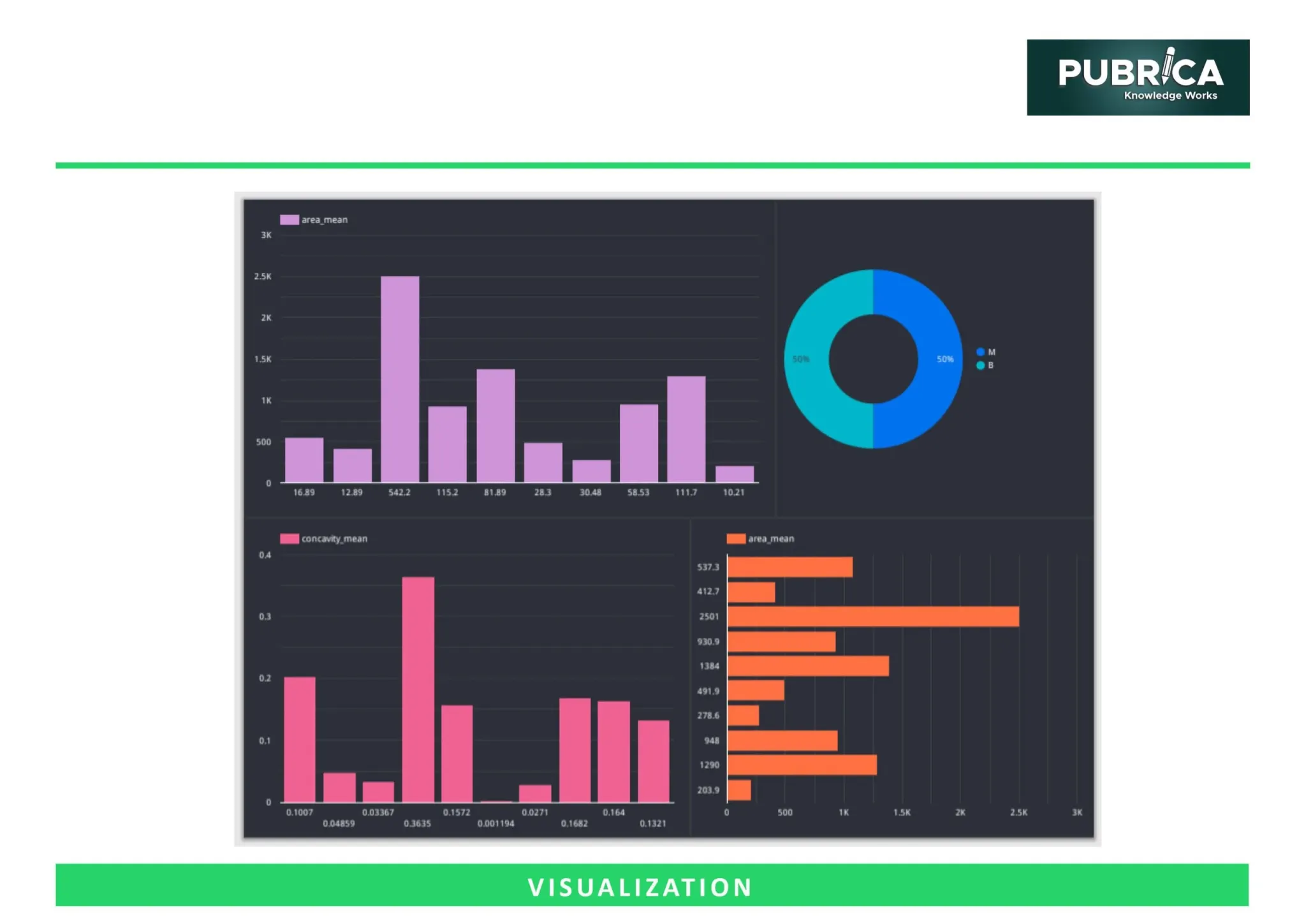
Data visualization in biostatistics enhances interpretability of complex results for regulators and stakeholders.
5. Best Practices in the Biostatistical Framework for Regulatory Research
The best practice to successfully implement a biostatistical framework consists of:
- Transparency & Documentation: Analytic methodology and underlying assumptions are clearly documented in order that the results can be replicated by other parties to the extent possible.
- Regulatory Alignment: Guidelines are integrated into the planning stages of the project (e.g., ICH E9, FDA statistical guidance) early enough in the analytical planning process to allow their impact on analytic methodology to be incorporated into the protocol development processes.
- Quality Control & Standards Compliance: Data must be in accordance with CDISC and FDA standards.
- Appropriate Use of Methodology: In addition to the use of statistically validated methods, methodologies, such as Bayesian methods, must also be considered where appropriate.
Biostatistics programming language training is essential to ensure correct and compliant implementation of analytical workflows.
Conclusion
The biostatistical programming framework for regulatory research provide a structured, standardized approach for generating reliable and reproducible evidence in clinical and biomedical studies. By integrating rigorous study design, validated statistical methodologies, regulatory-compliant data standards, and specialized analytical tools, this framework ensures that research outputs meet regulatory expectations for accuracy, transparency, and scientific integrity. Consistent application of this framework enhances data quality, streamlines regulatory review, and supports sound decision-making throughout the product development lifecycle, ultimately contributing to patient safety and public health advancement.
Strengthen your regulatory submissions with expert biostatistical programming support from Pubrica. Partner with our specialists to ensure compliant, accurate, and review-ready clinical data analyses. [Get Expert Publishing Support] or [Schedule a Free Consultation].
References
- The role of biostatistics in FDA clinical trial submissions – clinical research made simple. Clinicalstudies.In. Retrieved January 6, 2026, from https://www.clinicalstudies.in/the-role-of-biostatistics-in-fda-clinical-trial-submissions/
- Global regulatory requirements. (n.d.). Cdisc.org. Retrieved January 6, 2026, from https://www.cdisc.org/resources/global-regulatory-requirements
- Lee, S. (n.d.). Mastering biostatistical regulatory submissions. Number Analytics LLC. Retrieved January 6, 2026, from https://www.numberanalytics.com/blog/mastering-biostatistical-regulatory-submissions
- Dang, L. E., Gruber, S., Lee, H., Dahabreh, I. J., Stuart, E. A., Williamson, B. D., Wyss, R., Díaz, I., Ghosh, D., Kıcıman, E., Alemayehu, D., Hoffman, K. L., Vossen, C. Y., Huml, R. A., Ravn, H., Kvist, K., Pratley, R., Shih, M.-C., Pennello, G., … Petersen, M. (2023). A causal roadmap for generating high-quality real-world evidence. Journal of Clinical and Translational Science, 7(1), e212. https://doi.org/10.1017/cts.2023.635
- Lee, S. Y. (2024). Using Bayesian statistics in confirmatory clinical trials in the regulatory setting: a tutorial review. BMC Medical Research Methodology, 24(1), 110. https://doi.org/10.1186/s12874-024-02235-0
- Center for Devices, & Radiological Health. (2020, January 19). Guidance for the use of Bayesian statistics in medical device clinical trials. U.S. Food and Drug Administration; FDA. https://www.fda.gov/regulatory-information/search-fda-guidance-documents/guidance-use-bayesian-statistics-medical-device-clinical-trials