
- Services
- Discovery & Intelligence Services
- Publication Support Services
- Sample Work

Publication Support Service
- Editing & Translation
-
Editing and Translation Services
- Sample Work

Editing and Translation Service
-
- Research Services
- Sample Work
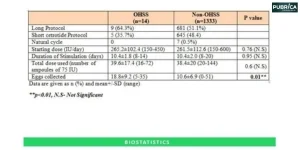
Research Services
- Physician Writing
- Sample Work

Physician Writing Service
- Statistical Analyses
- Sample Work
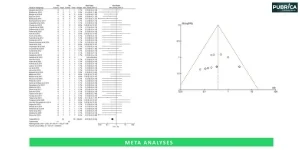
Statistical Analyses
- Data Collection
- AI and ML Services
- Sample Work
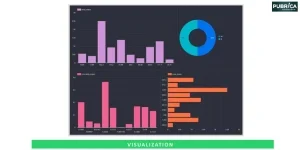
AI and ML Services
- Medical Writing
- Sample Work
Medical Writing
- Research Impact
- Sample Work

Research Impact
- Medical & Scientific Communication
- Sample Work
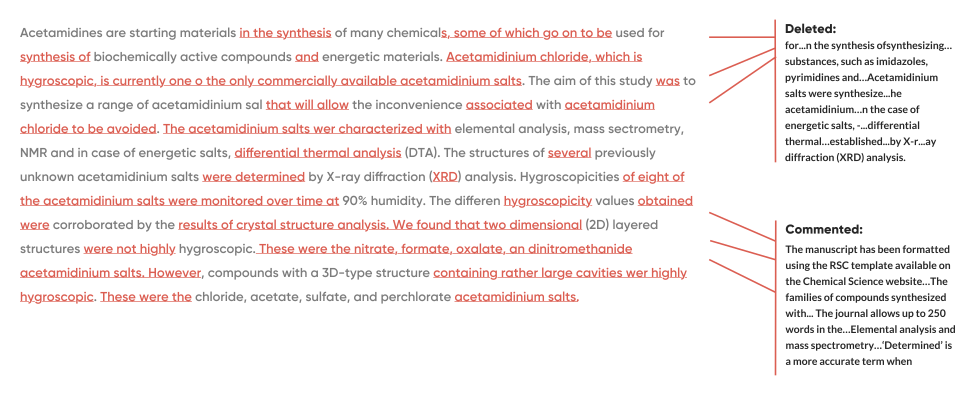
Medical & Scientific Communication
- Medico Legal Services
- Educational Content
- Academic Editorial Services
- Sample Work
Academic Editorial Services
- Educational Editorial Service
-
Education Editorial Services
- Sample Work
Education Editorial Services
-
- Industries
- Subjects
- About Us
- Academy
- Insights
- Contact Us
A Handy Guide to Random Forests for Big Biomedical Data
- Home
- Publication Support
- Journal Selection
- A Handy Guide to Random Forests for Big Biomedical Data
A Handy Guide to Random Forests
Interesting topics


A Handy Guide to Random Forests for Big Biomedical Data
Random Forests are a powerful machine learning method that uses a collection of decision trees to obtain an accurate prediction. In the biomedical field, where datasets are large, complex, and often noisy, Random Forests provide advantages when working with high-dimensional datasets, find important biomarkers, and facilitate clinical decision making. This document will demonstrate how Random Forests work while applying them to biomedicine, but it will also point to best practices to help create more robust models.[1]
1. What are Random Forests?
Random forests are a method for machine learning that builds multiple decision trees and combines the outputs from each to make a tough-to-beat prediction. Each tree is built with a randomly chosen subset of the data used to build the other trees. Most votes determine classification predictions, while the average from the trees determines regression predictions. Random forests generate good fits without overfitting the data as compared to single decision trees.[2]
2. Why Random Forests for Biomedical Data?
Biomedical datasets tend to be large, complicated, and noisy, often containing genomics, clinical notes, and imaging data. Random Forests can easily work with high-dimensional data and are robust to missing values and outliers. It also provides feature importance scores, which allow researchers to find important biomarkers or predictors. This aspect of variable importance is critical to developing targeted therapies and understanding mechanisms of disease.[3]
3. Getting Started with Random Forests
3.1. Data Preprocessing
Preprocessing is an important step to train a robust model. This usually involves handling missing data, normalizing features, encoding categorical features, and removing irrelevant features. In the case of biomedical datasets, additional steps can include reducing noise in genomic data or preprocessing images in radiology scans.[4]
3.2. Train Your Forest
To train a Random Forest, you will need to select the number of trees, the depth of each tree, and the number of features to consider when splitting at each node. The model is trained using the pre-processed input data. Cross-validation promotes good generalization on unseen data as well as reduces overfitting.[5]
3.3. Evaluate Your Model
Evaluation measures depend on the task: classification tasks often use accuracy, precision, recall, F1-score, and ROC-AUC; regression tasks rely upon mean squared error or R-squared.
3.4. Tune Your Model
Hyperparameter tuning is an important consideration for best performance. The most tuned parameters are the number of trees, maximum depth, minimum samples per leaf, and the number of features to consider for splitting. You can use either grid search or randomized search strategies to find the best combination of parameters.
3.5. Interpret the Results
Random Forests provide the feature importance scores to identify which variables have the most influence on predictions. This can point researchers in biomedical fields toward identified biomarkers, relevant genes, or clinical indicators.

4. Practical Applications of Random Forests in Biomedicine
Random Forests are a common machine learning method in genomics, proteomics, and clinical prediction tasks. They can classify disease subtypes, predict patient outcomes, identify genetic variants associated with diseases, and analyze high-dimensional data collected from the omics data types. In medical imaging, Random Forests contribute to detecting tumours, segmenting anatomical structures, and aiding in diagnostics.[6]
Conclusion
Random Forests are an effective method for analyzing complex biomedical datasets. Their adaptability to large-scale, noisy data, transparency of results, and versatility for biomedical research and clinical applications make them an important tool. Once researchers understand the workflow from pre-processing to interpretation, their use of Random Forests can lead to meaningful insights to improve patient outcomes.
A Handy Guide to Random Forests for Big Biomedical Data. Our Pubrica consultants are here to guide you. [Get Expert Publishing Support] or [Schedule a Free Consultation]
References
- Chen, X., & Ishwaran, H. (2012). Random forests for genomic data analysis. Genomics, 99(6), 323–329. https://doi.org/10.1016/j.ygeno.2012.04.003
- What is random forest? (2025, June 4). com. https://www.ibm.com/think/topics/random-forest
- Proniewska, K. (2016). Data mining with Random Forests as a methodology for biomedical signal classification. Bio-Algorithms and Med-Systems, 12(2), 89–92. https://doi.org/10.1515/bams-2016-0005
- Proniewska, K. (2016). Data mining with Random Forests as a methodology for biomedical signal classification. Bio-Algorithms and Med-Systems, 12(2), 89–92. https://doi.org/10.1515/bams-2016-0005
- Ferry, J., Fukasawa, R., Pascal, T., & Vidal, T. (2024). Trained random forests completely reveal your dataset. In arXiv [cs.LG]. http://arxiv.org/abs/2402.19232
- Mbonyinshuti, F., Nkurunziza, J., Niyobuhungiro, J., & Kayitare, E. (2022). Application of random forest model to predict the demand of essential medicines for non-communicable diseases management in public health facilities. The Pan African medical journal, 42, 89. https://doi.org/10.11604/pamj.2022.42.89.33833