
- Services
- Discovery & Intelligence Services
- Publication Support Services
- Sample Work
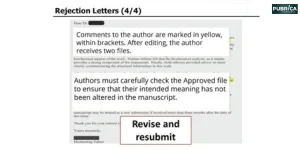
Publication Support Service
- Editing & Translation
-
Editing and Translation Services
- Sample Work

Editing and Translation Service
-
- Research Services
- Sample Work
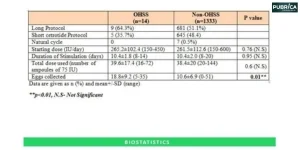
Research Services
- Physician Writing
- Sample Work

Physician Writing Service
- Statistical Analyses
- Sample Work

Statistical Analyses
- Data Collection
- AI and ML Services
- Sample Work

AI and ML Services
- Medical Writing
- Sample Work
Medical Writing
- Research Impact
- Sample Work

Research Impact
- Medical & Scientific Communication
- Sample Work
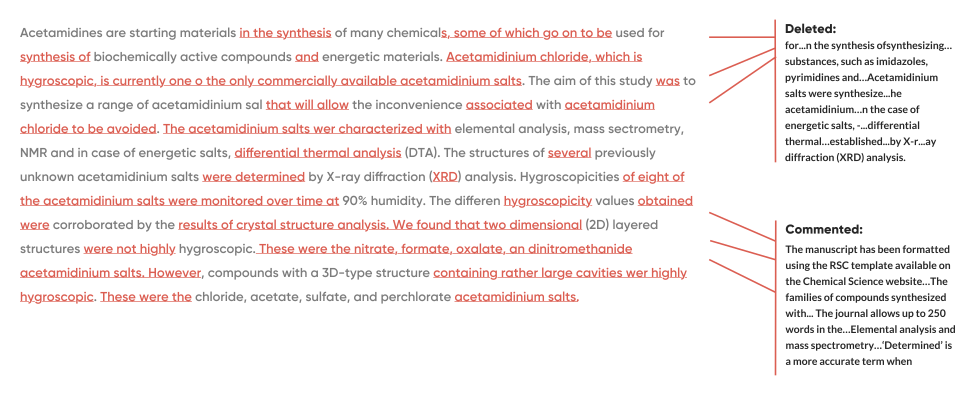
Medical & Scientific Communication
- Medico Legal Services
- Educational Content
- Academic Editorial Services
- Sample Work
Academic Editorial Services
- Educational Editorial Service
-
Education Editorial Services
- Sample Work
Education Editorial Services
-
- Industries
- Subjects
- About Us
- Academy
- Insights
- Contact Us
PROSPERO Explained: Why Protocol Registration Matters
- Home
- Academy
- PROSPERO Explained: Why Protocol Registration Matters
Research Impact
Interesting topics
PROSPERO Explained: Why Protocol Registration Matters
PROSPERO is an international, free database for prospective registration of systematic reviews, primarily in health and social care, designed to reduce research duplication, minimize reporting bias, and increase transparency. It allows researchers to post their planned methods before starting, ensuring that final findings are not selectively reported to fit desired outcomes. Systematic review protocol registration plays a central role in improving research credibility by documenting planned methods in advance and promoting systematic review transparency and bias reduction.
Evidence-based healthcare relies heavily on systematic reviews and meta-analyses to guide further research, influence clinical practice and contribute to the development of health policy. The value of systematic reviews and meta-analyses is only possible through methodological transparency and the mitigation of bias throughout the process. Evidence of bias reduction and methodological transparency can be established through PROSPERO protocol registration(The International Prospective Register of Systematic Reviews).
The PROSPERO registry for systematic reviews provides a publicly accessible platform that supports research protocol registration importance across health and social care disciplines. The use of PROSPERO to document the methods that will be used in a systematic review prior to data extraction will help guard against research misconduct, minimize the risk of selective reporting and enhance the confidence that clinicians and researchers have in published evidence [1,2].
1. What Is PROSPERO?
PROSPERO is a free and open-access, global database of registered protocols for systematic reviews making use of health-related outcomes in humans.
Researchers can register systematic review protocol PROSPERO to ensure transparency before initiating study selection or data extraction. The main features of PROSPERO are as follows:
- All registrations are available to the general public
- Once a protocol has been registered with PROSPERO, a unique CRD registration number is assigned to the protocol
- The review methods described in the protocol are documented
A history of any changes made to the Protocol—version history—is available.
PROSPERO is a prospective registry that records a priori methodological plans for systematic reviews, allowing public comparison between planned and completed research.
2. Why Protocol Registration Matters
Registering a systematic review protocol should be seen as a methodology best practice, not simply a procedure. Protocol registration for meta-analysis is widely recognized as a core component of systematic review methodology best practices.
There are four main reasons for this:
- Reduces the risk of selective outcome reporting.
- Prevents post hoc methodological changes to systematic reviews.
- Increases the accountability to the reader or reviewer of the systematic review.
- Increases the reproducibility of systematic reviews.
The earlier you register, the more likely you are to make your analytical decisions based on scientific reasons rather than the evolving results.[3].
3. PROSPERO and Research Integrity
Protocol registration through PROSPERO plays a critical role in identifying and mitigating common sources of bias in systematic reviews. By prospectively documenting methodological decisions, PROSPERO allows readers and reviewers to assess the integrity of the review process. Systematic review transparency and bias reduction are strengthened when planned methods are openly available through prospective registration.
Potential Bias | Role of PROSPERO |
Selective reporting | Outcomes are predefined |
Methodological deviation | Deviations must be declared |
Duplicate reviews | Ongoing reviews are visible |
Lack of transparency | Protocols are publicly accessible |
4. What Information Is Included in a PROSPERO Protocol?
The PROSPERO record contains key methodological components needed to assess the rigor of the review.
These components include:
- Research and review objectives and questions
- Criteria that define what will be eligible for inclusion based on PICO or PECO .
- Search strategies that are planned and the sources of information that will be used
- Plans for assessing the risk of bias
- Methods for synthesizing data from different studies
Protocol Component | Purpose |
Review question | Defines scope and relevance |
Eligibility criteria | Limits selection bias |
Outcomes | Prevents outcome switching |
Analysis plan | Supports reproducibility |
A registered protocol specifies primary and secondary outcomes, inclusion criteria, and analysis methods before results are known. When the completed review is published, readers can compare the final report against the registered protocol to assess consistency, identify justified deviations, and evaluate the credibility of the findings[4].
Clear documentation through research protocol development and registration services supports consistency between planned and reported review methods.
5. PROSPERO and Reporting Guidelines
PROSPERO complements established reporting and methodological frameworks rather than replacing them.[5] PRISMA protocol guidelines work alongside PROSPERO to improve the quality and clarity of registered review protocols. Key alignments include:
- PRISMA-P for protocol reporting.
- PRISMA 2020 for completed reviews.
- Cochrane methodological standards.
- PROSPERO documents what researchers plan to do
- PRISMA reports what researchers did
6. Common Misunderstandings About PROSPERO
There are many persistent myths surrounding what registering a protocol means.
Clarifications:
- PROSPERO does not conduct a formal peer-review process on the protocols submitted.
- Registration of a protocol does not mean that your study will be published
- PROSPERO is not limited to Cochrane reviews
Awareness of these points is particularly important for researchers seeking systematic review and meta-analysis support services. Nonetheless, a number of academic journals and funding agencies are strongly encouraging, or even requiring, researchers to register their protocols to improve research transparency.
7. When Should a Protocol Be Registered?
PROSPERO requires registration before data extraction begins. Protocols submitted after this stage may be rejected or clearly labelled, which can reduce their perceived value and acceptance by journals.
Connect with us to explore how we can support you in maintaining academic integrity and enhancing the visibility of your research across the world!
Conclusion
PROSPERO protocol registration represents a critical step in producing credible, transparent, and reproducible systematic reviews. By making methodological intentions publicly visible in advance, it reduces bias, discourages unnecessary duplication, and strengthens confidence in evidence synthesis. PROSPERO registration services and systematic review protocol writing service offerings can help researchers meet journal expectations while maintaining methodological rigor. As expectations for research transparency continue to rise, PROSPERO registration has become an essential component of high-quality systematic review practice.
Need help registering your systematic review protocol? Pubrica’s experts support researchers with PROSPERO registration, protocol development, and compliance with PRISMA and journal requirements ensuring your review starts on solid methodological ground. [Get Expert Publishing Support] or [Schedule a free Consultation]
References
- Booth, A., Clarke, M., Ghersi, D., Moher, D., Petticrew, M., & Stewart, L. (2011). An international registry of systematic-review protocols. Lancet (London, England), 377(9760), 108–109. https://doi.org/10.1016/S0140-6736(10)60903-8
- Moher, D., Shamseer, L., Clarke, M., Ghersi, D., Liberati, A., Petticrew, M., Shekelle, P., Stewart, L. A., & PRISMA-P Group (2015). Preferred reporting items for systematic review and meta-analysis protocols (PRISMA-P) 2015 statement. Systematic reviews, 4(1), 1. https://doi.org/10.1186/2046-4053-4-1
- Chan, A. W., Song, F., Vickers, A., Jefferson, T., Dickersin, K., Gøtzsche, P. C., Krumholz, H. M., Ghersi, D., & van der Worp, H. B. (2014). Increasing value and reducing waste: addressing inaccessible research. Lancet (London, England), 383(9913), 257–266. https://doi.org/10.1016/S0140-6736(13)62296-5
- Page, M. J., McKenzie, J. E., Bossuyt, P. M., Boutron, I., Hoffmann, T. C., Mulrow, C. D., Shamseer, L., Tetzlaff, J. M., Akl, E. A., Brennan, S. E., Chou, R., Glanville, J., Grimshaw, J. M., Hróbjartsson, A., Lalu, M. M., Li, T., Loder, E. W., Mayo-Wilson, E., McDonald, S., McGuinness, L. A., … Moher, D. (2021). The PRISMA 2020 statement: an updated guideline for reporting systematic reviews. BMJ (Clinical research ed.), 372, n71. https://doi.org/10.1136/bmj.n71
- Moher, D., Shamseer, L., Clarke, M., Ghersi, D., Liberati, A., Petticrew, M., Shekelle, P., Stewart, L. A., & PRISMA-P Group (2015). Preferred reporting items for systematic review and meta-analysis protocols (PRISMA-P) 2015 statement. Systematic reviews, 4(1), 1. https://doi.org/10.1186/2046-4053-4-1