
- Services
- Discovery & Intelligence Services
- Publication Support Services
- Sample Work
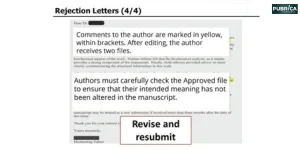
Publication Support Service
- Editing & Translation
-
Editing and Translation Services
- Sample Work

Editing and Translation Service
-
- Research Services
- Sample Work

Research Services
- Physician Writing
- Sample Work

Physician Writing Service
- Statistical Analyses
- Sample Work

Statistical Analyses
- Data Collection
- AI and ML Services
- Sample Work
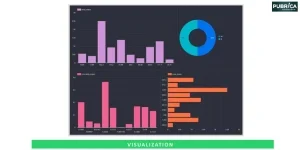
AI and ML Services
- Medical Writing
- Sample Work
Medical Writing
- Research Impact
- Sample Work
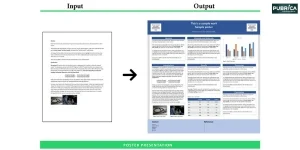
Research Impact
- Medical & Scientific Communication
- Sample Work
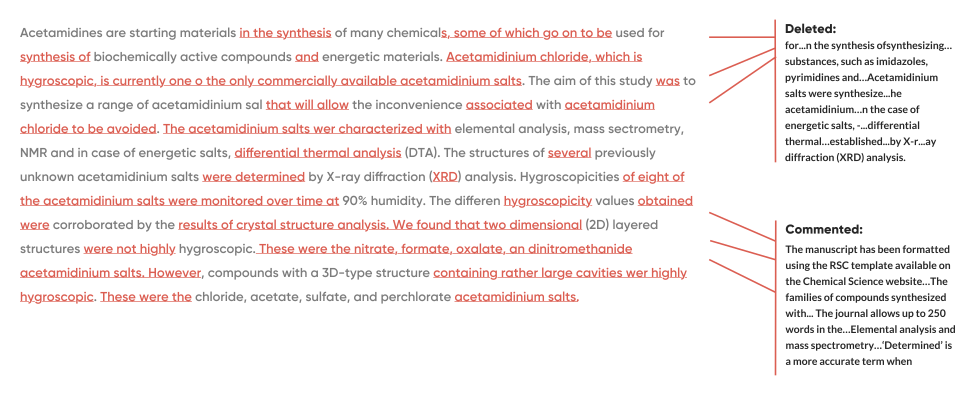
Medical & Scientific Communication
- Medico Legal Services
- Educational Content
- Academic Editorial Services
- Sample Work
Academic Editorial Services
- Educational Editorial Service
-
Education Editorial Services
- Sample Work
Education Editorial Services
-
- Industries
- Subjects
- About Us
- Academy
- Insights
- Contact Us
From Protocol to Publication: Outsourced Research Support for Universities, Pharma & CROs
High-Impact Journals
- Understanding Outsourced Research Support
- Research Support Across the Project Lifecycle
- How Universities Benefit from Research Support
- Value of Outsourced Research Support for Pharmaceutical Companies
- Importance of Research Support for Contract Research Organizations (CROs)
- Technologies Powering Modern Research Support Services
- Ensuring Quality and Regulatory Compliance
- Common Challenges in Outsourced Research Support
- Strategies for Effective Research Collaboration
- Future of Outsourced Research Support
- Conclusion
Interesting topics
From Protocol to Publication: Outsourced Research Support for Universities, Pharma & CROs
The research environment has become more complicated, demanding multidisciplinary knowledge, compliance with rules, the use of advanced statistics, and proper project management. There are continuous pressures on universities, the pharmaceutical industry, and Contract Research Organizations (CROs) to conduct high-quality research within budgetary constraints, timelines, regulations, and publishing standards. The process of managing all phases of the research lifecycle through internal operations is often an expensive exercise.
Outsourced research support services offer a viable approach for gaining access to highly specialized research experts in all phases of the research process outsourcing lifecycle, from research protocol development services to manuscript publication support. Working with research support services will help an organization to conduct better research, complete projects faster, lower costs, and publish more successfully. Outsourced research services are not a replacement for researchers but rather an addition to the team, providing protocol to publication support and end-to-end research support. [1]
1. Understanding Outsourced Research Support
Outsourced research support is the professional help available from specialized organizations that provide their assistance to researchers during all phases of research. The range of outsourced research support includes such phases of research as design, protocol development, ethics, data management, statistics, medical writing, systematic reviews, manuscript development, submission, and publication. [2]
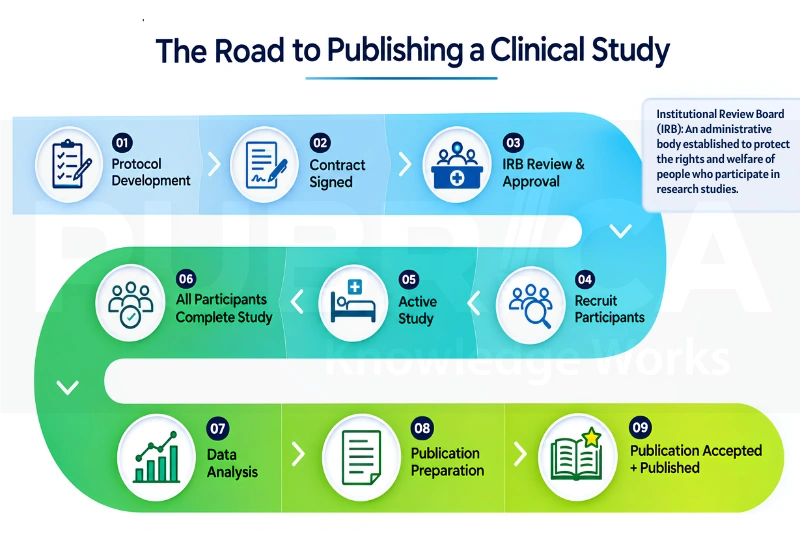
The goal is to let researchers concentrate on science rather than on technical details of research while benefiting from academic research outsourcing expertise.
2. Research Support Across the Project Lifecycle
Outsourced partners contribute at multiple stages of research, ensuring continuity and quality throughout the project.
Research Stage | Outsourced Support Services |
Research Planning | Study design, protocol development, literature review |
Ethics & Regulatory | Ethics applications, informed consent documentation, regulatory compliance |
CRF design, database development, data management | |
Data Analysis | Biostatistics, machine learning, statistical programming |
Scientific Writing | Manuscript preparation, medical writing, editing |
Publication | Journal selection, submission support, reviewer response management |
This integrated approach minimises delays and improves overall research efficiency while delivering end-to-end research support.
3. How Universities Benefit from Research Support
Collaboration between universities and external research support agencies is becoming common practice to enhance research capabilities without increasing their workforce through academic research outsourcing. [3]
Benefits of such collaboration include:
- Consultation by multidisciplinary research specialists.
- Enhanced grant proposals.
- Expert statistical assistance.
- Greater acceptance rate of publications.
- Less administrative burden.
- Better adherence to research requirements of the institution.
Such support is especially useful for postgraduate students, doctoral researchers, and faculties involved in numerous research studies.
4. Value for Pharmaceutical Companies
Pharmaceutical firms work within a rigorous regulatory environment where there is a need for proper documentation and scientific reporting.
Outsourcing pharmaceutical research assistance is beneficial for the pharmaceutical firm in that:
- Clinical protocols are drafted.
- Preparation of Clinical Study Reports (CSR).
- Scientific communications.
- Pharmacovigilance documentation.
- Support with regulatory submission.
- Statistical Programming using SAS, R, and Python.
- Publication planning and scientific communication.
This will not only improve documentation but also help their scientific teams concentrate on innovations and clinical developments.
5. Importance for Contract Research Organizations (CROs)
Clinical research organizations often conduct several studies simultaneously. The outsourced experts assist clinical research organizations in expanding their operations efficiently because they help in:[4]
- Management of clinical data.
- Statistical analysis.
- Medical coding.
- Validation of database.
- Drafting risk-based monitoring documents.
- Compliance with regulatory requirements.
- Assurance of quality.
The flexibility offered enables CROs to meet changing demands of clients through comprehensive clinical research support services.
6. Technologies Supporting Modern Research Services
Modern outsourced research support integrates advanced digital technologies that improve productivity and analytical accuracy.
Technology | Research Application |
Artificial Intelligence | Literature screening, document summarization |
Machine Learning | Predictive analytics and pattern recognition |
Electronic Data Capture (EDC) | Clinical data collection |
Statistical Software (SPSS, SAS, R, STATA) | Advanced data analysis |
Reference Management Software | Citation organization |
Clinical Trial Management Systems | Study monitoring and coordination |
The integration of these technologies enables faster, more accurate, and reproducible research workflows.
7. Ensuring Quality and Regulatory Compliance
High standards of research assistance depend on full compliance with international research standards and ethics. [5]
Research assistance professionals usually comply with the following:
- Good Clinical Practice (GCP)
- International Council for Harmonisation (ICH) Guidelines
- CONSORT Statement
- PRISMA Guidelines
- STROBE Guidelines
- Declaration of Helsinki
- Institutional Review Board (IRB) standards
Compliance with such standards increases research transparency, reproducibility, and publication suitability.
8. Challenges in Outsourced Research Support
Although outsourcing provides numerous advantages, organisations should carefully address several considerations.
Challenge | Recommended Approach |
Communication gaps | Establish regular project meetings |
Data security concerns | Use secure encrypted systems and confidentiality agreements |
Quality consistency | Implement standardised quality assurance procedures |
Timeline management | Define clear milestones and deliverables |
Regulatory compliance | Work with experienced domain specialists |
Effective collaboration and project governance help mitigate these challenges while maintaining research quality.
9. Strategies for Effective Research Collaboration
Value from outsourcing research alliances can be maximised by utilising effective collaboration methods.[6]
- The project’s objectives must be clearly stated.
- Choose partners who know the field.
- There should be continuous communication during the project period.
- The process of quality control should be done.
- The confidential research data needs to be safeguarded.
- The output of the project should be examined at each project milestone.
10. Future of Outsourced Research Support
Outsourced research support will in future be increasingly dependent on the use of AI, automation, cloud-based collaboration tools, and analytics. Universities, pharma companies, and CROs are set to integrate research ecosystems where experts such as consultants, data analysts, medical writers, and statisticians work together seamlessly within the research process, providing protocol to publication support across diverse research disciplines.
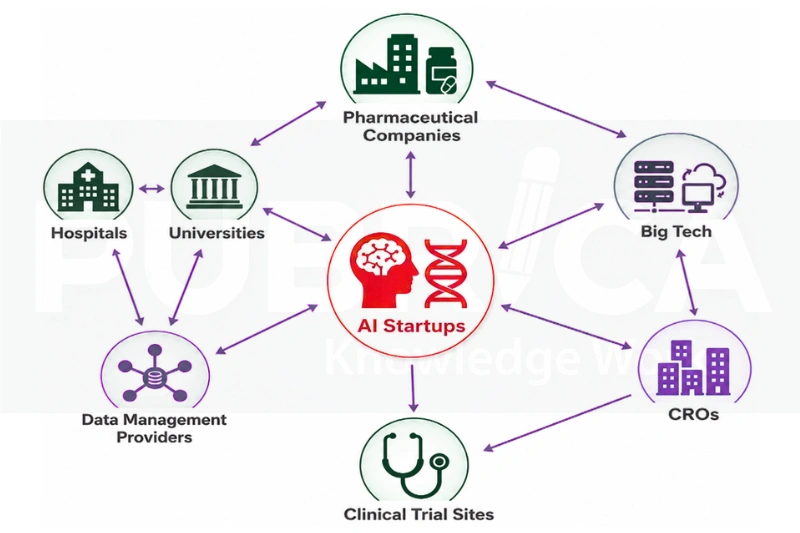
In the wake of increased interdisciplinarity and data-intensity of global research projects, outsourced research support will be vital for scientific advancement.
Connect with us to explore how we can support you in maintaining academic integrity and enhancing the visibility of your research across the world!
Conclusion
Research outsourcing has turned into a highly valued and effective partnership that goes way beyond mere administrative support. The research support services offered by research service organizations include research protocol development services, ethical approvals, data handling, statistical analysis, medical writing, and manuscript publication support. By delivering protocol to publication support and end-to-end research support, combined with proper communication, quality control measures, and advanced technology, research support services enable universities, pharmaceutical companies, CROs, and other organizations to speed up discoveries and efficiently navigate the complete research journey from protocol development to scientific publication.
From Protocol to Publication: Outsourced Research Support for Universities, Pharma & CROs. Our Pubrica consultants are here to guide you. [Get Expert Publishing Support] or [Schedule a Free Consultation]
Frequently Asked Questions (FAQs)
Outsourced research support involves partnering with specialised experts who assist with research planning, protocol development, data management, statistical analysis, medical writing, and publication support.
Universities, pharmaceutical companies, Contract Research Organisations (CROs), hospitals, research institutes, faculty members, postgraduate students, and clinical researchers can all benefit from outsourced research support.
Commonly outsourced services include protocol writing, literature reviews, ethics documentation, data management, biostatistics, systematic reviews, medical writing, manuscript editing, journal submission, and regulatory documentation.
Expert guidance enhances study design, statistical analysis, scientific writing, journal selection, and compliance with reporting guidelines, increasing the likelihood of publication in peer-reviewed journals.
Pharmaceutical companies receive support for clinical protocols, Clinical Study Reports (CSRs), pharmacovigilance documentation, statistical programming, regulatory submissions, and scientific communications.
CROs leverage outsourced expertise to manage clinical data, perform statistical analyses, validate databases, maintain regulatory compliance, and efficiently scale research operations.
Modern research support incorporates artificial intelligence (AI), machine learning, electronic data capture (EDC), statistical software such as SAS, R, SPSS, and STATA, reference management tools, and clinical trial management systems.
References
- Berendt, L., Callréus, T., Petersen, L. G., Bach, K. F., Poulsen, H. E., & Dalhoff, K. (2016). From protocol to published report: a study of consistency in the reporting of academic drug trials. Trials, 17, 100. https://doi.org/10.1186/s13063-016-1189-4
- Stamenovic, M., & Dobraca, A. (2017). Benefits of Outsourcing Strategy and IT Technology in Clinical Trials. Acta informatica medica : AIM : journal of the Society for Medical Informatics of Bosnia & Herzegovina : casopis Drustva za medicinsku informatiku BiH, 25(3), 203–207. https://doi.org/10.5455/aim.2017.25.20
- Petrella, J. K., & Jung, A. P. (2008). Undergraduate Research: Importance, Benefits, and Challenges. International journal of exercise science, 1(3), 91–95. https://doi.org/10.70252/MXRI7483
- Dehlinger-Kremer, M., Lüning, H., Ş, Y., Rolando, D., & Mahi, L. (2023). OP16 The Importance of Clinical Research Organizations (CRO) in Clinical Research and Impact of COVID-19 Pandemic. Value in Health, 26(6), S310. https://doi.org/10.1016/j.jval.2023.03
- Institute of Medicine (US) Committee on Clinical Research Involving Children; Field MJ, Behrman RE, editors. Ethical Conduct of Clinical Research Involving Children. Washington (DC): National Academies Press (US); 2004. 7, Regulatory Compliance, Accreditation, and Quality Improvement. Available from: https://www.ncbi.nlm.nih.gov/books
- Ruwanpathirana, R. E., Deshpande, S., Abdulhai, S., Billau, M. D., Catic, S., Chin, T. L., Harrison, J. N., Kumar, P., Leyson, M. C. T., Li, H. W., Madani, K. S., Serumaga, A., Tarpley, M., Wright, G., Zalamea, N. N., & Ng-Kamstra, J. S. (2025). Establishing best practices guidelines for collaborative research in global surgery: developing a Delphi survey. Journal of global health, 15, 04237. https://doi.org/10.7189/jogh.15.04237