
- Services
- Discovery & Intelligence Services
- Publication Support Services
- Sample Work

Publication Support Service
- Editing & Translation
-
Editing and Translation Services
- Sample Work

Editing and Translation Service
-
- Research Services
- Sample Work

Research Services
- Physician Writing
- Sample Work

Physician Writing Service
- Statistical Analyses
- Sample Work

Statistical Analyses
- Data Collection
- AI and ML Services
- Sample Work

AI and ML Services
- Medical Writing
- Sample Work
Medical Writing
- Research Impact
- Sample Work

Research Impact
- Medical & Scientific Communication
- Sample Work
Medical & Scientific Communication
- Medico Legal Services
- Educational Content
- Academic Editorial Services
- Sample Work
Academic Editorial Services
- Educational Editorial Service
-
Education Editorial Services
- Sample Work
Education Editorial Services
-
- Industries
- Subjects
- About Us
- Academy
- Insights
- Contact Us
Understanding Conceptual and Theoretical Frameworks in Academic Research
- Home
- Academy
- Original Research Article
- Understanding Conceptual and Theoretical Frameworks in Academic Research
High-Impact Journals
Interesting topics
Understanding Conceptual and Theoretical Frameworks in Academic Research
In academic writing, clarity of mind and organisation are two important ingredients that help create a good study. Two key elements that play an important role in determining the direction of the research and in interpreting it are the conceptual framework. These frameworks in research form the basis on which research questions are formulated, methodologies are decided, and conclusions are drawn. Even though they may be considered the same thing, there is a clear difference between conceptual and theoretical framework.[1]
1. What is a Theoretical Framework?
The theoretical framework is the set of theories that have been developed before conducting any research. The process entails selecting, analysing, and utilising pre-existing theories that relate to the subject matter being studied. Theories are used to justify how certain factors are related to one another and to form hypotheses. [2]
- Uses prior scholarly theories
- Helps in interpreting the findings
- Aids in forming hypotheses
- Bases its research on pre-existing knowledge
As an example, theories of behavioural or cognitive learning can be applied in researching student motivation.
2. What is a Conceptual Framework?
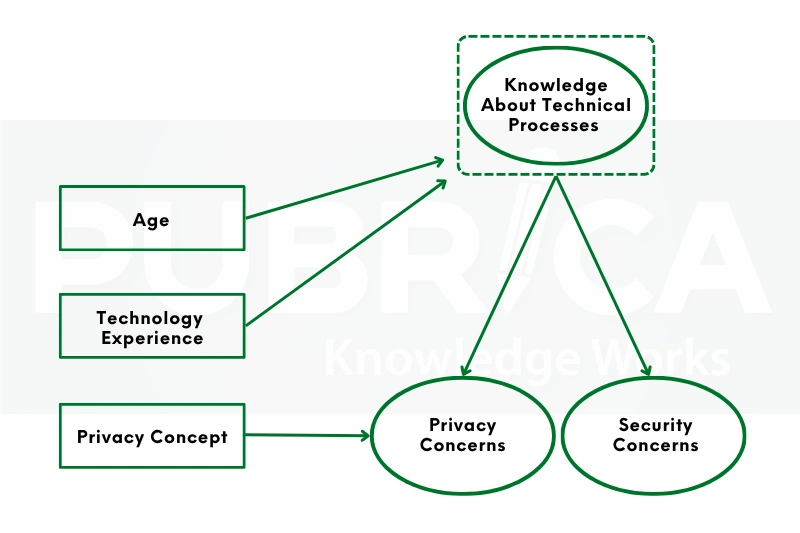
A conceptual framework refers to a framework developed by researchers illustrating the relationship between variables unique to the research being conducted. The difference with theoretical frameworks lies in the fact that conceptual frameworks are not restricted by theoretical constructs; rather, they consist of both theory and concepts from literature and personal experiences of the researcher.[3]
Characteristics of Conceptual Frameworks Include:
- Researcher Developed
- Relationship Between Variables Illustrated
- Theory, Assumptions, and Context Incorporated
- Mapped Through Visual or Verbal Models.
3. Key Differences Between Conceptual and Theoretical Frameworks
| Aspect | Theoretical Framework | Conceptual Framework |
|---|---|---|
| Basis | Established theories | Researcher-developed model |
| Purpose | Explain phenomena | Illustrate relationships |
| Source | Existing literature | Combined concepts & ideas |
| Nature | Abstract and general | Specific and applied |
| Function | Guides interpretation | Guides study design |
4. Importance in Academic Research
Both frameworks play a vital role in ensuring research quality and coherence. [4]
Why are they important:
- Give order and guidance to the research process
- Help to precisely define research problems
- Ensure coherence between the objectives and methods
- Increase academic legitimacy
- Allow for a sound interpretation of the data
Without such concepts, research will not be structured and coherent.
5. How to Develop Effective Frameworks
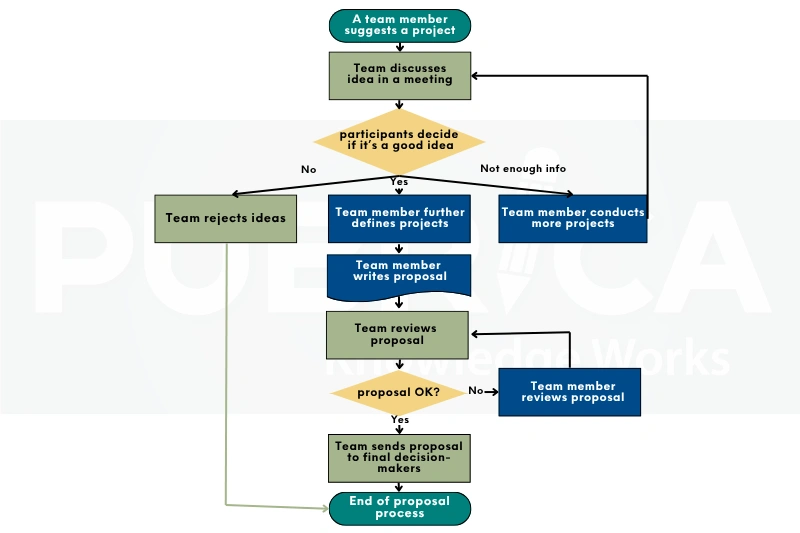
The development of effective frameworks takes a lot of systematic thinking and reflection.
Process of developing a framework: [5]
- Literature review
- Ideation of theories
- Definition of variables and the relationship between them
- Drawing of a diagram or model
Establishment of a connection between the framework and research questions. Consistency between the framework and research design is very important.
6. Common Mistakes to Avoid
Framework design poses many challenges to researchers because of conceptual misunderstandings. [6]
- Misunderstanding conceptual vs. theoretical frameworks
- Relevance and obsolescence of theories used
- Failure to demonstrate variables’ interrelationships
- Complexity of diagrams
- Inadequate relevance to the research objectives.
Connect with us to explore how we can support you in maintaining academic integrity and enhancing the visibility of your research across the world!
Conclusion
Comprehending theoretical and conceptual frameworks is important for generating top-notch academic research work. Theoretical frameworks offer the study context through relevant knowledge, while conceptual frameworks enable researchers to formulate a personalised framework for conducting the research. Understanding what is a theoretical framework, along with the difference between conceptual and theoretical framework, is essential for building strong and effective frameworks in research.
Understanding Conceptual and Theoretical Frameworks in Academic Research. Our Pubrica consultants are here to guide you. [Get Expert Publishing Support] or [Schedule a Free Consultation]
References
- Luft, J. A., Jeong, S., Idsardi, R., & Gardner, G. (2022). Literature Reviews, Theoretical Frameworks, and Conceptual Frameworks: An Introduction for New Biology Education Researchers. CBE life sciences education, 21(3), rm33. https://doi.org/10.1187/cbe.21-05-0134
- Varpio, L., Paradis, E., Uijtdehaage, S., & Young, M. (2020). The Distinctions Between Theory, Theoretical Framework, and Conceptual Framework. Academic medicine : journal of the Association of American Medical Colleges, 95(7), 989–994. https://doi.org/10.1097/ACM.00000
- Bunn F, Trivedi D, Alderson P, et al. The impact of Cochrane Reviews: a mixed-methods evaluation of outputs from Cochrane Review Groups supported by the National Institute for Health Research. Southampton (UK): NIHR Journals Library; 2015 Apr. (Health Technology Assessment, No. 19.28.) Chapter 2, Conceptual framework and approach. Available from: https://www.ncbi.nlm.nih.gov/books
- Santini A. (2018). The Importance of Referencing. Journal of critical care medicine (Universitatea de Medicina si Farmacie din Targu-Mures), 4(1), 3–4. https://doi.org/10.1515/jccm-2018-0002
- McMeekin, N., Wu, O., Germeni, E., & Briggs, A. (2020). How methodological frameworks are being developed: evidence from a scoping review. BMC medical research methodology, 20(1), 173. https://doi.org/10.1186/s12874-020-01061-4
- Makin, T. R., & Orban de Xivry, J. J. (2019). Ten common statistical mistakes to watch out for when writing or reviewing a manuscript. eLife, 8, e48175. https://doi.org/10.7554/eLife.48175