
- Services
- Discovery & Intelligence Services
- Publication Support Services
- Sample Work
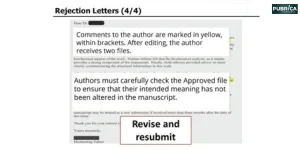
Publication Support Service
- Editing & Translation
-
Editing and Translation Services
- Sample Work

Editing and Translation Service
-
- Research Services
- Sample Work

Research Services
- Physician Writing
- Sample Work

Physician Writing Service
- Statistical Analyses
- Sample Work

Statistical Analyses
- Data Collection
- AI and ML Services
- Sample Work

AI and ML Services
- Medical Writing
- Sample Work
Medical Writing
- Research Impact
- Sample Work

Research Impact
- Medical & Scientific Communication
- Sample Work
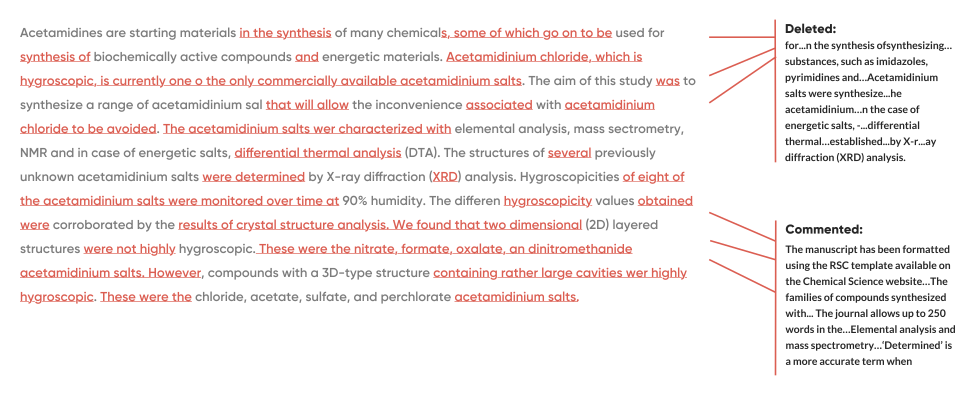
Medical & Scientific Communication
- Medico Legal Services
- Educational Content
- Academic Editorial Services
- Sample Work
Academic Editorial Services
- Educational Editorial Service
-
Education Editorial Services
- Sample Work
Education Editorial Services
-
- Industries
- Subjects
- About Us
- Academy
- Insights
- Contact Us
Targeted literature searches are a fundamental part of writing clinical manuscripts that will meet the standards of high-quality journals and contribute meaningfully to evidence-based practice. When physicians write clinical manuscripts, utilizing a targeted literature search can identify high-quality, relevant, and current evidence. While a general literature review is useful, a targeted literature search is specific to the clinical question and should be completed through frameworks established, such as PICO (Population, Intervention, Comparator, Outcome) and PRISMA [1].
Understanding Clinical Studies: Getting approval, registering the study and reporting your results
- Home
- Academy
- Research Impact
- Understanding Clinical Studies: Getting approval, registering the study and reporting your results
Understanding Clinical Studies
Interesting topics
Understanding Clinical Studies: Getting approval, registering the study and reporting your results
Clinical studies traditionally involve human volunteers (termed participants) for the purpose of increasing knowledge about the human body, or providing better methods of preventing, screening for, diagnosing, and treating diseases. Each clinical study should have a protocol that specifies what is going to happen in a study, how the study will be conducted, and why the individual pieces of the study are needed. A study may recruit volunteers who have specific disease conditions or healthy people.
1. Types of Clinical Studies
1.1. Interventional vs observational studies
During interventional studies, participants are given certain interventions according to the protocol of the investigator. The interventions can be participants changing behaviour, medical procedures, or medical products (drugs or devices). The aim is to determine the safety and effectiveness of the intervention by measuring outcomes on the participants. [2]
For example, if investigators administer a drug or intervention to participants that have high blood pressure, they could observe whether their blood pressure decreases.
Observational study, participants may receive an intervention or a procedure as part of their standard medical care, but the investigators do not allocate participants to an intervention (as in an interventional study). [3]
For example, an investigator could observe a group of older adults to gain more insight on effects of lifestyles on cardiac health.
1.2. Prospective vs Retrospective studies
| Prospective study | Retrospective study |
|---|---|
Researchers are looking for outcomes (e.g., the development of a disease) that happen during the study period and relate these outcomes to other factors, such as suspected risk or protective factors. There is usually a cohort of subjects who are being followed for a long time. The outcome of interest should be frequent in the population being studied; it would be statistically meaningless if there were too few outcomes to observe. Every effort needs to be taken to avoid possible sources of bias, such as differential loss to follow-up. There is typically less potential for bias and confounding in prospective studies than in retrospective studies. | The investigators examine existing data to investigate exposures to suspected risk or protective factor in relation to an outcome that is defined at the beginning of the study. Many important case-control studies were in fact retrospective studies, and they include the Lane and Claypan 1926 case-control studies of risk factors associated with breast cancer.[4] Remember that confounding and bias are more likely to occur in retrospective studies rather than prospective studies. For this reason, retrospective studies tend to be criticized. When the outcome of interest is uncommon, the size of the prospective study required to gain an estimate of relative risk is often prohibitively large, so a retrospective study must be conducted. In retrospective studies, the odds ratio is the statistic used to estimate relative risk. |
1.3. Case-control vs cohort studies
Case-control studies compare those with a disease or other outcome of interest (cases) to those without the disease or outcome (controls). Cases and controls are compared, looking back retrospectively to see how often the exposure to the risk factor was present, and whether there is a relationship between the risk factor and the disease.
Controls have been selected based on an unknown outcome. Case-control studies are generally advantageous for studying rare outcomes. They are also not as costly as cohort studies because fewer participants are required and therefore, both recruitment and the entire study occur in a shorter time frame. [5]
Cohort studies are those studies that contain one or more samples (called cohorts), are followed prospectively, and subsequent evaluations of status with respect to a disease or an outcome is assessed to ascertain which initial exposure characteristics (risk factors) were related to the disease or outcome. As the study research proceeds, the outcome of participants in each cohort is assessed, and determined relationships with characteristics are established [6]

Image Adapted From (N.d.). Retrieved September 3, 2025, from Scribbr.com website: https://www.scribbr.com/methodology/prospective-cohort-study/
2. How to Obtain Approval for and Register Your Clinical Study
Most clinical trials are reviewed, monitored, and approved by an institutional review board (IRB). An IRB is made up of physicians, statisticians, and members of the community. Their job is to ensure that the study is ethical, to maintain the rights and welfare of the participants, and to ensure that the risks, if any, are reasonable in comparison to the benefits.
In the United States, if a clinical trial studies a drug, biological product, or medical device regulated by the Food and Drug Administration (FDA), it needs IRB approval. It will also require IRB approval if the trial is funded or run by the federal government.
The International Committee of Medical Journal Editors (ICMJE) stipulates that clinical trials must be registered prior to publishing. The first online registry for clinical trials, ClinicalTrials.gov, is operated by the United States National Library of Medicine (NLM) and is currently the largest and most used registry.
The World Health Organization has launched the International Clinical Trials Registry Platform to promote clinical trial registration, and there has also been movement from the pharmaceutical industry, which has committed to increasing the transparency and accessibility of clinical trial data. The revised Declaration of Helsinki, released in October 2008, asserts that, every clinical trial must be registered in a publicly accessible database before the recruitment of the first subject.
3. Reporting the Results of Your Clinical Trial
After publication, your article will be read and evaluated by the scientific community and the data may be included in systematic reviews or used for clinical guidelines or clinical practice.
When you report the results of your study, be sure to identify the appropriate reporting guidelines. The Equator Network has devised a prototype decision tree to help guide your decision making on the appropriate reporting guidelines for your study.
4. Reporting guidelines used for each main study type.
Connect with us to explore how we can support you in maintaining academic integrity and enhancing the visibility of your research across the world!
Conclusion
Conducting clinical trials is critical to advancement of medical knowledge and patient care. To ethically conduct a study, scientifically promote validity, and meaningfully advance healthcare discipline, properly design a study, obtain IRB approval, register the study, and disseminate results.
References
- What are clinical trials and studies? (n.d.). Retrieved September 3, 2025, from National Institute on Aging website: https://www.nia.nih.gov/health/clinical-trials-and-studies/what-are-clinical-trials-and-studies
- Aggarwal, R., & Ranganathan, P. (2019). Study designs: Part 4 – Interventional studies. Perspectives in clinical research, 10(3), 137–139. https://doi.org/10.4103/picr.PICR_91_19
- Hess D. R. (2023). Observational Studies. Respiratory care, 68(11), 1585–1597. https://doi.org/10.4187/respcare.11170
- De Sanctis, V., Soliman, A. T., Daar, S., Tzoulis, P., Fiscina, B., Kattamis, C., & International Network Of Clinicians For Endocrinopathies In Thalassemia And Adolescence Medicine Icet-A (2022). Retrospective observational studies: Lights and shadows for medical writers. Acta bio-medica : Atenei Parmensis, 93(5), e2022319. https://doi.org/10.23750/abm.v93i5.13179
- Setia M. S. (2016). Methodology Series Module 2: Case-control Studies. Indian journal of dermatology, 61(2), 146–151. https://doi.org/10.4103/0019-5154.177773
- Setia M. S. (2016). Methodology Series Module 1: Cohort Studies. Indian journal of dermatology, 61(1), 21–25. https://doi.org/10.4103/0019-5154.174011